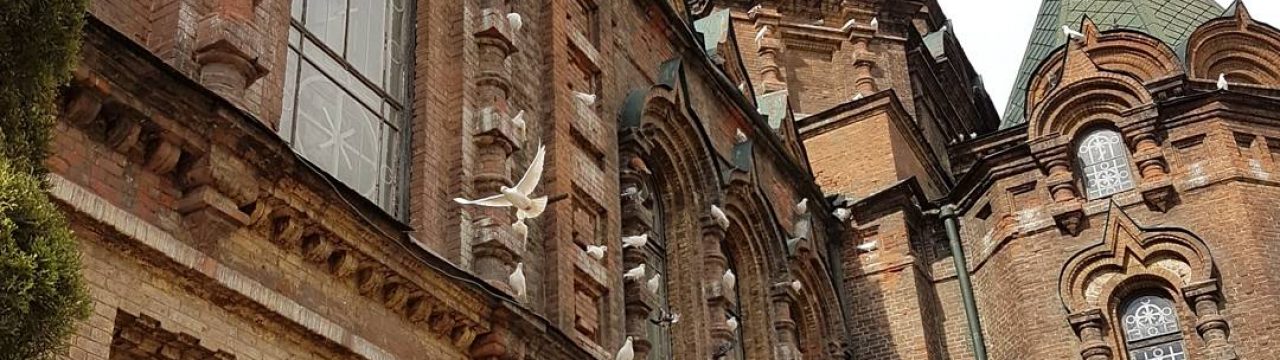
我 学 中文 or, How Learning Chinese is Changing My Mind

Our professor renamed each of us in Chinese. This is what he called me.

Our professor renamed each of us in Chinese. This is what he called me. It sounds like “Jenny.”

In three months my second novel, Sistering, will be released. The manuscript has been sent to layout. The cover has been finalized. For now, there’s nothing to do but wait. Authors can go a little mad at this point, second-guessing ourselves, worrying all past successes were just flukes. We could reread our unreleased novels to reassure ourselves they’re good, but if that reading raises any doubts, highlights any passages we wish we could have one more go at, it’s too late. Reassurance could turn to regret. So we leave books caught in Limbo untouched, willing ourselves to trust our editors, our publishers, the promise readers said they saw in us when they reviewed our previous novels.

It’s a funny space to inhabit—too far into the publishing process to look at the book, but too close to publication to look away.

A friend of mine quelled her latest bout of pre-publication nerves with a trip overseas. That’s not possible for me but I couldn’t just sit here and wait. I needed to diminish my obsession with my sophomore book with a new, completely unrelated obsession.

Yes, I get obsessed with things. Most of the time, I like that about myself. Without a propensity for obsession I might not have finished any novels or stayed infatuated with the same man for twenty-one years. Obsessions demand time, attention, and energy. They rob other things, including other incompatible obsessions.

And I’ve found a new one. My current obsession—my respite from fretful excitement over my next novel—is Mandarin Chinese.

What the heck, eh? I’ve been asked that a lot since I enrolled in a Chinese course at the University of Alberta this spring. It began with my interest in getting a Masters of English degree from a school that requires its candidates graduate with intermediate-level knowledge of a language other than English. I don’t believe in fate but I do believe our lives have purpose. At times, we act and at other times we are acted upon. I think I may have been acted upon by the university’s lean spring semester selections and the daily schedules of the schoolboys in my family. Chinese became my only viable course option. If I wanted to sound silly, I’d call it destiny. Whatever it is, I spent my Saturday afternoon sitting in a barber shop while the boys took turns getting their hair cut and showing me flashcards of Chinese characters.

Unlike other east Asian languages, Chinese has no alternate phonetic writing system. Often, casual beginners’ Chinese courses stick to Pinyin (Chinese written in romanized letters familiar to English speakers) and leave characters to native speakers and scholars. That’s not how it is at the U of A. Their course is an intensive, integrated, academic study of Chinese without any room for the mystique that can surround characters. In the words of my professor, “People have to get over it.”

As a storyteller, I’m finding I wouldn’t want to learn the language any other way. Chinese characters are fascinating. They’re also easier to draw and remember than they first appear. My fresh-brained genius days are long past but still, after one week of class, I drove home through Edmonton’s Chinatown reading snips of signage along 97 Street. It’s the road my husband’s office is on, one I’ve traveled countless times. I’d always traveled it illiterate but this time I was cackling with outright glee, alone in my car. “Honorable! That character is honorable! See the cowrie shell radical?”

Traces of the culture and history of the people who developed the language are folded within the characters. The word for “me” has a sword in it. Meaning is lost when characters are ignored. For instance, the words for “he” and “she” are pronounced the same, spelled the same in Pinyin, and can only be distinguished by seeing the characters. It’s an elegant, organic way to express historical social values.

Characters are words made concrete in a way I never experienced writing only in a phonetic language. At breakfast this morning, I read the French written on the side of a jam jar, and thought of how reading in Chinese isn’t much like what I’ve known as reading at all. Reading French or German or even Pinyin is a completely different intellectual and artistic experience than reading characters. Reading characters seems to activate a separate mental faculty—one I’m just discovering in myself. It’s startling, mind blowing in a way that’s almost literal. I am in awe that people—a billion people—can do this. And I’m stunned and a little betrayed that I never knew the world was like this until now.

All of this turns my mind and heart back to my new, unreleased book. And not just that, but everything that lies in the future for me and everyone else. If the world has room for something like Chinese writing—something so huge and pervasive yet hidden by my ignorance—that I didn’t truly notice until halfway through my life, there’s got to be much more in store for us than just the good things we’ve already discovered and enjoyed.

We have a tidy little English word for that sentiment: hope.

What I Didn’t Tell My Fellow Creative Writing Students

Sesame Street’s Don Music with a bust of William Shakespeare

I remembered them from my days as a twentysomething undergrad: certain “mature” post-secondary students heck-bent on sharing their wisdom and experience. They stalled lectures, dominating professors’ attention with “the adults are talking” airs or by questioning everything professors professed—because what do those ivory-tower hacks know anyways?

This winter, I took a class called Advanced Creative Writing at my old university. It was a writing workshop—my first. Though I’m firmly on the path of free-range writing rather than a hot-house writing, it’s okay if my range overlaps a hot-house for a few hours every week.

As I walked up the Humanities Centre stairs, I knew I didn’t want to be “that” mature student. I said so when it was my turn to introduce myself to the class. My professor, a talented author who had kindly waived the portfolio prerequisite because he’d already read my novel, stopped me and told the class I was there “to help” as well as to learn.

This was generous of him. I’m not sure how well I walked the line between helping and infuriating my classmates. I’m pretty sure I used the phrase, “I already graduated, what do I care?” too many times.

Naturally, I gravitated toward class members most like my sons and my youngest sister. Though familiar, this was not my usual writing crowd—far from the scene of a Linda Leith Publishing vin d’honneur—but the honor of being among talented people before they’ve made it (whatever that means) wasn’t lost on me. In the end, I managed to leave the course with a good though moot grade, one hug, and some sweet goodbyes.

Now that it’s over, no more restraint. Here’s the list I’ve suppressed all semester—the things Mama Mature Student would have told the class if she hadn’t been checked by all this dang self-awareness. It’s not that I wasn’t asked questions—one about episiotomies leaps to mind—but the full force of my advice rampage has been held back until now.

If you are or ever plan to be a creative writing student, consider this:

Be nice – This echoes the university’s writer in residence who visited our class. He went so far as to recommend we read How to Win Friends and Influence People. It’s not bad advice. Some of the most cringe-worthy things I can’t forget myself saying were said in my early twenties. Remember Franzen made his name before the social media age, back when authors’ rough styles could be easily managed by publicists. Personal scrutiny has never been closer than it is now and in a competitive arts world full of very good work, a skill like not openly rolling our eyes might be a career tipping point. Unfortunately, arts careers are a little like small businesses and our personalities can combine with our art to form an unsightly hybrid product that’s difficult to sell.

Take heart. Canadian literary communities, particularly the Alberta one with which I’m most familiar, tend to be collegial. We cheer one another, writing blurbs and retweeting announcements along the way. It’s easy to be nice here.

Be generous – Our professor held a book launch during the semester and only three of us came. Not cool. Go to local book events. We don’t have to buy all the new books (with writer wages, we probably won’t be able to) but realize that many authors arrive at their events convinced they’ll be facing a room of empty chairs, peppered with a few blood relatives feeling sorry and embarrassed for them. If at all possible, do not let this happen. Anyways, it’ll be fun. It’s moving and fascinating to hear people offering vocal interpretations of their own work—not work they’ve been picking at for classes but work they’ve toiled over for years, work they’ve staked their futures on. Go ahead and laugh at their jokes, gasp at their horror stories. Weep openly, if you feel like it. Events are more fun, more productive, and more satisfying when we invest ourselves in them.

Don’t take the workshop process too seriously – I am an old woman raised in the pre-Elmo golden age of Sesame Street and one of my favourite characters was Don Music. He’s an angsty songwriter we find one word shy of completing perfect nursery songs like “Twinkle, Twinkle Little Star.” When his near-perfect songs get “help” from a visitor, they get mangled into parodies with details that make so much literal sense the artistry of the songs become absurd. Our workshops were like that at times. I saw (and benefitted personally from) great suggestions coming from workshop discussions. However, I also saw classmates balk at truly powerful and original aspects of their stories because of well-meant questions these risks raised during workshops.Critique is a vital tool in writing but so is the discretion to resist pressure when it’s pushing a story in the wrong direction–when we know it’s time to depart from expectations. Remember the lessons of Don Music.

Don’t take your parents too seriously – Everyone’s parents betray them in some way. That’s the rule, not the exception. We all sit down to write reeling from that trauma. But look at where we are. We’re not roughneck-ing in the oil patch, we’re in university. We’re in university not to get a traditionally marketable skill like teaching or engineering. We’re in the Faculty of Arts. And we’re not just in the Faculty of Arts, we’re studying the fine art of creative writing. There are reasons we are here and our parents are probably among them. Maybe they hate this field. Maybe they deserve to become caricatures lampooned or eviscerated in fiction. But they also deserve a nod for the privilege we enjoy as people having a go at an expensive, elite liberal arts education. The idea that this privilege is universal regardless of the circumstances and people we were born among–even in Canadian society, it’s false.

Explore the free range – Make sure life is built upon pillars other than reading and writing. Duck out of the academic hot-house for a while–and not just through travel stunts. The daily grind is an excellent teacher. Some of the most interesting fiction in the class came from people who work part-time in stores and bars, in the real world where they form and sustain relationships with people nothing like themselves.

There was great sensitivity in the class. Sensitivity to our own feelings needs to be augmented by sensitivity to other people’s feelings or it will never be enough to make our writing real and potent. Empathy is everything. As the man says, “You can’t write if you can’t relate…” Love people—everyone. That is how they are known. That is how they will come to know and love you and your art.

Thank you so much, and all the best…

In Canada, Oprah Winfrey is Called Shelagh Rogers

No school for the kids today so I woke up late to a notification for this Tweet:

The US has it’s Oprah Winfrey book world–nods given by a bright, trustworthy, well-read media personality to books of note. In Canada, where everything but geography and weather unfold on a less flamboyant scale, we have a national radio book programme on the CBC called “The Next Chapter” anchored by a bright, trustworthy, well-read media personality named Shelagh Rogers. That’s her smiling face in front of my book cover in the Tweet. The book and I were the subjects of a feature called “How I Wrote It” on her programme this week. It was short and fun but a great moment nonetheless.

Listen here, it begins at 23:45.

We Have a Release Date…

Novel release date, 15 Aug. 2015

We’ve got a release date for Sistering, my upcoming novel.

Yes, “release date” can mean many things, especially in a family like mine where one of us works in the criminal justice system.

What I mean by it is the book will be available in print and ebook formats from Linda Leith Publishing, online bookstores, and on the shelves of fine bookstores beginning August 15, 2015.

That is, as long as I get off the Internet and get the latest revisions resubmitted on time. Fighting!

The Linda Leith Publishing Story in the Montreal Gazette

I’m always grateful for anything that extends the lifespan of my first novel. I wrote it in blood and it’s part of my heart. So fittingly, this Valentines Day morning, I woke up to find the book mentioned in the Montreal Gazette newspaper in a feature on my publisher, Linda Leith.

Read the piece here: Linda Leith in the Montreal Gazette

But wait, there’s more. A portion of the interview was video taped and posted on Youtube. It’s worth a listen just to hear Linda’s lovely, one-of-a-kind accent. In this clip she talks about surprising people, overcoming obstacles, and taking chances. To illustrate, she tells the part of her story that includes my story. Lucky me, to have fallen into the hands of someone with an iron stomach and a golden touch for my first, and soon, my second novels.

Watch the clip here: Linda Leith on Youtube

Imagine All the People

Breakdown of a Facebook Breakup

Someone emailed to tell me she had quit following my personal Facebook account in order to save our real life friendship. Her letter was carefully, thoughtfully written. I could tell she was being as gentle and sincere as she could be.

The news took me by surprise – awful surprise. I replied, saying I was very sorry to hear it. I told her what I liked and would miss about her Facebook presence. Her feelings are what they are and I didn’t argue their validity with her. We stayed friends and signed off and I rose up with great strength of character and immediately let it go.

I tried to, anyways. The exchange was warm and civilized but troubling. I didn’t sleep well, and decided I’d better take a hard look at what I post if it’s having a negative effect on people I care about. I logged into my Facebook account and scrolled through the last four months.

My friend was already gone from my online world (it’s safe to say she won’t read this blog post) but as a consolation I had a chance to learn what’s distasteful about myself on social media. It’s important to know professionally and as a human being. I settled in for a lesson in the mysterious, sometimes counter-intuitive art of not being horrible.

The Results

Thank my sociology training for this table of all my Facebook posts between September 2014 and January 2015:

Number of Posts Subject of Post Details
18 Family 9 posts about my kids

5 posts about my husband

4 links to articles by the press (not me) about family members’ achievements and activities

15 Professional 7 links to press coverage and publishing announcements about my novels

4 links to blog posts and an article written by me

4 posts about my activities at school

11 Personal 7 horrendous old photos posted by my very bad little sister

4 attempts at self-deprecating humour

What Wasn’t in the Results

Dirty Laundry As I’ve discussed elsewhere, I don’t post bad news very often, particularly when it comes to my career. For me, Facebook is mostly a good news ticker.

Dirty Dishes Facebook isn’t part of my domestic routine, meaning there are very few posts about housework, recipes, decorating, or similar topics often found on the Facebook pages of people managing busy households. I don’t fault anyone else for using the website this way. I actually find it charming in my friends. But my domestic life is not the focus of my account.

S*%t Kickin’ I purposely avoid controversial links and statements that might read as attacks on anyone else’s way of life. Polemics on politics, parenting, nutrition, public health, social justice, religion – they don’t appear in what I post. I sometimes participate in that kind of discourse on other people’s pages, but I never start it on my own.

The Lesson

Despite the table, I couldn’t tell what exactly was bothering my friend. Self-awareness is hard but nothing in my news feed stood out to me as particularly inflammatory. It was probably nothing and everything all at once. The effect was likely a gestalt (thanks again, sociology).

Or maybe I just missed something — careless comments made on mutual friends’ posts, repeated miscommunications of tone, a hundred little somethings here and there over years and years.

I remember an article from the Huffington Post about what makes a bad Facebook post. The author says posts used for “image crafting” are not good. He argues Facebook shouldn’t be a tool for sculpting our lives into the form that’s most pleasing to us. In his perfect Facebook, good news is out. Bad news is out. Overly specific is out. Vague is out. Sensational is out. Boring is out. Complaining is out. Gratitude is out. Love is out. Hate is out. Vapid is out. Clever is only okay if there’s no way someone might feel like we’re showing off. Essentially, any Facebook post that elicits an emotional reaction outside a narrow, neutral sense of benign, unremarkable amusement is out. Does that leave anything? Maybe really solid knock-knock jokes…

I’m not sure the Huffington writer was aware of it, but his denouncement of actual social interaction within a social network is awfully ironic. That doesn’t mean it’s not inevitable. I approach Facebook like a cocktail party where everyone is toasting each other. I suppose there must be people out there who hate that kind of party. No one tells us when we register with Facebook that all 500,000,000 users may be assuming we’re at 500,000,000 different, somewhat incompatible parties.

Here’s more irony: if I consciously craft an image middling enough for every single one my friends to like it, I’m still crafting an image — only I’m crafting an even less authentic image than the one arising naturally from my character and values. I’m not talking about whether I should behave respectfully, use good manners, and not attack people on Facebook. I’m talking about whether I’m obligated to pursue things that don’t interest me or that make me feel bad in hopes of walking a neutral, narrow, benign line that goes nowhere.

Here comes sociology again, patting me on the head, telling me not to fret. All selves are crafted, negotiated within social contexts. That’s what humans do. Everything we see of everyone we know can never be more than a complex image in our minds. Literally, that’s how the visual cortices in our brains work. Figuratively, that’s how social life works, even on the Internet. We can try to quit it, but when we turn away to look at something else, what we see there will be just an image too.

On the One Hundredth Anniversary of my Grandmother’s Birth

Thelma Mae Bruce, circa 1920

Thelma Mae Bruce, circa 1920

I was three months pregnant with my third son when our  washing machine broke. The tub would fill, spin, and drain but the agitator wouldn’t turn. We had no money and a lot of laundry. Something needed to be done. I rolled my pants over my kneecaps, climbed onto the edge of the washing machine and stomped the clothes clean with my feet and legs. From half inside the machine, I realized that, just for a moment, I had become my grandmother – and I was grateful and astounded such a thing could happen.

If my grandmother was still alive, she would have celebrated her one hundredth birthday yesterday. And by “celebrated” I mean stood up beside the dinner table while everyone else ate. I called her Gram but her name was Thelma, a word now used in our family as a verb describing a hostess who won’t stop working to sit down with the rest of the party. “Nah, I’m fine. You guys go ahead. I’m just gonna Thelma.”

If I lived 600km closer, I would have joined my dad and my aunties yesterday at a big Thelma Day dinner. It looks, from the picture, like they went to one of Gram’s favourite prairie Chinese food smorgasbords.

Gram was loving but not always easy to feel close to. We were close anyway. At size 5, she was one of the few adults I could trade shoes with – not that we ever did swap her hospital inspired Naturalizers for my chunky-heeled boots. We were both oldest daughters of large families who had to take on work as teenagers to help our parents. My load was lighter and I was able to stay in school but when Gram quit in the eighth grade, she quit for good. I never heard her complain but when I graduated from high school at the top of my class she bought me a card and instead of just signing her name, as she usually did, she wrote “very proud of you” and my heart spilt in two. We’re both daddy’s girls, cleaning ladies, fast food super stars — doctor snarking, sibling scolding, hard coughing, cat ignoring, short ladies.

She’s a figure recurring throughout my creative work. The first piece I ever did for CBC Radio was a personal essay for Tapestry about the work Gram and I did together tracing our roots from New Brunswick to Scotland. In my novel, I shamelessly lifted the character of the grandmother who sleeps on a saw bench the night before her husband’s funeral from a scene out of my own childhood, with my own grandmother.

When she was nearly dead and losing her hearing, many voices slipped out of the pitch where she could still hear. But I knew where to find the right range and she could always hear me, right to the end. I stood up to speak at a funeral for the first time when she died.

So I felt like an idiot going to bed after midnight on Thelma Day, the one hundredth anniversary of my grandmother’s birth, without doing anything to observe it. While my family members were eating commemorative dinners, I had done nothing and said nothing about it as I fed my kids a rushed meal before darting off to take the 9-year-old to judo lessons. I had eaten standing up while packing his gym bag. I had dropped him off and driven to the senior’s home where my mother-in-law lives and collected her laundry. I had tried to phone my favourite schizophrenic loved one, found out his line was disconnected, and arranged to pay the bill to hook him back up. There are lots of good ways to observe Thelma Day, even if we happen upon them unknowingly while doing what she would do if she was here.

More than any inspiration she’s given me creatively, Gram inspires me spiritually. For our family, she was a Miriam without a Moses. Her Promised Land is a hard brilliant place without anywhere to sit.  Someday, I hope to stand with her there.

Happy Thelma Day, everyone.

Me on the CBC

It’s finally happened: the Canadian Broadcast Corporation is covering my debut novel. It’s starting with this feature on the CBC Canada Writes website composed of parts of the transcript from a bit of radio we recorded. The audio itself should eventually air on the programme that might be the gold standard of literary journalism in this country, CBC Radio’s The Next Chapter.

Things got a bit weird when they asked me what music I was listening to while writing the book. But let’s face it: weird, odd, strange, peculiar have been our watchwords all along this journey.

Read it here.

Love Letters of the Angels of Death Goes Global with the International IMPAC Dublin Literary Award Long-list

I’m so pleased to announce my debut novel has been included on the long-list of the International IMPAC Dublin Literary Awards.

Of all the books written in or translated into English in 2013, 142 are contending for this award. They come from 39 different countries. Eleven of them are from my home country of Canada. I’m the only name in the Q section, coming right after Thomas Pynchon because — wow. Only ten (or so) books will make it onto the short-list, announced next spring.

It bears repeating that I’m very happy and grateful to the wonderful Edmonton Public Library for nominating the book.

And get a load of this tweet where I’m called a “star” for the first time ever.

Announcing Book #2

pubagreementToday I signed and mailed away the publishing agreement for my second novel. Once again, I’m working with Linda Leith Publishing in Montreal and the novel is a blackly comic literary treatment of family life. Our projected release date is Fall 2015. And I still can’t believe this is really my life.

Watch this space for more and more and more details to come.