Picture Book, Part I

It’s been observed in reviews of my work that the imagery I use isn’t the typical sort of literary imagery, rooted in visual experience–things that can be seen. Instead, it’s based on other senses (especially smell), simple minute experiences, and cultural allusions. I was surprised to read this about myself but I have to agree with it.

Maybe I was surprised because, no matter how I wind up expressing myself in the end, I do have albums of pictures in my head that inspire my writing. I’ve kept track of some of them and I’ve been posting them every few days as a countdown to the release of my second novel this August 15. A friend called them “clues” and I suppose they do serve to create a bit of mystery. They also satisfy my little kids, who are very diplomatic about their disappointment that my books don’t come with pictures.

Whatever the pictures do, there are still fifteen days before Sistering is released and in the meantime, here’s a recap of what I’ve posted in the past 15 days–my picture book.

Back Stairs, by Heather Horton

Back Stairs, by Heather Horton

dolls

Vintage Paper Dolls

The Dionne Quintuplets (and the Premier of Ontario)

The Dionne Quintuplets (and the Premier of Ontario)

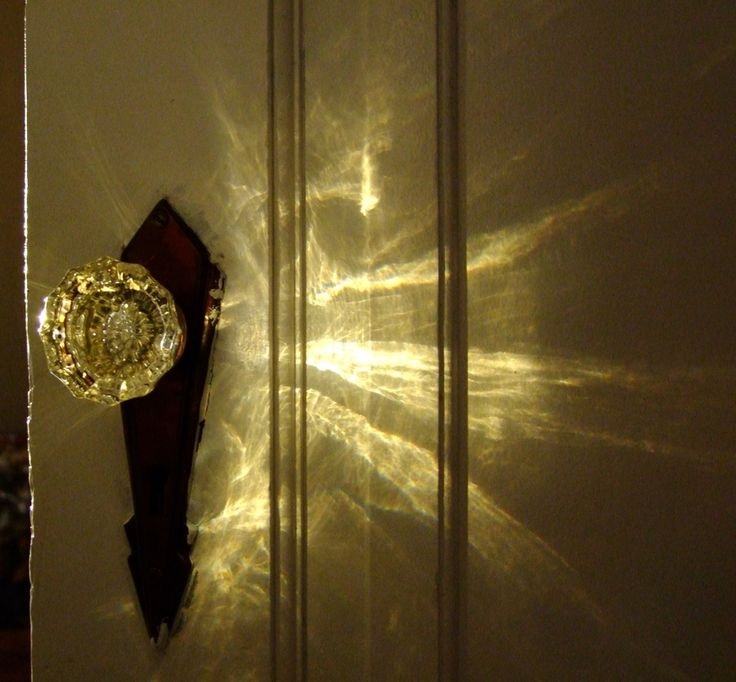
doorknob

Sunlight through an old glass doorknob

headstonecare

Light gravestone maintenance

Queen of the Mist

Queen of the Mist

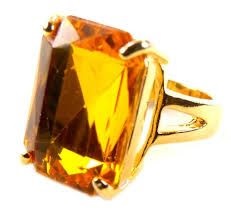
Big Ole' Yellow Ring

Big Ole’ Yellow Ring

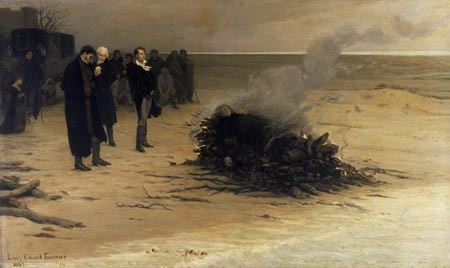
The Cremation of Percy Bysshe Shelley

The Cremation of Percy Bysshe Shelley, by Fournier

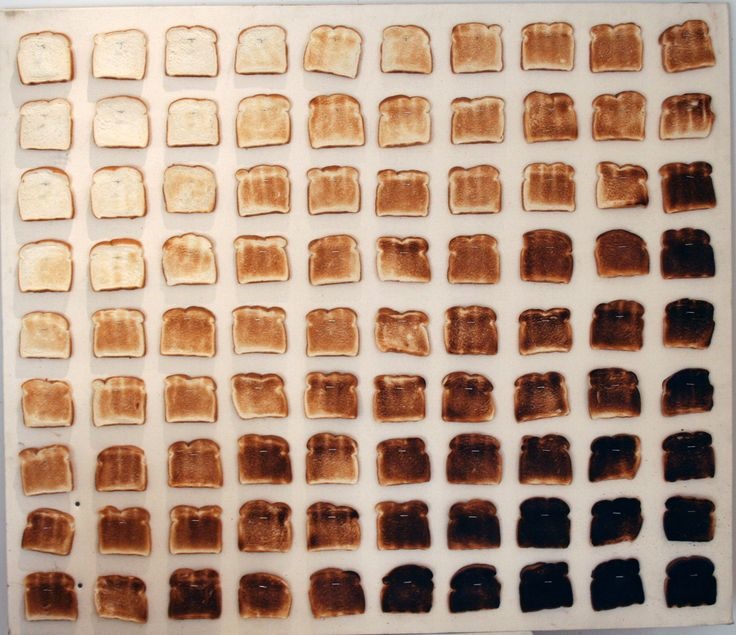
The Toast Spectrum

The Toast Spectrum

我 学 中文 or, How Learning Chinese is Changing My Mind

Our professor renamed each of us in Chinese. This is what he called me.

Our professor renamed each of us in Chinese. This is what he called me. It sounds like “Jenny.”

In three months my second novel, Sistering, will be released. The manuscript has been sent to layout. The cover has been finalized. For now, there’s nothing to do but wait. Authors can go a little mad at this point, second-guessing ourselves, worrying all past successes were just flukes. We could reread our unreleased novels to reassure ourselves they’re good, but if that reading raises any doubts, highlights any passages we wish we could have one more go at, it’s too late. Reassurance could turn to regret. So we leave books caught in Limbo untouched, willing ourselves to trust our editors, our publishers, the promise readers said they saw in us when they reviewed our previous novels.

It’s a funny space to inhabit—too far into the publishing process to look at the book, but too close to publication to look away.

A friend of mine quelled her latest bout of pre-publication nerves with a trip overseas. That’s not possible for me but I couldn’t just sit here and wait. I needed to diminish my obsession with my sophomore book with a new, completely unrelated obsession.

Yes, I get obsessed with things. Most of the time, I like that about myself. Without a propensity for obsession I might not have finished any novels or stayed infatuated with the same man for twenty-one years. Obsessions demand time, attention, and energy. They rob other things, including other incompatible obsessions.

And I’ve found a new one. My current obsession—my respite from fretful excitement over my next novel—is Mandarin Chinese.

What the heck, eh? I’ve been asked that a lot since I enrolled in a Chinese course at the University of Alberta this spring. It began with my interest in getting a Masters of English degree from a school that requires its candidates graduate with intermediate-level knowledge of a language other than English. I don’t believe in fate but I do believe our lives have purpose. At times, we act and at other times we are acted upon. I think I may have been acted upon by the university’s lean spring semester selections and the daily schedules of the schoolboys in my family. Chinese became my only viable course option. If I wanted to sound silly, I’d call it destiny. Whatever it is, I spent my Saturday afternoon sitting in a barber shop while the boys took turns getting their hair cut and showing me flashcards of Chinese characters.

Unlike other east Asian languages, Chinese has no alternate phonetic writing system. Often, casual beginners’ Chinese courses stick to Pinyin (Chinese written in romanized letters familiar to English speakers) and leave characters to native speakers and scholars. That’s not how it is at the U of A. Their course is an intensive, integrated, academic study of Chinese without any room for the mystique that can surround characters. In the words of my professor, “People have to get over it.”

As a storyteller, I’m finding I wouldn’t want to learn the language any other way. Chinese characters are fascinating. They’re also easier to draw and remember than they first appear. My fresh-brained genius days are long past but still, after one week of class, I drove home through Edmonton’s Chinatown reading snips of signage along 97 Street. It’s the road my husband’s office is on, one I’ve traveled countless times. I’d always traveled it illiterate but this time I was cackling with outright glee, alone in my car. “Honorable! That character is honorable! See the cowrie shell radical?”

Traces of the culture and history of the people who developed the language are folded within the characters. The word for “me” has a sword in it. Meaning is lost when characters are ignored. For instance, the words for “he” and “she” are pronounced the same, spelled the same in Pinyin, and can only be distinguished by seeing the characters. It’s an elegant, organic way to express historical social values.

Characters are words made concrete in a way I never experienced writing only in a phonetic language. At breakfast this morning, I read the French written on the side of a jam jar, and thought of how reading in Chinese isn’t much like what I’ve known as reading at all. Reading French or German or even Pinyin is a completely different intellectual and artistic experience than reading characters. Reading characters seems to activate a separate mental faculty—one I’m just discovering in myself. It’s startling, mind blowing in a way that’s almost literal. I am in awe that people—a billion people—can do this. And I’m stunned and a little betrayed that I never knew the world was like this until now.

All of this turns my mind and heart back to my new, unreleased book. And not just that, but everything that lies in the future for me and everyone else. If the world has room for something like Chinese writing—something so huge and pervasive yet hidden by my ignorance—that I didn’t truly notice until halfway through my life, there’s got to be much more in store for us than just the good things we’ve already discovered and enjoyed.

We have a tidy little English word for that sentiment: hope.

A Book Cover for “Sistering”

The cover for my upcoming novel, "Sistering," Aug 2015 from Linda Leith Publishing

The cover for my upcoming novel, “Sistering,” Aug 2015 from Linda Leith Publishing

I’m not usually fussy about design. There is photographic proof of it. When my in-laws-to-be generously organized decorations for my wedding reception while I was consumed with final exams at a university hundreds of kilometers away, they went for the crepe paper aesthetic—streamers and accordion bells. My in-laws are lovely but the crepe paper could only be horrible. I managed not ruin the day or our relationship over it (don’t worry, the person who did the shopping is dead and won’t be reading this). On my wedding day, I stood in crepe paper carnage, held onto the beautiful husband these nice people had made for me, and smiled for the pictures.

Those easygoing design sensibilities of mine become brittle when it comes to my own book covers. Stakes are high with book covers—not as high as at a wedding ceremony but definitely higher than at the crepe-paper reception afterwards. Book covers can tip the scales for readers choosing from a market full of good books. Covers usually convey something about plot—especially in genre fiction—but more importantly, they communicate tone and theme. They hint at the state of mind and heart readers can expect to inhabit. They make vague but real promises. They’re meant to elicit emotional connections. We’re supposed to have feelings about book covers—especially when we’ve authored the stories between them. For a second outing in an author’s career, getting a new cover is a little like getting a new face. And I loved my old face.

Like my first novel, the tone of the second novel is (wait for it) unusual. The structure and storyline are quite different from my first book but I hope my signature oddness (whatever it is, I’m too close to sense much of it) has endured. However, strangeness makes the book hard to characterize with a single illustration. My new book is grave but funny enough that a spooky cover wouldn’t be appropriate. The main characters are women but it’s got nothing like a chick-lit vibe so a cover full of flowers or lipsticks or purses doesn’t make any sense. It’s got elements of a warm, family story but images of sunlit kitchen windowsills would be bad fits too.

I set up my first ever Pinterest board and asked my sisters (blood sister and sisters-in-law, after twenty years with my in-laws, unless I’m looking for a kidney donor, it’s all the same) for cover suggestions and for their opinions on my ideas. But I asked them to do it blindfolded, knowing little more about the book than its title. I’m unreasonable that way.

A few days before the latest Linda Leith Publishing catalogue was finalized, Linda was kind enough to send me two designs being considered for my book cover. Nothing in our official agreement obligates my publisher to ask me anything about design. As is typical in the industry, the publisher buys the rights to produce the book however they see fit. This cover preview was a courtesy and one not every publisher extends. I am grateful for it. And that gratitude made me feel like a terrible person when I admitted I didn’t feel right about either of the designs. The kinds of images we were using—stairways—were the right kind. The concept was good and it was one I hadn’t been able to come up with myself. But I was being fussy about colour schemes and other fiddly details.

IMG_8009

Quit trying to cute it up, Cat

With the deadline for the catalogue looming, we all kept working. In desperation, I even recruited my sister Sara, a photographer, to take photos of the stairwell in her house in case we couldn’t find anything that worked. Her kitten didn’t make it easy, frolicking into the shot over and over again. “Hey, it’s not that kind of book,” I kept telling it. On my way home, I stopped at my sister Amy’s house to take photos of her stairs, as a backup plan for the backup plan.

In further desperation, I reached further into my wealth of sisters. While Sara and I were trying to light her stairwell, my sister-in-law, Stephanie, was picking through the Internet for me. Steph is a writer too—urban fantasy and romance with commercial appeal. She does most of her publishing independently and her best book covers are the ones she designs herself. She has a few favourite resources and on one of those, she unearthed the image of stairs our designer transformed into the book cover.

I love it. The blue-green tones are moody and a bit haunted without being gloomy or melodramatic. The architecture is pretty and visually interesting but not too fanciful or domestic. The title’s font—one of the LLP standbys that give the company’s books their unified look—blends well with the image. And best of all for my poor sophomore nerves, this cover has a comforting sisterly resemblance to my first novel’s cover—the novel that was well-received and not just a fluke, right?

When I posted the finished cover on social media, someone cool and smart said, “I’m picturing the Brady Bunch sisters lined up on those stairs. Except they’re all goth.” I didn’t know until I read it that this was exactly what I wanted to hear.

We Have a Release Date…

Novel release date, 15 Aug. 2015

We’ve got a release date for Sistering, my upcoming novel.

Yes, “release date” can mean many things, especially in a family like mine where one of us works in the criminal justice system.

What I mean by it is the book will be available in print and ebook formats from Linda Leith Publishing, online bookstores, and on the shelves of fine bookstores beginning August 15, 2015.

That is, as long as I get off the Internet and get the latest revisions resubmitted on time. Fighting!

The Linda Leith Publishing Story in the Montreal Gazette

I’m always grateful for anything that extends the lifespan of my first novel. I wrote it in blood and it’s part of my heart. So fittingly, this Valentines Day morning, I woke up to find the book mentioned in the Montreal Gazette newspaper in a feature on my publisher, Linda Leith.

Read the piece here: Linda Leith in the Montreal Gazette

But wait, there’s more. A portion of the interview was video taped and posted on Youtube. It’s worth a listen just to hear Linda’s lovely, one-of-a-kind accent. In this clip she talks about surprising people, overcoming obstacles, and taking chances. To illustrate, she tells the part of her story that includes my story. Lucky me, to have fallen into the hands of someone with an iron stomach and a golden touch for my first, and soon, my second novels.

Watch the clip here: Linda Leith on Youtube

Matters of Discretion, or, One Way Writing is Like Dating

Along with my IRL friends, my kids’ friends, and my enormous family, I’m accumulating a growing number of writers on my social network feeds. I like it a lot. One of the newest additions to my Facebook friends list is American novelist Sarah Dunster. I’ve met her only once, but through her online voice I’ve grown to admire the heck out of her as a human being.

She’s currently pitching manuscripts to major literary agencies. I learned about it through her fascinating practice of reporting the responses she’s been getting to her queries. It only takes one positive response – one agent willing to take on a book project – to end the pitching process. Sarah hasn’t received that one response yet so the replies she’s been reporting have been what dour folks like me would call rejection letters.

That’s not what Sarah calls them — at least, not all of them. She seems to prefer the term “polite letters.” She announces them and will sometimes share excerpts of them – anything positive or personalized. Perhaps it’s a way of celebrating warmth, encouragement, and humanity in a process that usually ends in dismissive dead silence. It’s one of the loveliest, most surprising acts of making lemonade out of lemons I’ve seen in a working writer.

When a “polite letter” arrives at my house, I log it, shred or delete it, don’t mention it to anyone but my husband, and only after I refuse to cook and insist he go out to dinner with me.

Maybe I lack the sweetness to make lemonade. I, the girl who, thanks to my parents, went to eleven different schools before I graduated, learned to cope with disappointment by moving on, starting over. When it comes to something like a book proposal, there’s nothing wrong with that strategy. The sooner a rejection is obliterated, the better for me and everyone around me. Get on with it!

I’m convinced both Sarah’s way and my way are fine approaches to rejection. As long as we go on writing and improving our writing, it doesn’t matter how we handle setbacks. Into the shredder or onto Facebook – either one is fine. Looking for the bright side or the blank slate — there’s no wrong choice.

Sarah’s sharing of her rejections on a social network is, by definition, social. My choice to not share mine isn’t meant to be social – but it is.

When an acceptance letter, an award nomination, a good review, or any helpful press coverage comes my way, I tell everyone. I hit Facebook, Twitter, Tumblr, and this blog to let everybody know my good news. And then I refuse to cook and insist we go out for dinner.

Sarah shares her good news too. It’s on her Facebook feed right along with her “polite” letters. Every writer does this. It’s 2015. The world is chock-full of books and if writers won’t talk about our own work, no one else will.

It’s especially true for writers working with small presses with constrained marketing resources. There are publishing companies (not mine, thank goodness) that require authors to prepare “marketing plans” and submit them along with manuscripts when there’s still no publishing agreement in sight.

My small publisher makes a little go a long way. Thanks to their efforts, I had good publicity for my novel’s debut. Still, my personal contributions of time and online platform-space were indispensable in promoting the book. That’s how this industry works. We may cloak it in humblebrags and earnestly sheepish modesty but writers cannot opt out of our own buzz and expect it to continue.

Buzzing really bugs some people. And not everyone caught in my social network puts up with me by choice. Many are connected to me by birth or other kinds of social superglue. They’d have a hard time tuning out my book promotion racket if they found it annoying. I know it. I’m sorry. And if I want to keep working in this field, I have to subject them to it anyway.

This is where not sharing my rejection becomes social after all. If I was more like Sarah — reporting setbacks with frank optimism, not fishing for compliments — maybe my good news would be easier for onlookers to stomach when it finally comes along. Talking about it would seem more balanced, less like a double standard. I wouldn’t be a humblebragger. I’d be simply humbled. Maybe it’s selfish — even dishonest — of me to advance only good news.

Here’s some honesty. I’m not yet emotionally equipped to post my rejections. I probably never will be. While doing so may be useful for writers like Sarah, and satisfying for a few fed-up readers, it has no value for me. It hurts. I won’t do it.

It’d be like publicly posting something about asking someone to love me and having them turn me down. Marketing writing is actually a lot like dating. Some people want to chronicle every detail of the chase, every high and low; some don’t. In my dating days I was never one to announce I liked a guy until he’d already made a very clear first move. It’s not that I never pined for anyone. It’s just that I didn’t talk about it. That’s how I write too – never announcing my submissions until a successful deal is struck. Neither approach to dating or to writing makes anyone selfish or bad. It’s a matter of discretion, not a character flaw.

I’ll always have more to lose, more to suffer, in flaunting my failures than anyone will have to gain in inspecting them. I still just need to move on. This is a tough business. Trust me: I do get bad news, plenty of it. In lieu of public rejection letters, let’s let this post stand as the official, general acknowledgement of all my bad news, past, present, and in perpetuity. It will remain here for easy reference any time my good news feed gets insufferable.

Announcing Book #2

pubagreementToday I signed and mailed away the publishing agreement for my second novel. Once again, I’m working with Linda Leith Publishing in Montreal and the novel is a blackly comic literary treatment of family life. Our projected release date is Fall 2015. And I still can’t believe this is really my life.

Watch this space for more and more and more details to come.

Lo, the First Foreigner on “The Good Word” Podcast

After writing, my favourite medium is radio — no make-up, all talk. Podcasting is a lot like radio — radio without all the “ums” edited out, long-form radio where guests can really cut loose and do some damage. This is a podcast I recorded last month with Nick Galieti, a book industry guy in Utah.

We talk about my accent, my family, Mormonism, literary elitism, the Republican Party (a first for me in an interview, for sure), my marriage and the lighter side of death schtick, and the mysterious geography of the second largest country on the globe.

Nick: So how is Canada today?

JQ: Canada is — is enormous.

Nick was a fine interviewer and it turns out he served with my cousin-in-law when they were missionaries.

Check out the podcast if you’d like to hear some unfortunate, spontaneous voice acting, a little bit of Mormon jargon, and my six-year-old coughing through a door. Must have been a good time; my final word was “Woo hoo!”

Jennifer Quist Interview with Nick Galieti

Getting Ready for the Blue Met

I’ve booked my ticket and my cheap but not inexpensive hotel room and I’m all set to fly to Montreal in four weeks for the Blue Metropolis International Literary Festival.  It’ll be my first time in Montreal outside the airport or the freeway and my first visit to a literary festival in any capacity.  In keeping with my out-of-step career path, at my first literary festival I’ll be appearing as an author with three spots on the programme.  As always, I’m humble and happy to be included in such a great event — and glad everyone’s cool with me performing only in English.

Link to the festival programme 

Writing Without a Grant: Girl in a Post-Shteyngart World Tries to Feel Smug About It

If Can-Lit is subdued by government grants it’s got nothing to do with me.

Between spurts of productive work on my latest just-keep-swimming short writing project, I indulged my bad habit of listlessly scrolling through my Twitter feed.  The Canadian literary community – for all you normal folks out there – is ravenous for controversy.  We love and hate to have a focal point for cheeky, gleefully indignant tweets and blogs.  This winter, controversy flared up around comments 2012 Giller Prize judge Gary Shteyngart made while drinking with a reporter in New York City.  He said something about Can-Lit lacking risk-takers.  His now notorious explanation was that Canadian writers “all get grants” and therefore “they want to please the Ontario Arts Council, or whatever it is.”

Now, anyone who follows this blog knows I came to be a working writer through unconventional channels.  I don’t have an MFA from any of the creative writing programmes where Canada’s up-and-coming literary talent is usually hot-housed.  I live in a rural area where the local literary fiction circle includes me and my lovely neighbour.  I have never worked in publishing.  And, I have never received any grant money.  No arts council – certainly not the faraway Ontario Arts Council – has ever funded my work.

In the spirit of Can-Lit-Da’s relentless self-reflection, I considered what Shteyngart’s comments (which he later joked should be taken in the context of his “drunken stupor”) say about me.

For one thing, there isn’t much room in his comments for me.  I disprove his over-generalization.  I wrote a manuscript and sold it to a traditional literary publishing house without applying for, let alone getting, a government grant.  Maybe I can ignore everything Shteyngart said and join the cheerleaders tweeting titles of great, “risky” Canadian books which may not have been (but probably were) written by grant recipients.

Or, I could feel robbed.  How fair is it that I work in a country that seems to have an international reputation for being glutted with arts grants of which I’ve never been paid my share?

Or, I could embrace Shteyngart’s assumption that writing needs to be somewhat staid in order to get the bureaucratic rubber-stamping of a government grant.  I could try to spin my grant-free-working-writer status as a sign that my stuff must be subversive and edgy — the kind of thing lucidly drunk, chatty New York City hipsters might find interesting.

There might be a bit of support for the third option – the fun, cocky, unlikely option.  We haven’t had a bad review of my novel but we’ve seen it described over and over again with words like “odd, strange, surprising” or “unusual.”  I knew when I was writing the book that it was peculiar and I had to keep writing it that way regardless.  And now — if Shteyngart is right — I have the distinction of writing it without a grant and thereby proving what a weirdo I am.  I should revel in that, I guess.  There’s not necessarily anything wrong with it.  There could be a whole lot right with it.

Yeah, all this reasoning is a bit of a stretch.

I don’t know if what I do is at all risky.  Frankly, it’s 2014 and I’m not even sure I’d recognize a new literary risk if I saw one.  And I can’t deduce a risk by whether there’s anything entered on the grants line of an income tax form.  Like most people, I just write what I want to write, whether anyone wants to pay for it or not.