Carols, Angels, Babel, and Noona

babel

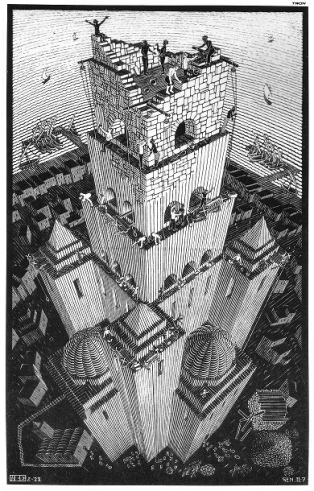
M.C. Escher’s “Tower of Babel”

It’s Christmas, a fine time of year to tell a story that begins in church. Recently, I was in a congregation singing “It Came Upon a Midnight Clear.” In the lyrics of the little-known later verses, the ones I had to peek at the hymnal to remember, the song describes the world we live in. It says, “And ever o’er [the world’s] Babel sounds, the blessed angels sing.”

Of course, “Babel” refers to a story early in the Bible about the social catastrophe of the Tower of Babel. Humanity was glitching out and needed its reset button hit–again. But instead of suffering another flood, our language was scrambled. It was the end of the world. Everyone was dry and safe but the world that existed before language was “confounded” was over.

Whether we read the Bible literally or not, the tower story reveals something about ourselves. The fact that a story like this could endure for so long and be so widely spread betrays the profundity of our sadness—maybe even our terror—at the barriers that divide us from each other. The Tower of Babel pricks at our collective longing for a world where “the whole earth [is] of one language, and of one speech.”

With great difficulty, language barriers can be overcome.  They are overcome, all the time. In many ways, this overcoming proves that our higher nature—the one allied with the Christmas carol’s “blessed angels” who see “all the weary world” at once—can rise above the “Babel sounds” of our lower, confused and tribal nature that would rather we huddle in exclusive groups, throwing rocks, registering and monitoring people whose families don’t sound like ours. But separation does not make us happy. On some level, when we’re calm and honest with ourselves, we all know this. It’s one of the oldest lessons there is.

In everyday terms, told without angels or towers, here’s what I mean.

For the past two semesters, my Chinese class partner and school bff has been a 27-year-old, world-travelling, polyglot, sweetie-pie, veteran of the South Korean navy. One morning, I jokingly referred to myself as his noona (Korean for a boy’s older sister) and the rest is history. Noona, noona, noona~~~

A few weeks ago, my husband and I were having lunch with him. English is the third of the five languages he knows and sometimes, understandably, his talk gets tangled. He stopped himself mid-sentence with a bitter, “Oh, my English!” Actually, it wasn’t so bad. I rephrased the complicated statement I assumed he’d been trying to make and repeated it to him. He didn’t reply with his voice. Instead, he smiled, put one hand over his heart, and extended his other hand across the table, toward me. I recognized it as the universal sign for, “This person knows my heart.” It was beautiful. I will remember what he looked like, sitting there with us, for as long as I have a mind that remembers anything.

Ask anyone: overcoming a language barrier takes more than flashcards and worksheets. Memorization and practice can train us to function but they won’t boost us all the way over the wall to where people really live. True understanding of anyone from outside (or, heck, from inside) our language group requires bringing that hand to the heart, sharing and connecting in sublime ways beyond vocabulary. Any barrier is best overcome by acts of love and brotherhood—noona-hood.

All of this is what I want to say when I’m asked why I am slaying myself to learn a new language. The more people we can talk to, the more people we can love. And when we put ourselves in a setting where our native language is not the dominant one, we learn to pay more attention to what people mean rather than just what they say. When we can only translate part of a communication through language alone, we learn to tune in to other cues—obvious ones we can observe with our senses like gestures, facial expressions, and non-verbal vocalizations, as well as cues we sense with our empathy, our feelings, with our spirits.

Why learn another language? Do it to for the resume, sure. But also, do it for love. How corny is that? Corny enough to be a Christmas song, one that looks forward to the day when “the whole world send back the song, which now the angels sing.”


This Is What a Good Day Looks Like

I emerge from 准备考试 (where I’m all about midterms in a class of super-smart people all clutching raw scores of over 90% which will eventually be hammered into a horrifying curve) to share this post from the Literary Press Group’s All-Lit-Up blog. It’s about both of my books.
Go ahead and read it here.

The author, Leonicka Valcius, compares my novels’ treatments of themes of family, love, and death. She even picks a favourite of the two books–and it’s not the same as mine. The piece is long and thoughtful and I enjoyed it immensely, reading as my bus rolled along Jasper Avenue, away from the restaurant where I’d had lunch with my tall, fancy husband and, for the first time this month, we hadn’t been asked if we wanted separate bills.

I got home and made dinner for my family, almost from scratch. And in the evening, whilst watching Chinese TV on the exercise bike, I understood not only a phrase but its cheeky play on words that doesn’t translate into English–because no matter what grade I end up with I am learning something.

That’s a good day.

Ode to an #uglyfeminist

I do not wish to be beautiful. I’ve learned a lot and lost nothing of lasting importance by going through life far from beautiful. I am complaining about nothing. I wouldn’t be thinking about ugliness at all if it hadn’t come to the social media forefront recently with the Twitter hashtag #uglyfeminist.

The hashtag is as troll-ridden as it sounds. It’s not a springboard for enlightening discussion (something the Internet is not known for anyways) but a brawl. On one side of it are misogynists who think it’s clever to reduce millennia of struggle for safe and equitable conditions for half of humanity to a joke where women they do not find sexually attractive are simply frustrated at being unworthy of the social favour men mete out. On the other side are women posting pictures of themselves showcasing their conventionally attractive looks to—I don’t know—prove #notallfeminists are ugly. Some feminists actually do fulfill their social obligation to look the way men want them to, and shame on men for not fulfilling their side of the social contract, I guess.

Now, I won’t tear down my Twitter sisters any further for living their struggle in the ways they see best. I continue to believe that tossing out wedges for women to drive between each other—like the #uglyfeminist hashtag—is an old device men use to make peace for themselves by keeping women preoccupied attacking each other. I won’t do it. But I will share a few things I’ve learned about why ugliness matters.

Ugly is the opposite of beautiful – the opposing end of a crude, arbitrary, culturally constructed spectrum of physical attractiveness. As long as the lights are on, the appearance of beautiful humans affects the people around them. Beauties are able to change other people’s behaviours, beliefs, and sway their emotions just by looking the way they look. Don’t argue. If this wasn’t true, the multi-billion dollar advertising industry would not exist in the form we all know. Most of the time, being beautiful makes the daily hassle of social life easier. It’s a form of privilege and power.

On the opposite pole of the spectrum, we ugly folks have our own kind of power over people.  Like beautiful people, we affect other’s behaviours, beliefs, and emotions simply by showing up and looking the way we do. The effects are different in nature but not in potency.  But where the beautiful can inspire warmth and affection they may not deserve, we can inspire disgust and derision we don’t deserve.

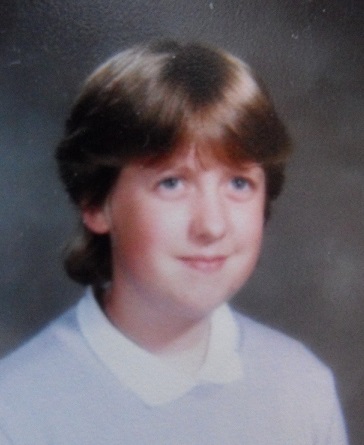
I’ve experienced disgust and derision based on my looks. Most of it happened in junior high school when both my looks and the people around me were at their worst. I’ll spare us the details but on a rainy day in 1987 I was voted ugliest girl in school by a group of loud, rude boys who didn’t know me at all.

They were personally offended that a girl would let herself be so unattractive to them. My looks were transgressive. They flouted the social code that promises boys they’re important and social life ought to be constructed to keep them happy, comfortable, and gratified. As part of that social code, girls are expected to look the way boys want us to.

By being ugly, it was as if I didn’t know how important boys were—or worse—that I knew and I didn’t care. The boys knew in a tacit, latent way they probably didn’t fully realize they understood, that I needed to be punished for my transgressive ugliness. If looking bad all on its own wasn’t aversive enough for me (it was) they would provide the aversion themselves by humiliating me in public. And that’s what they did.

Girls responded to my ugliness differently. At nearly every all-girl-party I went to—especially ones with older, big sisterly girls—I would be given the gift of a makeover. Someone would stick my head in the sink and set about changing my life, just like in the movies. In the late 1980s this meant curling irons, hairspray, and loads of eye makeup. It was sweet and noble and futile. When the big makeover reveal moments fell flat (unlike my high, sprayed bangs) I felt an especial hate for my ugliness, for its imperviousness to makeovers—its rejection of my friends’ love and goodwill.

Sensing my parents’ reaction to my “awkward phase” was bittersweet too. “Awkward” is a term grownups apply to gently describe the unbalanced strangeness in the form and features of children they remember as silky, sparkly babies.  Adults say “awkward” like an apology, with longing and grief. Longing and grief spring from love. There’s heartbreak in the word “awkward.”

I wish I could say I was ugly as part of some precocious feminist stunt—that it was about rebellion and wilful disobedience to oppressive social norms. That wasn’t it at all. I was ugly because I needed my braces off. I needed my body to relinquish the emergency weight it added to get me through the growth spurt that never came. I needed my hair to grow out of the awful cut my well-meaning mother chose for me. I needed to start buying my own clothes. I needed the 90s to start so everyone else would wash off their eyeshadow, let the aerosol out of their bangs, and join me in low maintenance grooming regimens. I needed mean-boys to grow up. Eventually, all of that happened.

Is being ugly what made me a feminist? It must have been one of thousands of factors. Did it make me the frustrated, bitter, unwanted man-hating caricature of the #uglyfeminist hashtag? Clearly, it didn’t. Most of the people who mean the most to me are men—my husband, my five sons, my father, brothers, cousins, brothers-in-law, friends, mentors, colleagues. I don’t spend much time baking them cookies or ironing their shirts but I do love them in my own way.

And it goes like this: a few years ago, I caught one of my teenaged sons sharing an unflattering photo, a candid shot, of a 13-year-old girl we know, the daughter of a family friend. He and a male friend who had never met this girl were laughing, mocking, and posting the photo in a fairly obscure region of a social media website. The odds of the girl ever seeing it herself were low. That didn’t matter.

“Honey, don’t,” I said to my son. “That girl is me.”

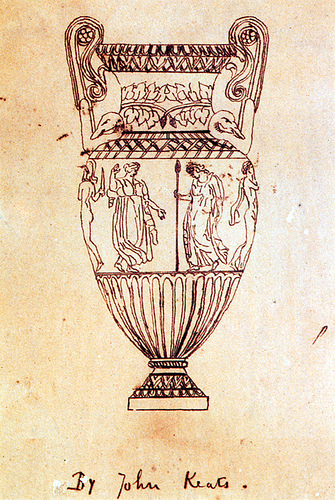
This is the gift I, an ugly feminist, try to give to men instead of beauty. It’s truth, which, as sweet, silly Keats says, is beauty after all.

A Book Cover for “Sistering”

The cover for my upcoming novel, "Sistering," Aug 2015 from Linda Leith Publishing

The cover for my upcoming novel, “Sistering,” Aug 2015 from Linda Leith Publishing

I’m not usually fussy about design. There is photographic proof of it. When my in-laws-to-be generously organized decorations for my wedding reception while I was consumed with final exams at a university hundreds of kilometers away, they went for the crepe paper aesthetic—streamers and accordion bells. My in-laws are lovely but the crepe paper could only be horrible. I managed not ruin the day or our relationship over it (don’t worry, the person who did the shopping is dead and won’t be reading this). On my wedding day, I stood in crepe paper carnage, held onto the beautiful husband these nice people had made for me, and smiled for the pictures.

Those easygoing design sensibilities of mine become brittle when it comes to my own book covers. Stakes are high with book covers—not as high as at a wedding ceremony but definitely higher than at the crepe-paper reception afterwards. Book covers can tip the scales for readers choosing from a market full of good books. Covers usually convey something about plot—especially in genre fiction—but more importantly, they communicate tone and theme. They hint at the state of mind and heart readers can expect to inhabit. They make vague but real promises. They’re meant to elicit emotional connections. We’re supposed to have feelings about book covers—especially when we’ve authored the stories between them. For a second outing in an author’s career, getting a new cover is a little like getting a new face. And I loved my old face.

Like my first novel, the tone of the second novel is (wait for it) unusual. The structure and storyline are quite different from my first book but I hope my signature oddness (whatever it is, I’m too close to sense much of it) has endured. However, strangeness makes the book hard to characterize with a single illustration. My new book is grave but funny enough that a spooky cover wouldn’t be appropriate. The main characters are women but it’s got nothing like a chick-lit vibe so a cover full of flowers or lipsticks or purses doesn’t make any sense. It’s got elements of a warm, family story but images of sunlit kitchen windowsills would be bad fits too.

I set up my first ever Pinterest board and asked my sisters (blood sister and sisters-in-law, after twenty years with my in-laws, unless I’m looking for a kidney donor, it’s all the same) for cover suggestions and for their opinions on my ideas. But I asked them to do it blindfolded, knowing little more about the book than its title. I’m unreasonable that way.

A few days before the latest Linda Leith Publishing catalogue was finalized, Linda was kind enough to send me two designs being considered for my book cover. Nothing in our official agreement obligates my publisher to ask me anything about design. As is typical in the industry, the publisher buys the rights to produce the book however they see fit. This cover preview was a courtesy and one not every publisher extends. I am grateful for it. And that gratitude made me feel like a terrible person when I admitted I didn’t feel right about either of the designs. The kinds of images we were using—stairways—were the right kind. The concept was good and it was one I hadn’t been able to come up with myself. But I was being fussy about colour schemes and other fiddly details.

IMG_8009

Quit trying to cute it up, Cat

With the deadline for the catalogue looming, we all kept working. In desperation, I even recruited my sister Sara, a photographer, to take photos of the stairwell in her house in case we couldn’t find anything that worked. Her kitten didn’t make it easy, frolicking into the shot over and over again. “Hey, it’s not that kind of book,” I kept telling it. On my way home, I stopped at my sister Amy’s house to take photos of her stairs, as a backup plan for the backup plan.

In further desperation, I reached further into my wealth of sisters. While Sara and I were trying to light her stairwell, my sister-in-law, Stephanie, was picking through the Internet for me. Steph is a writer too—urban fantasy and romance with commercial appeal. She does most of her publishing independently and her best book covers are the ones she designs herself. She has a few favourite resources and on one of those, she unearthed the image of stairs our designer transformed into the book cover.

I love it. The blue-green tones are moody and a bit haunted without being gloomy or melodramatic. The architecture is pretty and visually interesting but not too fanciful or domestic. The title’s font—one of the LLP standbys that give the company’s books their unified look—blends well with the image. And best of all for my poor sophomore nerves, this cover has a comforting sisterly resemblance to my first novel’s cover—the novel that was well-received and not just a fluke, right?

When I posted the finished cover on social media, someone cool and smart said, “I’m picturing the Brady Bunch sisters lined up on those stairs. Except they’re all goth.” I didn’t know until I read it that this was exactly what I wanted to hear.

On the One Hundredth Anniversary of my Grandmother’s Birth

Thelma Mae Bruce, circa 1920

Thelma Mae Bruce, circa 1920

I was three months pregnant with my third son when our  washing machine broke. The tub would fill, spin, and drain but the agitator wouldn’t turn. We had no money and a lot of laundry. Something needed to be done. I rolled my pants over my kneecaps, climbed onto the edge of the washing machine and stomped the clothes clean with my feet and legs. From half inside the machine, I realized that, just for a moment, I had become my grandmother – and I was grateful and astounded such a thing could happen.

If my grandmother was still alive, she would have celebrated her one hundredth birthday yesterday. And by “celebrated” I mean stood up beside the dinner table while everyone else ate. I called her Gram but her name was Thelma, a word now used in our family as a verb describing a hostess who won’t stop working to sit down with the rest of the party. “Nah, I’m fine. You guys go ahead. I’m just gonna Thelma.”

If I lived 600km closer, I would have joined my dad and my aunties yesterday at a big Thelma Day dinner. It looks, from the picture, like they went to one of Gram’s favourite prairie Chinese food smorgasbords.

Gram was loving but not always easy to feel close to. We were close anyway. At size 5, she was one of the few adults I could trade shoes with – not that we ever did swap her hospital inspired Naturalizers for my chunky-heeled boots. We were both oldest daughters of large families who had to take on work as teenagers to help our parents. My load was lighter and I was able to stay in school but when Gram quit in the eighth grade, she quit for good. I never heard her complain but when I graduated from high school at the top of my class she bought me a card and instead of just signing her name, as she usually did, she wrote “very proud of you” and my heart spilt in two. We’re both daddy’s girls, cleaning ladies, fast food super stars — doctor snarking, sibling scolding, hard coughing, cat ignoring, short ladies.

She’s a figure recurring throughout my creative work. The first piece I ever did for CBC Radio was a personal essay for Tapestry about the work Gram and I did together tracing our roots from New Brunswick to Scotland. In my novel, I shamelessly lifted the character of the grandmother who sleeps on a saw bench the night before her husband’s funeral from a scene out of my own childhood, with my own grandmother.

When she was nearly dead and losing her hearing, many voices slipped out of the pitch where she could still hear. But I knew where to find the right range and she could always hear me, right to the end. I stood up to speak at a funeral for the first time when she died.

So I felt like an idiot going to bed after midnight on Thelma Day, the one hundredth anniversary of my grandmother’s birth, without doing anything to observe it. While my family members were eating commemorative dinners, I had done nothing and said nothing about it as I fed my kids a rushed meal before darting off to take the 9-year-old to judo lessons. I had eaten standing up while packing his gym bag. I had dropped him off and driven to the senior’s home where my mother-in-law lives and collected her laundry. I had tried to phone my favourite schizophrenic loved one, found out his line was disconnected, and arranged to pay the bill to hook him back up. There are lots of good ways to observe Thelma Day, even if we happen upon them unknowingly while doing what she would do if she was here.

More than any inspiration she’s given me creatively, Gram inspires me spiritually. For our family, she was a Miriam without a Moses. Her Promised Land is a hard brilliant place without anywhere to sit.  Someday, I hope to stand with her there.

Happy Thelma Day, everyone.

Laugh Track at the Beauty School

This is not a picture of my four sisters and me; neither is my next novel.

I am one of five sisters. I was born first and in exchange for having the best memories of our parents when they were young and cool, I missed out on adventures my sisters had together after I swore off women for a life with my husband and sons. Different combinations of my sisters have traveled to Disneyland, New York City, Winnipeg, Amsterdam, the Northwest Territories, and the old gravel pit in Prince George all without me.

This year, for the first time, I made it to one of their “girls’ trips.” I met the three of my sisters who aren’t currently breastfeeding (see, someone’s always left out – it’s not personal) in Calgary to spend a weekend together.

I am terrible at ordering and it was over a bowl of thick green sauce at dinner that I taught the girls a new word: sistering. It’s like mothering only just between us. And then I warned them about my second novel. It’s about a group of five sisters.

No, it’s not about us.

If it’s not a tribute to our family why stretch the cast over five main characters? Well, because it’s not a stretch. There were five Spice Girls, five Go-Gos, five Miss Bennetts in Pride and Prejudice, and, of course, five Dionne quintuplets. My mind isn’t the only place where a group of five girls is the only size that makes sense.

It was impossible to write the book-sisters without invoking bits of my real sisters. I used some of our quirks and experiences as inspiration, like any writer would have done. To add to the tangle, our family is large. On my side alone there are seven siblings, seven spouses, one ex-spouse, and twenty-two nieces and nephews. It’s hard to create characters and situations that don’t overlap in some way with people I know very well simply because I know so many people so very well. When we’re primed to look, even general coincidences can seem like deliberate rip-offs. For instance, one of the sisters is the book is a nurse, just like Amy. One is divorced, like Sara. One is married to a man who’s adopted, like Mary’s husband. These elements aren’t uncommon inside or outside literature. Moreover, my book’s story wouldn’t work without them. And the story definitely wouldn’t work without the intimate understanding of sisterhood we sisters have given each other.

None of this is the same thing as writing a story about my sisters.

Still, I submitted to the girls teasing me about the book for the rest of the weekend. They let me have it, with that sharp sweetness of theirs and lots of laughter.

The next day Amy had planned girlie activities for us. We spent the morning shopping. That was easy. The afternoon was more difficult. The other girls wanted to go to a spa together. The only place that could book all four of us at the same time was not exactly a spa but a beauty school. I don’t want to use its real name so let’s just call it – oh, I don’t know – Carvel Mollege.

I’d had a facial only once before. It seemed like witchcraft – a superstitious ritual in smearing stuff on my face and wiping it off, a cycle of application and removal. The key to a successful facial is to end it immediately after finishing a thorough removal.

I was about to learn this.

If I’d been a more experienced exploiter of the pink ghetto that is esthetics, I would have realized how strangely my facial was unfolding and made some kind of protest. As it was I laid under a towel that smelled like someone else while a college girl let facial goops drip into my hairline, while she failed to rinse the cocktail of creams and toners and tonics off my skin.

At some arbitrarily determined point she said we were done. My skin felt tight and tacky as I stood up and looked for a mirror. There was only one in the room, mounted too high for me to see much of my face in it. All I could see was a dark, oily perimeter where my hair had soaked up the skin treatments.

Not a good sign.

The supervising instructor was waved out of a classroom to inspect my student’s work. “How do you feel?” she asked me.

“Pretty sticky.”

“From the moisturizer,” she finished for me.

I went downstairs, fingering the gummy surface of my face. In the lobby, my three little sisters were sitting in a love seat meant for two. They looked great. But when they saw me, they looked concerned – and amused. That’s when I knew for sure something wasn’t right. While the receptionist ran my card through the machine, I flexed my sticky face until it cracked. I stood in the lobby and peeled a sheet of – something – off my face.

Across the room, my sisters were cackling. “Why’d it have to be Jenny?”

Between my fingers I held a transparent mask of most of my face. It reminded me of a bored habit I had in grade four, pouring white glue into my hand and letting it dry before trying to peel it off in one piece. This glue mask was a good one. Every hair of my left eyebrow was perfectly visible.

I rolled the film into a ball between my fingers. “I’m not paying for this.”

My sisters kept laughing.

“I understand they’re just students,” I told the receptionist. “But look at my sisters: they’re not down here peeling their faces off.”

No one argued about refunding my money. Maybe they should have. My sisters and I had spun the barrel in a game of college student esthetician roulette and on our fourth shot, my shot, the game fired its inevitable concluding round.

We got in my minivan and drove away, off to a dinner where I would order another plate of food I wouldn’t like. Mary told me how radiant I looked. Amy lent me some makeup. And we never stopped laughing. That’s my sisters: the laugh track of my life, calming me down, cheering me up, convincing me this drama is much more fun than any amount of reason says it should be.

When my new book appears next year (please read it) don’t skip the dedication page. But just in case, let me reveal now how it will read:

For Amy, Sara, Mary, and Emily

All of whom inspired, none of whom is depicted in this book

How to Read Minds in the Check-out Line: Hints for Parents of Toddlers

My uber-toddler. It was the best of times, it was the worst of time.

My uber-toddler. It was the best of times, it was the worst of times.

Those social media posts and blog entries written by moms of young children, complaining about the way strangers interact with them in public spaces — I could have written those. In fact, I once wrote and voiced a five minute piece for CBC Radio about a low point in my public mothering of little kids.

My youngest child is the ripe old age of six and doesn’t attract much attention in grocery stores or restaurants anymore. However, in order to arrive at this time of life, I first had to run the gauntlet of five toddlers.

All five of my kids had monster moments but two of my toddlers – the first and the fourth – consistently and horrendously stood out when we were in public. They were what kind people called “handfuls” or “going concerns” and what not-so-kind people might’ve considered proof that there’s no hope for the future of humanity. Thanks to bad mate-selection on their father’s part, these two also out-class me in every measure of relative size and strength and I often looked more like their underqualified, overwhelmed, soon-to-be-fired nanny than their biological mother.

What I mean to say is I fought in the trenches of toddler-motherhood for as long and as hard as just about any other women ever to complain about it. I hear you, sisters. I remember. Three short years ago, I was you.

I want to show support for mothers of younger children – treat toddler-moms and their kids the way I wish people had treated us. I want to give the assurances I wish someone had given me – even if it’s going to be a few years before toddler-moms will be able to believe me.

Of course, what I have to say might not be true for everyone witnessing the struggle. I know that. I went on the radio and testified about it to the whole country. Yes, there are plenty of grownup weirdos who have no idea how to behave in public and feel they can scold other adults for things that do not concern them. I don’t know what they’re thinking.

But I can speak for myself. And between me and more than a few other parents with older kids, it’s safe to assume there are allies among the onlookers. It’s safe to assume:

No one cares about the noise and mess kids make as much as their parents do. Everyone in line at the Wal-Mart has ninety-nine problems and someone else’s little kid isn’t one. To strangers, little kids are pretty much white noise – alright, maybe beige noise but definitely not the red noise they sound like to their own parents. What might be interpreted as hostile glaring from strangers is likely just bored staring, idle bemusement, a lack of anything else to look at. We won’t remember or resent a noisy little kid. But thanks for the floor-show while we wait in line.

Wanna know what we’re thinking of that noisy little kids’ parents? I’ll tell ya. Nothing. We’re usually not thinking about them at all. Like most people, we have no trouble staying busy thinking all about ourselves. Most experienced parents are only too happy to let newer parents enjoy absolute rule in their own jurisdictions. There’s nothing we want more for toddler-wranglers than the free exercise their own good judgment. Maybe we’re jerks but compassion isn’t the only thing on our minds when faced with someone else’s struggle. Sometimes, it’s more like, “Better them than me.”

Our smiles for goofy little kids aren’t supposed to encourage them to keep acting up. We usually give frazzled moms space, willfully trying not to notice them. But kids don’t understand space the same way we do and can wind up too close to ignore. At times like these, our smiles and friendliness are meant to show goofy kid’s mom that he’s not bothering us nearly as much as she might worry he is. It’s a simple sign of good will. His mom is having a hard time and a common, deeply ingrained social reaction to seeing one of our kind in distress is to offer non-verbal reassurance and comfort with a smile. We don’t expect those moms to smile back at us – heck knows we never did – but if they did, it’d probably relieve some tension. It’d feel better than scowling and making a retort about how it’s not okay. The truth is, if no one’s being hurt, it probably is okay.

Sometimes someone is being hurt and it’s hard for moms of older kids to ignore years of well-learned reflexes and let it go. Raising toddlers leaves us with something like a post-traumatic stress disorder, hurling us into flashbacks of our very worst days – the ones when we went to the emergency room hoping the medical staff wouldn’t call the police about our kids’ bizarre but completely accidental injuries. When a fellow mom is distracted and her little kids look like they’re in danger, we might break down and squawk out a warning.

This was me, a few weeks ago. I was waiting in a slow, painful line while a mom with two young kids was paying for her purchases. She was focused on the cashier, trying to move along as quickly as possible, and her older daughter was pushing the baby back and forth in a shopping cart. It was a harmless, boring game. It was so boring the little girl added a new element. She pushed the cart as hard as she could and let go of the handle. The baby was launched toward a metal shelf. His mom was still busy with the cashier and hadn’t seen any of it. So this horrible voice called out “Excuse me, your daughter…” It was my voice. The mother whirled around, lunged for the handle of the cart, and turned back to the cashier without looking at me. She wasn’t grateful. She was ticked off. I get it. It’s embarrassing to feel like we’ve been called out in public for making a mistake. It’s embarrassing to be the one doing the calling. But accidents happen to everyone, even good parents. People jump in to help not because they don’t care about adults but because they do care about kids. That sounds sappy but it’s true.

We’re not trying to sabotage other parents. Everyone in the mall is muddling through, trying to figure out his or her own humanity. For me, being a good human means if I see a toddler standing alone screaming in a big space full of strange adults I will always rush up to him and say, “Hey, honey, are you okay? Are you by yourself?” Among a thousand reasons, I will do this in case someone who may not be such a softie steps in to take advantage of the situation. There is no way for me to know the kid’s mom is standing behind a nearby planter trying to teach him a lesson about the perils of being a doofus who won’t stop running away. I raised a kid exactly like that. I know how frustrated and desperate he can make his poor mother. But I also know how relieved and grateful I was every time my son truly was lost and someone reached out and rescued both of us. Personally, I’m happier living in a world where the “natural and logical consequences” of my kids’ bad behaviour is encountering compassion from someone with no specific duty to love and care for them who’s willing to love and care for them anyway.

Toddler-mothering sisters, we’re in this together, though maybe not at the same time. We’ve obsessed over the same little failures, exulted in the same small successes. Maybe no one has more confidence in young mothers’ abilities to overcome than mothers just a few years ahead of their schedule. We’ve lived through toddlers and emerged largely undamaged. More importantly, so have our freshly civilized older kids.

I’m Back — or, Someone Like Me

We — my family of seven — have moved to a new house in a new city. Though the physical act of moving is over we’re still not quite ourselves. Frankly, we never will be. We’re different now. I’ve moved enough to believe that, in time, these new differences will be mostly for the best. And I know “for the best” hardly ever means pleasant or easy.

One comfort I have as I and six other pieces of me venture into the more-than-ordinarily unknown every day is the house we have to come back to. Unlike all the other houses we’ve owned, this one was home to another family before us. They built it to suit their fancies and lived here for twenty-four years. Naturally, it’s a bit quirky — a bit haunted.

Here are some highlights.

Cold Storage!

Cold storage to delay all kinds of decay

This is the cold storage room which, as my father who was raised in a converted former funeral parlor explained to me when I was 4 years old, is the best place in the house to keep a dead person. It’s also got a rack for properly storing fur coats — at last.

Secret office space behind the furnace

Ultra-private office space behind the furnace

Behind the furnace is the secret inner office. I’m not sure who used to work here but he was probably very easily distracted. No windows, lots of white noise, total privacy. No, I’m not using it as my office. I work in the laundry room, like a normal person.

Laundry Office

I’m at the laundry room (What?), I’m at the office (What?), I’m at the combination laundry room and office

Honestly, I’m just happy to be working sitting in a chair instead of leaning against the headboard of my bed, typing on a tea tray.

The wrong wood

The wrong wood

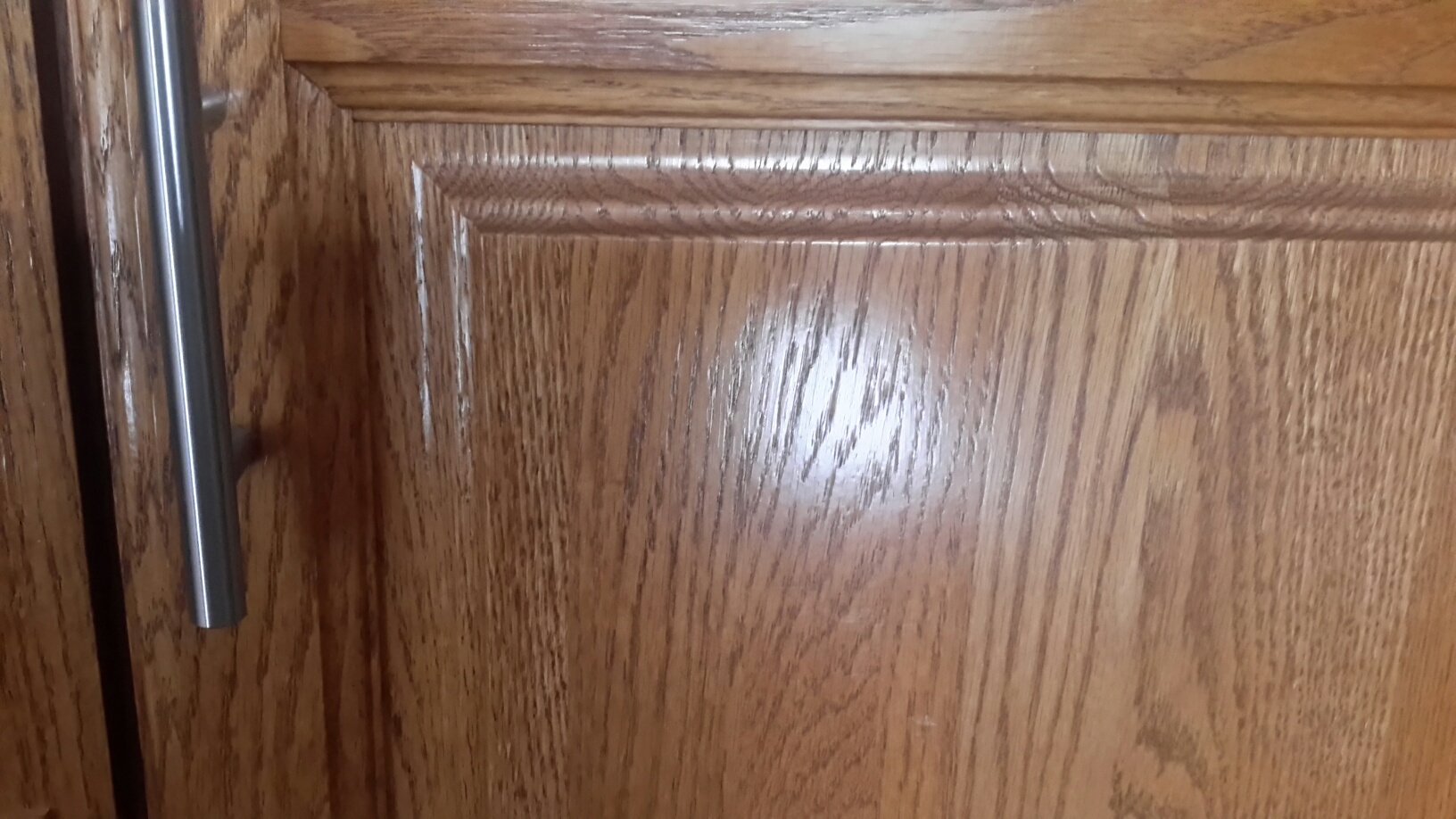
This is what let us buy the house at the price we probably would have paid if it was truly haunted. Everything here is finished in a light, strongly grained oak. In 1990, it was right on. In 2014, it is wrong, wrong, wrong. It’s so wrong the sellers’ (very bad) realtor offered a cash-back incentive to help new buyers rip it all out. We opted for a reduced price instead and will be keeping all the lovely once-living material a hardwood tree was sacrificed to provide. I like it fine and even if I didn’t, it’d be sick and tragic to waste it.

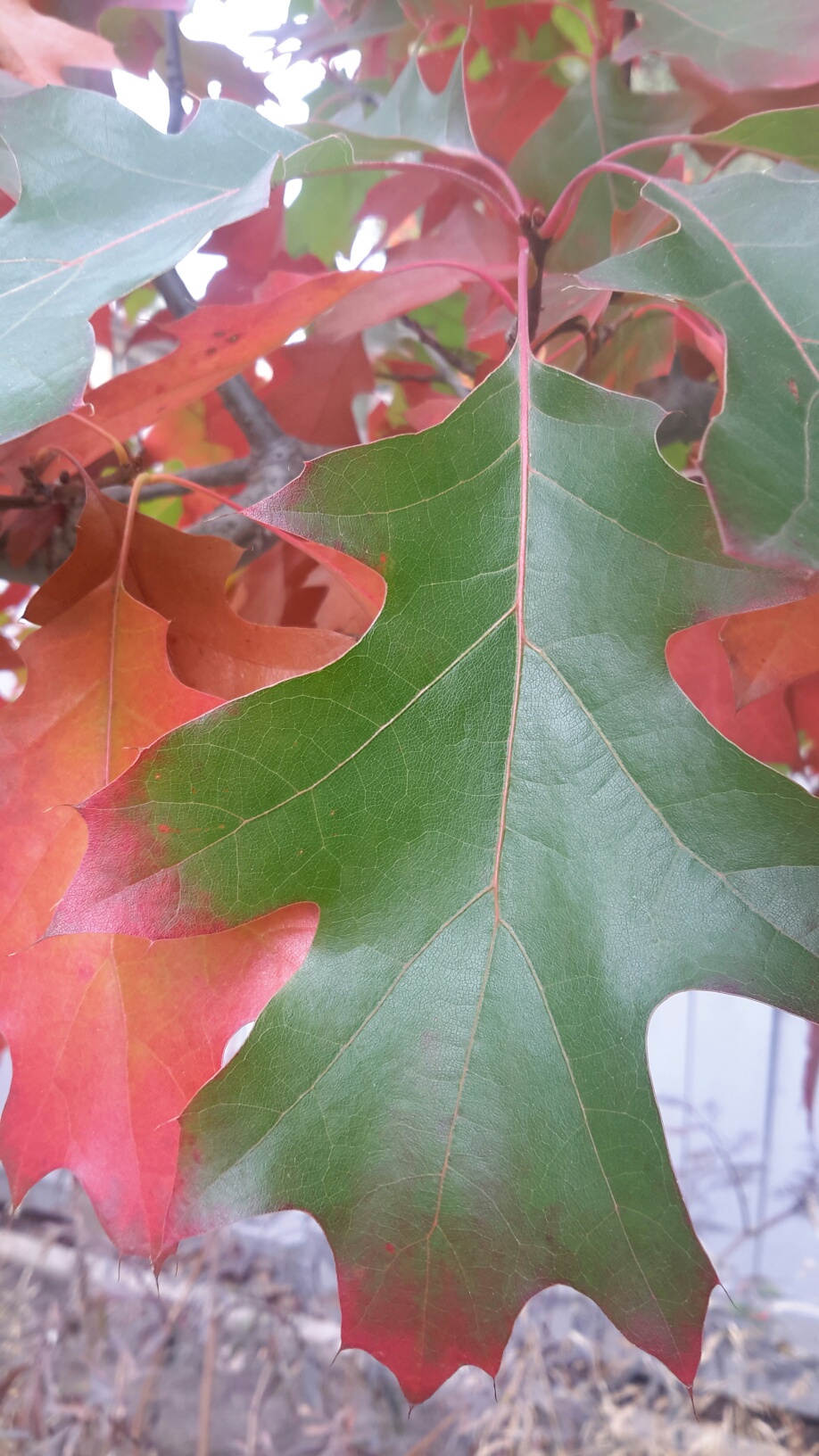
Pin oak leaf

Pin oak leaf

There’s more oak outside in the form of a still-living tree. It’s fertilized by the carcass of a dead dog lovingly buried at its base. What was the name of that grody Stephen King book? About the cemetery, with the pets?

Unstained cedar doesn't look like much but it smells amazing

Unstained cedar doesn’t look like much but it smells amazing

Also outdoors is the virgin cedar deck. It’s never been stained or varnished and when it’s warm the whole backyard smells like a fancy new hope chest. Smell-writer loves it.

Sturgeon (yes, we know he's a goldfish)

Sturgeon is not a sturgeon

Formerly from outside is Sturgeon. He’s the sole survivor of the backyard pond. When a freak snow storm hit the first week of September, the boys couldn’t bear to leave him outside. Yes, we realize he is not a sturgeon but a goldfish (and we also realize a snow storm in September in Alberta is actually not freakish).

Her de facto name is "It's That Spider Again"

Her de facto name is “It’s-That-Spider-Again”

Here’s another new, accidental pet. This big, skinny spider has been hanging around watching the kids play video games in the basement ever since we got here. She commands too much respect for anyone to want to kill her and she refuses to step onto a sheet of paper so we can turn her loose in the outside world.

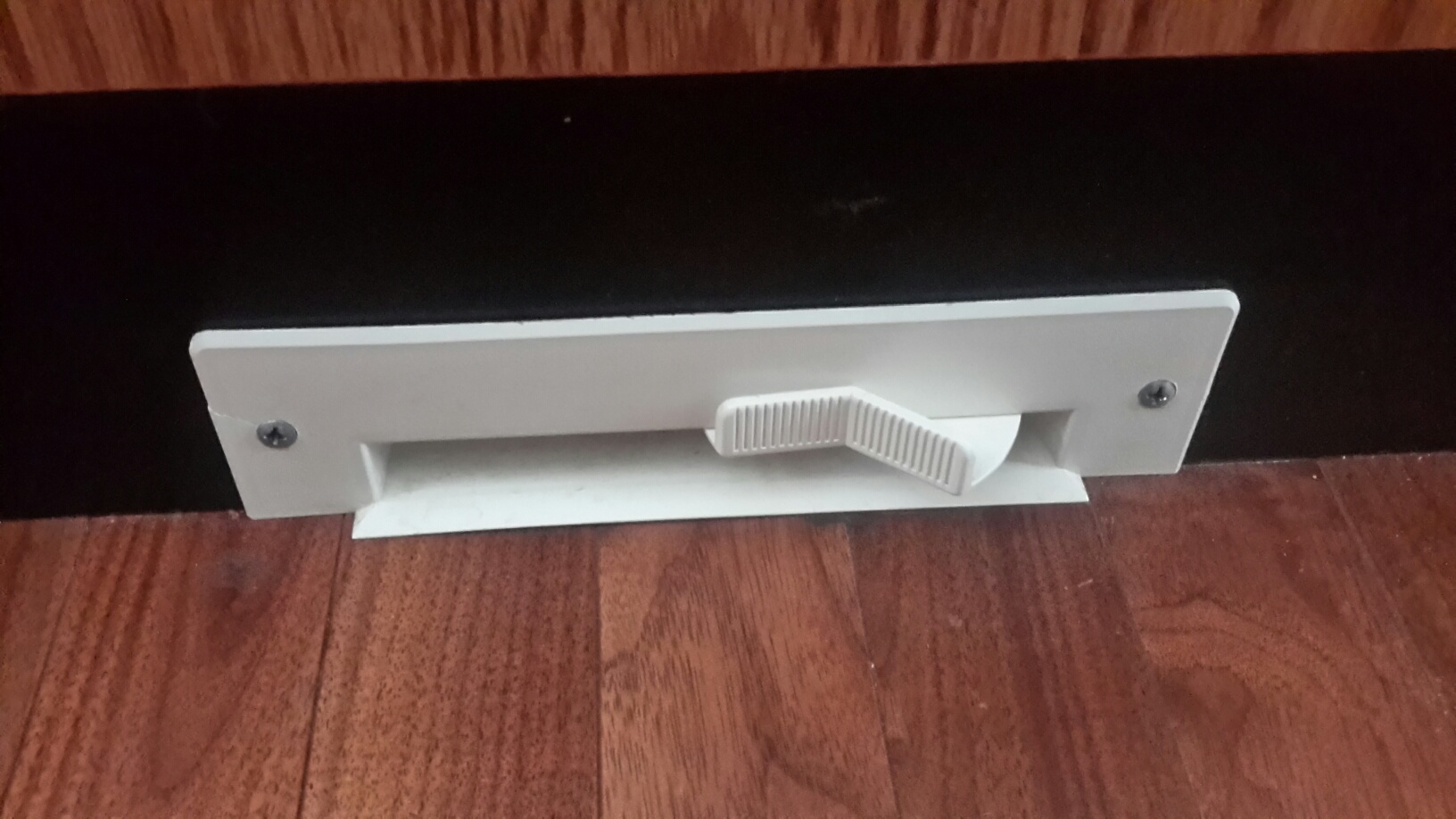
portal

The Portal

This might be our favourite thing about the new house. It’s a magic portal in the kitchen floor that sucks up dirt from an ordinary broom and hurls our filth into the void. It might be old technology to better housekeepers but I remain astounded by it.

rock

Sometimes a rock is just a rock

When my dear barely-older-than-me brother — my childhood animus — came to help us unload the moving truck, he said this towering rock in the front yard was the only thing he envied. Let’s not psychoanalyse this any further.

Tabula rasa

Tabula rasa

And last of all the quirky and darling things I could include in the tour of the house that has consumed all my time, energy, and money for the last month, here’s a 17 foot tall neutral-coloured wall I have no idea how to decorate. Leave suggestions in the comments, I beg you.

With that, here’s to clean slates and new beginnings and all things desperately optimistic.

Heart and Lip: Intellectual Prowess and the Obnoxious Dork

“Which one is yours?” the nice lady sitting beside me in the spectator seats at the junior high school asked.

“The obnoxious one,” I answered.

She nodded and laughed a little, knowing exactly which kid I meant.

Reach for the Top in the 1980s

We were at the provincial “Reach for the Top” tournament.  As a kid, I’d seen competitions like this one on TV during long, cold, boring afternoons in the days when we only had three channels to watch. It’s a trivia contest for school kids – kind of like Jeopardy only the contestants give their answers in the form of an answer.  Like lots of the stuff on Canadian TV in those days, it seemed to me like another weird Ontario-thing.

Reach for the Top doesn’t exist as a television show anymore but thanks to the dedication of teachers in our area, there’s an untelevised league of it operating in my kids’ schools.  We’ve been involved with it for four years, ever since one of my sons took the local programme by storm.

I admire my son’s smarts but I don’t think he’s always the most knowledgeable kid on his team.  He is, however, the only one who nearly got fouled out for heckling the quiz mistress.  He is also the one who answers more questions than anyone else.  He likes to be right but being wrong isn’t a disaster for him.  The reward of winning makes the occasional “that is incorrect” worth the risk.  In other words, he dominates Reach for the Top out of sheer nerve.

It’s well-known that the sports trivia sections of Reach for the Top matches are usually wash-outs – those and the classic rock sections.  (“Trooper!” I once heard a parent rave.  “Come on. I can’t believe they couldn’t get Trooper.”)  When the topic is sports, the quiz master usually just reads through the questions while the kids wait for the time to run out.

But since points aren’t deducted for giving wrong answers, my kid buzzes in and tries to guess the sports questions anyway, again, out of sheer nerve.  It paid off most spectacularly the time the question asked for the number on Frank Mahovlich’s hockey sweater.

Like a random number generator in a hoodie, my kid picked a value between one and ninety-eight.

“27.”

“That is correct.”

“What?!”

It was unholy.

That match – the one with the hockey sweater divination – was the only time our team beat the team captained by our arch Nemesis, an über-dork named Angus.  In terms of high school competitions, it was an epic moment.  If the Reach for the Top team was the football team there would have been yelling and hugging, water bottles emptied over people’s heads, my kid getting cheered and mauled by dozens of people.  As it was, there was some excited whispering.  I admit I applauded — high and fast, fingers splayed like Snow White — in spite of all the stink-eye.

If my boy was a football quarterback instead of a trivia jock, maybe he would have spent his high school career being celebrated for playing his chosen game with such courage and self-confidence – so much of what is referred to in sports as “heart.”  It’s the willingness to take risks and use raw energy and enthusiasm to out-perform what ought to be expected of our natural talents.

But “heart” is for physical contests.  In the sit-down, four-eyed, noisy-spectators-will-be-ejected world of trivia contests, my kid’s “heart” is called “lip.”  Even I do it when I tell the other parents my kid is the obnoxious one instead of describing him as the gutsy one — the heroic one.  Sure, he doesn’t deserve to win any sportsmanship awards.  But maybe someone could give him a break and acknowledge that his headlong approach to his game is not a character flaw he needs to apologize for but a gift.  And the person who needs to do that first is probably me.

Go Rams!

Here Baby, There Mama: Don’t Politic My Hair

Let me tell you about the angriest I’ve ever been with my husband. Our not-quite-two-year-old son needed his long, wispy, angel hair cut. He hated haircuts and would carry on like a calf getting branded. It was always awful. My husband told me he’d take care of one particular haircut by himself. He took the baby into the bathroom and buzzed his head with electric clippers.

I was furious.

Yes, the baby’s hair grew back. And no one – not my oh-so-scolded husband, not anyone – has ever buzzed it again. The baby is fifteen years old now. His hair is still light blond but it’s also thick, silky, and he wears it long. I love it. Everyone loves it.

That’s the angriest I’ve ever been at my husband. I’m very lucky. I have an excellent husband. I also have an excellent mother. Guess what makes me angriest about the way she raised me. Once again, it’s haircuts. I’m not one to try to blame my mother for everything. She was and is wonderful to me and my six siblings. But she is a demon in a hair salon.jennyshort

Her first six children were born within seven and a half years. No, she’s not crazy. She’s just talented at pregnancy and babies. My mum is never happier than when she’s raising a baby. I don’t understand it — the same way I don’t understand people who are happiest when they’re cooking or playing soccer or doing math.

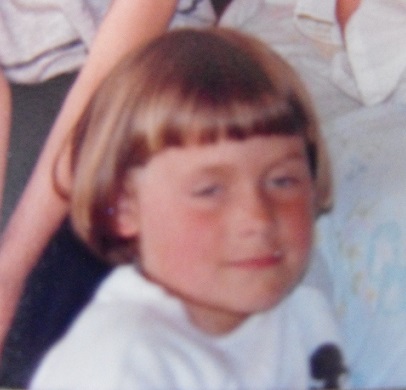
With a family like that, I guess Mum needed some short-cuts – literally. Five of us are girls — though it was hard to tell from looking at us when we were kids and our mother was choosing our haircuts. Mum had this idea that short hair on girls was “stylish” and modern – that and it didn’t need any time consuming combing or binding with elastics.

amyshort

Some people look fine in short hair. These people are not in my immediate gene pool. We all looked horrible. We knew it even though our mother raved about how pert and bold we were and how boring and backward our girl-friends were with their gorgeously normal shoulder-length bobs. But we were respectful, filial girls and I didn’t rise up and put an end to my mother’s terrible haircuts until I was in the tenth grade. That was when I grew my hair long – crazy long – and never went back. My sisters have thrown off their chains and grown out their hair too.

We all have the hair we want now. We’re educated, independent women exercising control over our own bodies and using a whole lot of high-end conditioner every morning. That’s the happily ever after, right?

Unfortunately, personal preference isn’t the only thing being read into hair length lately. Some click-baiting doofus wrotesarashort an article in response to the recent Hollywood revival of the pixie cut that made my childhood so awkward. He trolls on about how women cut their hair short to perturb and alienate men. The article has been answered by far more thoughtful pieces claiming long hair can be a patriarchal weapon meant to signal reproductive receptivity and with it, submission to oppressive forms of traditional gender roles.

Actually, for most people from my ethnic group anyways, long hair is just the natural state of all hair, for men and women. It’s now been unnaturally politicized by both sides of the gender divide. One of my brothers-in-law snapped and told my sister she had to cut her hair because she looked like the wife of a fundamentalist cult leader. I guess that wasn’t the impression he wanted his colleagues to have of their successful family business. My sister keeps her hair long anyway and sometimes twists it into a tight, top ‘o the head, power-bun that is authoritarian and formidable and totally awesome.

maryshortI admit I’m still insecure enough to worry whether anyone mistakes my long hair as a sign there’s something oppressive in my relationships or worldview – something amiss with my feminism. There isn’t. I’ve written more in defense of feminism than many people will ever read in their lifetimes.  I have nothing to be insecure about.  Part of enjoying my personal autonomy is invoking my right not to cut my hair if that’s what makes me happiest.

All that anger from the beginning of this story – with my husband and my mum – it’s petty. I’ve let it go and moved on. Even in the teeth of the crises, I never had much to complain about.  Unless it’s a token of religious observance, everything that’s said about another person’s hair length seems just as petty to me. And in realms of pettiness, what’s important aren’t the choices we make but the fact that we are free to make those choices.emshort

Sometimes, as Freud is rumored to have said, a cigar is just a cigar. And sometimes, a haircut is just a haircut – no social agenda, no revolution, no patriarchal violence – just pretty protein sprouting out of a scalp. When it comes to the way I wear my hair, all I’m trying to say is that I love it long – on my sons, on me, on my sisters, even on my mother herself.

Me, My Mum, and My Sisters Today