
The Rusty Toque, Issue 6
Here I am again, reviewing some very interesting Can-Lit in literary journal The Rusty Toque. Just realized I’m covering yet another book about the end of the world — or, a world, this world.

The Rusty Toque, Issue 6
Here I am again, reviewing some very interesting Can-Lit in literary journal The Rusty Toque. Just realized I’m covering yet another book about the end of the world — or, a world, this world.
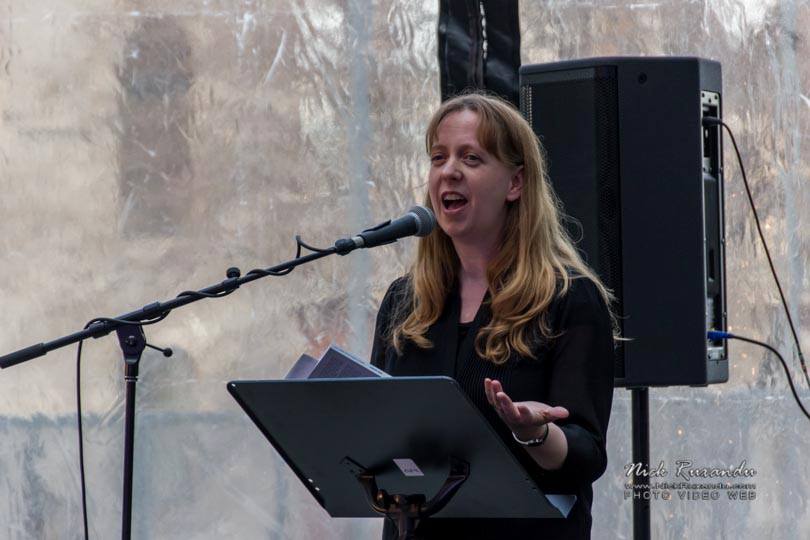
Me at the Blue Metropolis International Literary Festival in Montreal
So my 17 year old son asked me, with all the irony he could muster, “Mom, which value is more important to you: YOLO or swag?”
If you’re over 25 and this question makes no sense, that’s exactly how it should be. This is the current youth lexicon at work, reminding – or warning – us older people that we aren’t the sole proprietors of our language. However, as the beloved parent of generous teenagers I’m given a pass in a few areas of youth culture including permission to know the meaning and social function of words like YOLO and swag. Thanks, boys.
I won’t define YOLO here like the old sociologist dork I truly am (and as if there’s no Google). It’s just a simple acronym anyways. Swag is more complicated. It’s concrete and ephemeral at the same time. It can be stuff, but not stuff. It arises from what’s inside and outside. It comes and it goes. What’s swag on one person may be sad or silly on another. Sometimes the very best swag comes from the most humble sources. There’s irony and self-consciousness in swag. And it descends differently upon everyone.
Follow any of that? I know, it reads like old theology – swag is invisible, uncreated. It can be a bit of a riddle. Just ask my 35 year old friend Christi who’s been trying to use the word “swag” appropriately in conversation with teenagers since the New Year. It’s a process of trial and error but don’t worry, she’s got swag enough to keep trying and will pull it off eventually.
I can use the word swag but that doesn’t mean I can command swag itself. Sometimes I worry I’ve never had it — especially when I’m doing my writer-thing out in public.
If anyone wants to know what I mean when I talk about good writer swag, I recommend a look at the Blue Metropolis International Literary Festival in Montreal. It’s a gathering of writers, publishers, media, and book lovers from all over the world held annually in one of the great cosmopolitan cities of my country. The festival is peopled with top literary talent – and me. Believe it or not, I was given spots at three of the festival’s venues this spring.
With a gig like that, it was time to stop being awe-struck and turn on the swag.
Rightly or wrongly, I believe my best hope for swag begins with boots. I packed a couple pairs and headed off on a cross-country flight, alone.
My first impression of Montreal was that the city is serious about Canada’s second (or first, depending on who’s asked) official language: French. I knew most people in Montreal can speak both English and French but I didn’t realize Montrealers’ default is French. I also didn’t realize how profoundly my French has atrophied since I left eastern Canada twentysomething years ago.

My first Montreal venue: the Atwater Library
When I was a high school student in Nova Scotia, I spoke French all the time – horrible French. I understood it was bad and did not care. The badness was part of the sport. What I lacked in ability I made up for with confidence, enthusiasm and – wait for it – swag. That bad-French swag is now history and I’m left with my sheepish grownup French – stressing out over masculine and feminine nouns. At least I still have the comprehension to tell the nice lady asking me to donate blood in the street “Non merci.” And by the time I left the city I was comfortable enough to be using my natural Acadian quack for “oui” again.
No matter how stupid I sounded, I loved the city. I went to galleries, cathedrals, museums, and got to debut by reading my novel to a crowd at an old library. At my publisher’s festival event, I witnessed the gorgeous writer-swag of some of my fellow Linda Leith Publishing authors. As always, they astounded me. They’re multi-lingual, well-traveled, well-educated, and each of them writes like a house on fire. Even the new non-fiction book all about the prostate gland sounded amazing when I heard the doctor who wrote it presenting it at the festival. Set on a sheltered patio, our party was everything I fantasized it would be.
I was set to appear late in the English portion of the programme.

Want swag even in death? You want a saint’s burial in a French-Canadian Catholic Church.
“Come on, Jenny. Think swag. Last winter the Montreal Gazette called your novel the ‘stand-out’ of this company. Swag!”
I still don’t know if it was swag or not but I got up on stage and nodded to my misfit-ness in the Linda Leith Publishing stable of writers. Unlike the others, I speak one language, have one degree, and have lived my whole life on one continent. “But I have the same heart as everyone else,” I said, “and my heart is in this book.”
It wasn’t a confession or an apology. It was more like bragging. To be at the Blue Metropolis International Literary Festival with Linda Leith Publishing, I have to punch above my weight class. There’s no shame in that. It’s as if something has triggered a special dispensation. The rules have been waived and I’ve been let into something I would normally have no right to approach. It’s as if there’s something intangible about me and my work that lets me get away with this beyond all reason.
Must be swag after all.

I don’t know this woman but I do adore her.
 In preparation for an upcoming multi-author book event, I’ve been reading novels outside my usual range of Can-lit and literary fiction. The atypical reading choices I’ve been making have been eye-opening – literally. So far, what’s struck me most in my venture into crowd-pleasing commercial fiction is the diligent reporting of characters’ eye-colours.
Maybe everything I know is wrong but for me, all on its own, the colour of a person’s eyes determines nothing about how they experience life. Okay, I admit my blue-eyed family may do more than the average amount of squinting in bright light. And if I ever produce a brown-eyed child while married to my fellow blue-eyed husband, it would add some horrible drama to our home-life. But most of the time, iris pigment is not the crucial narrative factor a random sample of Western pop-fiction might lead us to believe it must be.
Mentioning eye colour in literature can be a nice touch — like writing at length about a sunset or the ocean or whatever. (Writers can get away with a lot in the name of world-building.) And in the right context, eye colours can be important story elements. In Irving Berlin’s Easter Parade, Judy Garland closes her eyes and tests Fred Astaire’s devotion by challenging him to remember her eye colour. Even as a kid watching the old movie on TV with my mum, I knew this was an important moment. It advances the plot, reveals something about each of the characters, and it’s hecka sweet. Well done, 1940s film-makers. Look at you, making eye color genuinely relevant and letting it arise organically from the narrative. That’s how it’s done.
The same could be said for any detailed description of characters’ looks. Descriptions can work to propel the story, motivate actions, explain character traits. But sometimes they’re dumped into a story apropos of nothing. It’s as if we’re driving along an icy street and someone yanks up the parking brake and we’re flying in a circle for a moment, calling out eye and hair colours, spinning out of the true direction we’d been traveling. Or it’s like the story has deteriorated into a junior high school Language Arts lesson and we’re now outside the narrative reading a “character sketch.” At their best, character sketches are just exercises meant for the writer’s purposes. They’re notebook scribbles, not even first drafts, and certainly not good reading.
I hope all of that sounds technical and reasonable. Here’s a personal reason why I write without bothering to explain the minutiae what everyone looks like: I don’t care. I honestly do not care what people look like. That’s not to say I’m any less shallow than anyone else – I care far too much about how people smell – but it is to say that when I’m choosing what to pay attention to, a person’s looks aren’t all that compelling.
When I’m acting as creator of a book-world, I let everyone look the way readers want to imagine them. That’s done by forgoing physical descriptions I don’t need for plot and thematic reasons. Giving up the creative control that comes with dictating everyone’s colour palette is worth the sacrifice if that’s what it takes to keep physical traits from interfering with everything else I’m trying to say.
Describing a human being’s looks – even a fictitious human being’s – is actually not like describing a sunset. It might feel idle and innocuous but it’s not. Sunsets don’t come with politics. People do. Spelling out physical descriptions can introduce prejudices and tropes that distance readers. If that’s what an author wants (and sometimes it is), carry on, I guess. Descriptions also run the risk of fueling male gazes and other sources of negative stereotypes. They can end up assuring readers certain appearance-based prejudices are right and fair. I have a revulsion to abetting that.
In the novel Eleanor Rigby, Douglas Coupland deliberately withholds the information that the narrator, a woman, is overweight. He allows the reader to discover her through what she does and says and only later introduces what she looks like. The delayed fat-reveal is brilliant. I was surprised at how it affected me. I am not a fat-shamer. I’m not fat myself (she rushed to say) but during my most intensive baby-raising years I was a bit of a chubby-chick. It runs in my family. I love fat people. I understand on a deeply personal level that they are not lazy or greedy or bad. And it meant I was shocked at how my vision of Coupland’s character unwittingly changed for the worse after I read she was fat.
To add another layer of complexity, Coupland’s narrator challenges the reader, saying we must have been able to tell she was fat before the reveal, as if something so fundamental must have been visible all along. Of course, it wasn’t. Her looks don’t make her any less human or relatable as a character. But it’s only through withholding a physical description and showing us our own reactions to it that Coupland demonstrates the depths of our appearance-based prejudices and how easy it is for writers to be complicit in maintaining them.
By the way, Judy Garland’s eyes – they were brown.
 I’ve booked my ticket and my cheap but not inexpensive hotel room and I’m all set to fly to Montreal in four weeks for the Blue Metropolis International Literary Festival. It’ll be my first time in Montreal outside the airport or the freeway and my first visit to a literary festival in any capacity. In keeping with my out-of-step career path, at my first literary festival I’ll be appearing as an author with three spots on the programme. As always, I’m humble and happy to be included in such a great event — and glad everyone’s cool with me performing only in English.

My Name — Among Way Cooler People’s — on the Back Cover of “40 Below”
Last year, a piece of my short non-fiction was included in 40 Below: Edmonton’s Anthology of Winter. As always, I was thrilled to get the gig. The book was released three months after my novel’s debut and it turns out to be the gig that keeps on giving. It helped introduce me — a little hick in the sticks — to the big city Edmonton literary scene. It got me invited to some cool events (most of which I couldn’t attend because of the winter weather — is that irony?) and also got me a slot in the podcast series produced to accompany the anthology. Here’s a link to me and editor/writer/nice guy Jason Lee Norman celebrating the book writer-style — locked in a little room.
My husband got me chocolates just like I ordered for Valentines Day today. And, by playing muse to my novel’s “Brigs,” he also indirectly got me this: a recommendation from the Edmonton Public Library’s “Great Stuff” curator, Diego Ibarra. See?
Really needed that today. Thanks, fellas.

Dominant Traits, by fellow “Ridgeview” High School Alumnus, Eric Freeze
I never read faster than when I’ve found a short book written by someone I know. It’s especially true when that short book by someone I know is also a good book.
That’s the experience I had blazing through Dominant Traits, a collection of short stories by Eric Freeze. Eric and I went to the same high school – the one I came to in grade eleven and into which I never became fully socially integrated. He was in the show-choir/theatre scene and I was an egghead poor-girl whose only extra-curricular pursuit was a part-time job. We were not close. But in a small school where everyone had some knowledge and experience with each other, Eric and I had good will between us.
This good will, our high school, writing fiction, and seeing it published aren’t the only things Eric and I share. We have both set stories in the same southern Alberta town where we went to school, the place that inspires his “Ridgeview.” We both write fiction deeply rooted in real life. I read his collected stories out of sequence and noticed real life first in “A Prayer for the Cosmos” when the narrator refers to an infamous pep rally where dear old Ridgeview High School made a casual racial slur against an exchange student basketball star playing for a rival school. Something like that really happened.
Then there was the story about the awkward white rural kid who thought of himself as a rapper. When I first came to Ridgeview, I assumed this kid must have been playing a character, trying to be funny. He wasn’t. It was excruciatingly embarrassing. I tried to ignore him. I guess it worked. I hadn’t thought about him for decades. He’s probably grown up and put his rapper days behind him. But then, in Eric’s “Francis the Giant” story, there he is again, not grown up at all, falling down on-stage in this MC Hammer act, and I can’t look away from him. Eric’s fiction folded the kid’s story into the accordion fan I hadn’t realized it had always been for me. There was the real kid, his act, my initial confusion about the act, the fictional character arising from the kid, and then the hallucinated transformation the character makes within the story, changing from a scrawny teenager to a giant, leech-flinging monster. We are everyone around us. We’re folded into accordion fans with everyone we know. Their stories are rightfully ours, the opposite sides of our own folded surfaces.
“He’s doing it,” I thought as Eric’s stories started to bend into my own experiences.
I do it too. Last night, at a literary event in Edmonton, I read one of the chapters from my novel that is crafted very much like an event from my family’s real story. Afterwards, as I signed her book, a nice lady asked if the book was fiction or not. I grinned, “Yeah, it’s fiction. But it cheats.” She seemed pleased. Readers love cheating.
Though I’ve been on the giving end – force-feeding my family, friends, and high school classmates doses of our histories, fictionalized, printed, bound between the brittle, narrow margins of my perspective — I don’t think I’d ever been on the receiving end of this kind of storytelling in so direct a way until I read Eric’s book. Seeing it from the other side had a much greater impact on me than I expected. I didn’t just smirk knowingly and say, “Ah, yes, it’s this.” Instead, my heart lurched inside me when I realized Eric’s “Torched” – a piece about a roofing crew grappling with the tenuous mortality of men early in adulthood — includes the story of a boy from our school who suffered an oddball head injury riding a bike in the dark. Even though he seemed to recover from the accident, he suddenly died from the injury a few years later. It’s weird but true. There’s a monument to it in Eric’s book.
It was good for me to read Dominant Traits. It ambushed me even after a mutual friend, the eye on the cover, and my cursory grasp of ancient Ridgeview gossip warned me the book was closely connected to things I had seen and heard for myself. Reading it helped me consider my own writing in a new way, with greater empathy, with more tenderness and patience for what I demand of everyone.
Here was another writer not only playing my game but playing much of it on the same field – the same place and time. Sure, his “Ridgeview” is different from mine. He lived there as an insider (compared to me, anyways) and as a boy. Unlike Eric, I would probably never attempt a story about cattle castration. That is not my Ridgeview. But I knew the convenience store, the comically wide roads, even the squeak of the gym floor, though I usually only heard it through closed doors.
Closed doors – that brings me to the point where I prove I don’t give old high school classmates free passes in book reviews. The collection, in many ways, is men’s fiction — if the prevailing literary privilege will allow me to talk of such a thing. It’s smitten with the male problem of imagining erections and ejaculations are far more salient in the world outside their own pants than they actually are. The other half of humanity rolls its eyes, scoots to the cold side of the bed, and tells those Very Important erections to just go to sleep, for crying out loud. I’d like to see a man my age write a meaningful, earnest, literary love story without any penises in it. I’m not protesting out of stodginess. I’m protesting because I’m tired and disappointed with male (and often female) writers taking the slimy, easy shortcut to writing about intimacy. Work at sex and intimacy in a different medium once in a while, fellas. Feel free to prove me wrong with examples in the comments.
In the age of “post-fiction,” writing from life is accepted and understood, sometimes preferred. Maybe it’s not considered cheating anymore. I don’t believe in creation ex nihilo – that everything we know must have been created by some kind of magic out of emptiness. I don’t believe in it physically or artistically. Ex nihilo nihil fit. I’d wager Eric Freeze doesn’t believe in it either. Everything created is organized out of pieces of things that are here already – Big Bangs exploding whenever someone or something comes crashing through us.

If Can-Lit is subdued by government grants it’s got nothing to do with me.
Between spurts of productive work on my latest just-keep-swimming short writing project, I indulged my bad habit of listlessly scrolling through my Twitter feed. The Canadian literary community – for all you normal folks out there – is ravenous for controversy. We love and hate to have a focal point for cheeky, gleefully indignant tweets and blogs. This winter, controversy flared up around comments 2012 Giller Prize judge Gary Shteyngart made while drinking with a reporter in New York City. He said something about Can-Lit lacking risk-takers. His now notorious explanation was that Canadian writers “all get grants” and therefore “they want to please the Ontario Arts Council, or whatever it is.”
Now, anyone who follows this blog knows I came to be a working writer through unconventional channels. I don’t have an MFA from any of the creative writing programmes where Canada’s up-and-coming literary talent is usually hot-housed. I live in a rural area where the local literary fiction circle includes me and my lovely neighbour. I have never worked in publishing. And, I have never received any grant money. No arts council – certainly not the faraway Ontario Arts Council – has ever funded my work.
In the spirit of Can-Lit-Da’s relentless self-reflection, I considered what Shteyngart’s comments (which he later joked should be taken in the context of his “drunken stupor”) say about me.
For one thing, there isn’t much room in his comments for me. I disprove his over-generalization. I wrote a manuscript and sold it to a traditional literary publishing house without applying for, let alone getting, a government grant. Maybe I can ignore everything Shteyngart said and join the cheerleaders tweeting titles of great, “risky” Canadian books which may not have been (but probably were) written by grant recipients.
Or, I could feel robbed. How fair is it that I work in a country that seems to have an international reputation for being glutted with arts grants of which I’ve never been paid my share?
Or, I could embrace Shteyngart’s assumption that writing needs to be somewhat staid in order to get the bureaucratic rubber-stamping of a government grant. I could try to spin my grant-free-working-writer status as a sign that my stuff must be subversive and edgy — the kind of thing lucidly drunk, chatty New York City hipsters might find interesting.
There might be a bit of support for the third option – the fun, cocky, unlikely option. We haven’t had a bad review of my novel but we’ve seen it described over and over again with words like “odd, strange, surprising” or “unusual.” I knew when I was writing the book that it was peculiar and I had to keep writing it that way regardless. And now — if Shteyngart is right — I have the distinction of writing it without a grant and thereby proving what a weirdo I am. I should revel in that, I guess. There’s not necessarily anything wrong with it. There could be a whole lot right with it.
Yeah, all this reasoning is a bit of a stretch.
I don’t know if what I do is at all risky. Frankly, it’s 2014 and I’m not even sure I’d recognize a new literary risk if I saw one. And I can’t deduce a risk by whether there’s anything entered on the grants line of an income tax form. Like most people, I just write what I want to write, whether anyone wants to pay for it or not.

Publishers Weekly Reviews My Novel
This week, my little Canadian novel was reviewed in Publishers Weekly. (I know, right? Read it here.) The review isn’t long but it is perfectly positive. The reviewer isn’t credited by name in the online version I’ve seen but she or he was thoughtful and insightful enough to have me Googling a few of the terms used to describe my own work.
The first was one of those words that’s still vaguely familiar from my Arts degree days — those spellbinding lectures on Jungian psychology at the base of the Tory Tower. Somewhere in scrolling through the fanciful vocabulary of archetypes scrawled on the overhead projector film, the meaning of this term slipped out of my consciousness. It’s “psychopomp.” It doesn’t sound like a nice thing to be called but, as I now remember, it means a creature who serves as a guide to souls — newly deceased souls in particular but also the newly born or anyone unmoored. As the PW review points out, my novel’s main characters are psychopomps. I had never thought of them that way before but it’s certainly true.
The second term I had to look up was completely new to me: mono no aware. Though it’s tempting, don’t try to use an English or Latin vocabulary to decode it. It’s a bit of Japanese philosophy and translates into something like “the pathos of things.” The idea is that instead of the bittersweet knowledge that this world is transient making us morbid and jaded, it moves us to reverence our lives and experience them as poignant rather than mundane. I’m no scholar of Japanese philosophy but I think it might be the opposite of the Western ennui that makes up so much of literary thought right now. Whatever it is, I think I need to find my old, water-stained copy of The Tale of Genji and read it again.
There’s a lot to love about being an artist. That anyone would read my work is great. That they would look up and from my work and have something to say about it is even better. And having them teach me something I didn’t know about what I, myself, have written makes me want to fall on my face and cry — especially when it’s something true. Sometimes, it’s wonderful to admit, “I didn’t know that was in there and I don’t know where it came from.”
I’m usually fairly pragmatic and cringe at the conceits and the headier romance of writer-life. I don’t have much of a stomach for elitist memes and other silliness bent on making embarrassing overstatements about writing and writers. But there is something genuinely sublime about art — even the quiet, tappity-tap, within sight of my laundry hamper art form of my own. At its best, art is a miracle. And we bow our heads, grateful and baffled that whatever it is that makes miracles would stoop to involve people like us.
My sister had just posted a new picture of her baby on Facebook. In it, my big-eyed, beautiful niece was wearing layers and layers of frilly pastel ruffles. Beneath the picture, I wrote, “I didn’t know ruffles were the big thing right now.” Even for idle social media chatter, my ruffle comment was pretty idle. I didn’t expect anything to come of it.
But then, out of the vastness of time and space, through the miracle of post-modern social networking, another comment came answering back from an old friend of mine. I didn’t know she and my sister were in touch. I was surprised. Frankly, they hardly know each other. Frankly, my friend and I hardly know each other anymore. We were closest during our early teenaged years, before I outgrew the worst of my hideous phase and started encroaching on her boy-chasing territory. Things had been very quiet between us for a very long time. But now that ruffles were on the table, she had something to say to me about them.
“That’s because you are the only girl in your home,” she told me, “And I don’t think that ruffles were ever your thing…”
She was right about that.
“…Little girls LOVE ruffles,” she continued, emphasis in the original. “And sparkles, and tiaras, and glitter, and magic wands. Maybe you should see if you can get a girl to balance out all of that boyness in your house.”
Maybe I’m crazy but it read like a smack-down. It sounded like my family of nothing-but-sons was being called out as karmic. She may as well have written, “You like boys, do ya? Well, take THAT, boy-stealer.”
I replied by doing what anyone put in my position would have done: I quoted out-of-context Bowie lyrics at her.
“There’s only room for one and here she comes, here she comes.”
Unlike me, my old friend – the ruffle expert – has a daughter. She goes shopping for tiny frilly dresses while I’m pushing a cart full of black and navy sweatpants.
I’ve heard people remark how tragic it is that mothers of boys don’t have as much fun shopping as the mothers of girls. The idea is familiar enough to make it feel like everyone must agree. But who actually makes this complaint? I took a straw poll, pulling comments out of Internet parenting forums dedicated to mothers of all-boy families. I was looking for any self-reports of mothers being disappointed about not being in the market for pretty dresses for anyone but ourselves.
Here’s what I found: hardly anything.
Every now and then, a long, sad venting post would appear where a mom of boys lists everything about parenting that hurts her. Once she’d started brainstorming her disappointments, she’d usually toss in a line about shopping. But in pages and pages of healthy, happy chit-chat about raising boys, it was nearly impossible to find any boys-only moms complaining about the lack of sparkles in their laundry.
So who keeps talking about how sad we must be? It seems the people most likely to think shopping in the pink section is important are people who are actively enculturating a little girl with prissy, Western notions of acceptable gender roles. These people care very strongly about it. But guess who doesn’t care much about it? Everyone else.

Groaner at the Scholastic Book Fair
Shopping may be a strange and backward place for flagrant plays of gender politics but it’s a real one. Most of the time, gendered shopping is a marketing tool meant to get parents with kids of both sexes to buy double the merchandise they need because pink bicycles burst into flames if boys try to ride them. It’s got nothing to do with what’s good for the human psyche and everything to do with selling products.
When it comes to underwear and tampons, I can see the wisdom in dividing the marketplace between the sexes. But when I walked into the Scholastic Book Fair at my kids’ school this winter and saw a table labelled “Books for Boys,” I got angry. Thanks, Scholastic, for making sure arbitrary gender division in education and the arts stay staunchly and clearly defined.
And thanks, I guess, to everyone harbouring any compassion for women who only mother children of the opposite sex. Go ahead and feel sorry for us. In truth, there are reasons for boy-moms to feel a little lonely – a little empty. They’re real and I believe they’re profound. The reasons women might mourn for never creating another human in their own image are existential, rooted in our personal identities, our senses of our own immortality, and our fears about dying alone. And that makes the suggestion that our feelings are all about vapid unfulfilled shopping fantasies outrageously offensive.
 Jennifer Quist, PhD