Announcing Book #2

pubagreementToday I signed and mailed away the publishing agreement for my second novel. Once again, I’m working with Linda Leith Publishing in Montreal and the novel is a blackly comic literary treatment of family life. Our projected release date is Fall 2015. And I still can’t believe this is really my life.

Watch this space for more and more and more details to come.

Enough Envy for Everybody

Big stage for big literary celebrity

Maybe there comes a time in every writing career when quiet, solitary writer-person gets curious about the literary world’s version of hype — popular, public, celebrity hype.

It’s true for me, anyways. So before they were sold out, I bought a ticket to see a celebrity author passing through my city. He’s a Canadian now living in the United States who appeared before a crowd of 500 people a few blocks from my house.

The author and I are strangers. I haven’t read his books. I didn’t go to see him as a fan or as a friend. Maybe I was falling back into my social science habits – acting the clinical outsider, coolly observing the phenomenon of celebrity enacted literary-style. There’s something nobly aloof about telling it that way. It lifts my delicate, fretting artist’s heart out of the story.

I arrived at the theatre just as “please find your seats” was announced. Arriving late at a sold-out event means making a rough, rude spectacle, crawling over people to lone seats in the centres of rows. I hadn’t dressed up and I arrived smelling like the onion I’d diced making dinner. That was me — rude, sloppy, late-coming, envious spectacle.

Goodwill and admiration don’t negate envy. Envy, my dad taught me, is different from jealousy. Envy is simply wanting the same thing other people have. Jealousy is wanting to get it by taking it away from them. Jealousy is hating them for having it. Those were the semantics I was raised on.

I knew sitting in a crowd gawking at a celebrity author wouldn’t get all the people who read and talk about his books to read and talk about my book too. Still, reading seems to work on a positive feedback cycle (social science!). The more people read, the more they keep reading. Reading is always good for writers.We lose nothing in supporting our colleagues — even when we’re just a tiny, anonymous faces on the far side of the footlights. There’s something slightly less noble about telling it that way.

Onstage, he read from his latest work. It was masterful and when I applauded, I felt like I meant it more than anyone else in the theatre. Then he talked. He talked about choices he’d made in his career that I wish I’d known to make in mine. He talked about disadvantages I don’t have that make his work rich and stirring and advantages I don’t have that make his work rich and stirring. He has more sisters than me. That stung. He must’ve mentioned his sisters three times — just like I would have.

Near the end, a book club leader from the audience asked him what he’s been reading lately. This isn’t the kind of amazing story where he answers, “Love Letters of the Angels of Death by Jennifer Quist. Check it out.”

That’s not what he said. He answered he doesn’t read other writers’ fiction very often. Especially when talking to a book club member, it’s a claim that demands defending. The author explained, “You read it and it’s like, ‘ah, they’re so good, why do I even bother?’”

That’s what a celebrity author looks like, lit onstage with his delicate, fretting artist’s heart. He looks a lot like the rest of us – rough and envious, unsure. I hadn’t known when I left my house that night, but this was what I’d come hoping to see for myself. There might not be much that’s noble about telling it this way.

I’m Back — or, Someone Like Me

We — my family of seven — have moved to a new house in a new city. Though the physical act of moving is over we’re still not quite ourselves. Frankly, we never will be. We’re different now. I’ve moved enough to believe that, in time, these new differences will be mostly for the best. And I know “for the best” hardly ever means pleasant or easy.

One comfort I have as I and six other pieces of me venture into the more-than-ordinarily unknown every day is the house we have to come back to. Unlike all the other houses we’ve owned, this one was home to another family before us. They built it to suit their fancies and lived here for twenty-four years. Naturally, it’s a bit quirky — a bit haunted.

Here are some highlights.

Cold Storage!

Cold storage to delay all kinds of decay

This is the cold storage room which, as my father who was raised in a converted former funeral parlor explained to me when I was 4 years old, is the best place in the house to keep a dead person. It’s also got a rack for properly storing fur coats — at last.

Secret office space behind the furnace

Ultra-private office space behind the furnace

Behind the furnace is the secret inner office. I’m not sure who used to work here but he was probably very easily distracted. No windows, lots of white noise, total privacy. No, I’m not using it as my office. I work in the laundry room, like a normal person.

Laundry Office

I’m at the laundry room (What?), I’m at the office (What?), I’m at the combination laundry room and office

Honestly, I’m just happy to be working sitting in a chair instead of leaning against the headboard of my bed, typing on a tea tray.

The wrong wood

The wrong wood

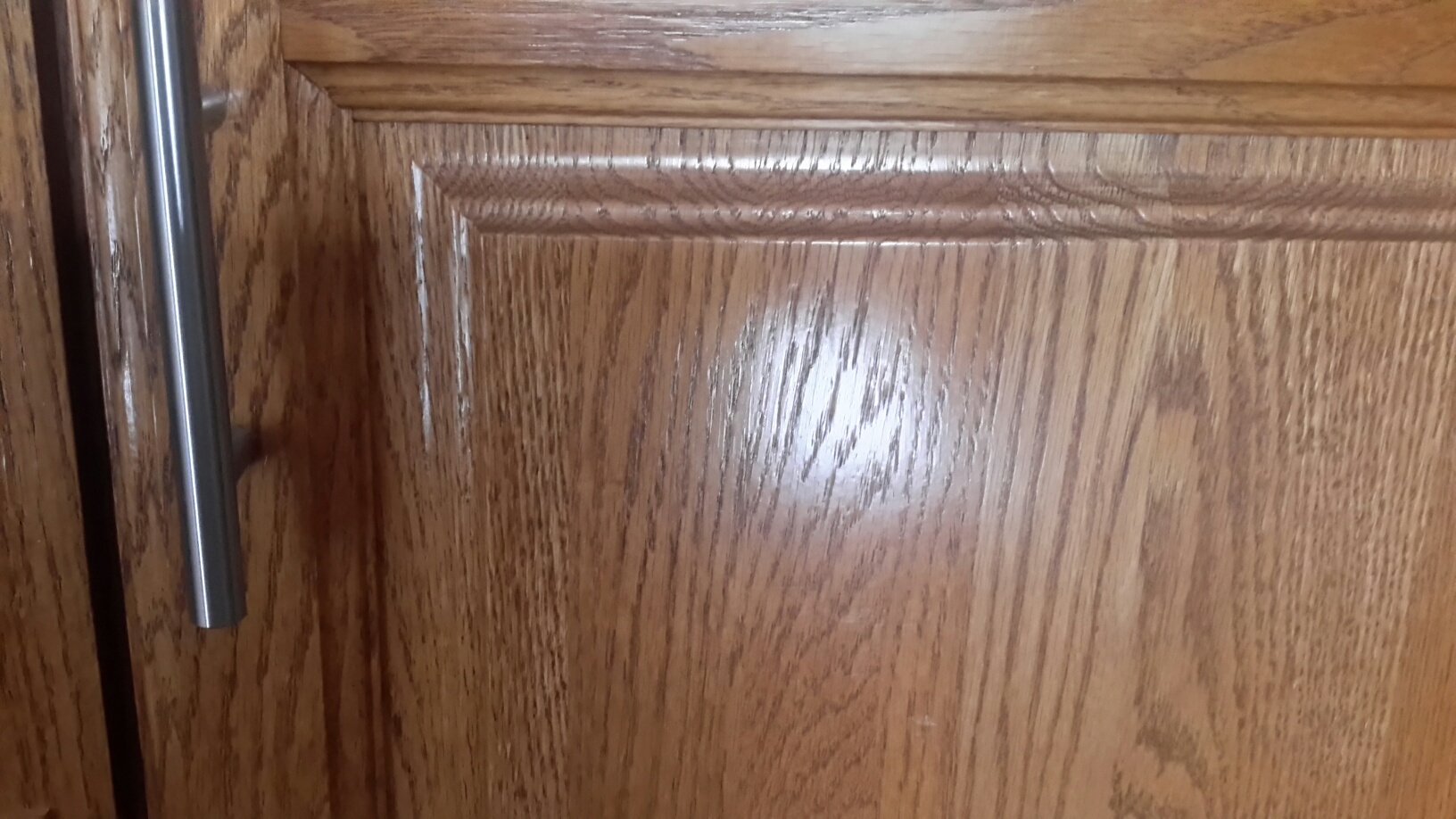
This is what let us buy the house at the price we probably would have paid if it was truly haunted. Everything here is finished in a light, strongly grained oak. In 1990, it was right on. In 2014, it is wrong, wrong, wrong. It’s so wrong the sellers’ (very bad) realtor offered a cash-back incentive to help new buyers rip it all out. We opted for a reduced price instead and will be keeping all the lovely once-living material a hardwood tree was sacrificed to provide. I like it fine and even if I didn’t, it’d be sick and tragic to waste it.

Pin oak leaf

Pin oak leaf

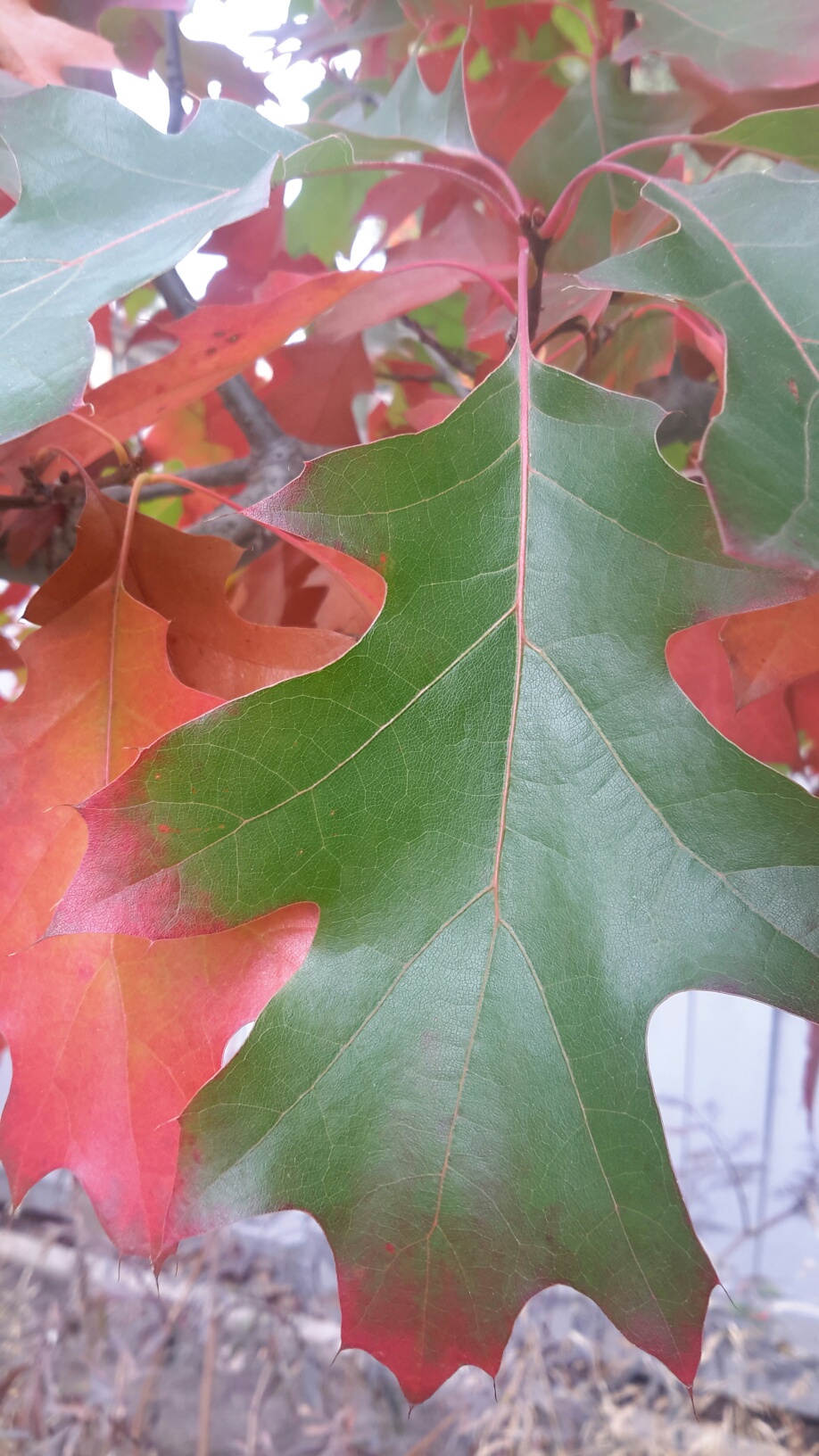
There’s more oak outside in the form of a still-living tree. It’s fertilized by the carcass of a dead dog lovingly buried at its base. What was the name of that grody Stephen King book? About the cemetery, with the pets?

Unstained cedar doesn't look like much but it smells amazing

Unstained cedar doesn’t look like much but it smells amazing

Also outdoors is the virgin cedar deck. It’s never been stained or varnished and when it’s warm the whole backyard smells like a fancy new hope chest. Smell-writer loves it.

Sturgeon (yes, we know he's a goldfish)

Sturgeon is not a sturgeon

Formerly from outside is Sturgeon. He’s the sole survivor of the backyard pond. When a freak snow storm hit the first week of September, the boys couldn’t bear to leave him outside. Yes, we realize he is not a sturgeon but a goldfish (and we also realize a snow storm in September in Alberta is actually not freakish).

Her de facto name is "It's That Spider Again"

Her de facto name is “It’s-That-Spider-Again”

Here’s another new, accidental pet. This big, skinny spider has been hanging around watching the kids play video games in the basement ever since we got here. She commands too much respect for anyone to want to kill her and she refuses to step onto a sheet of paper so we can turn her loose in the outside world.

portal

The Portal

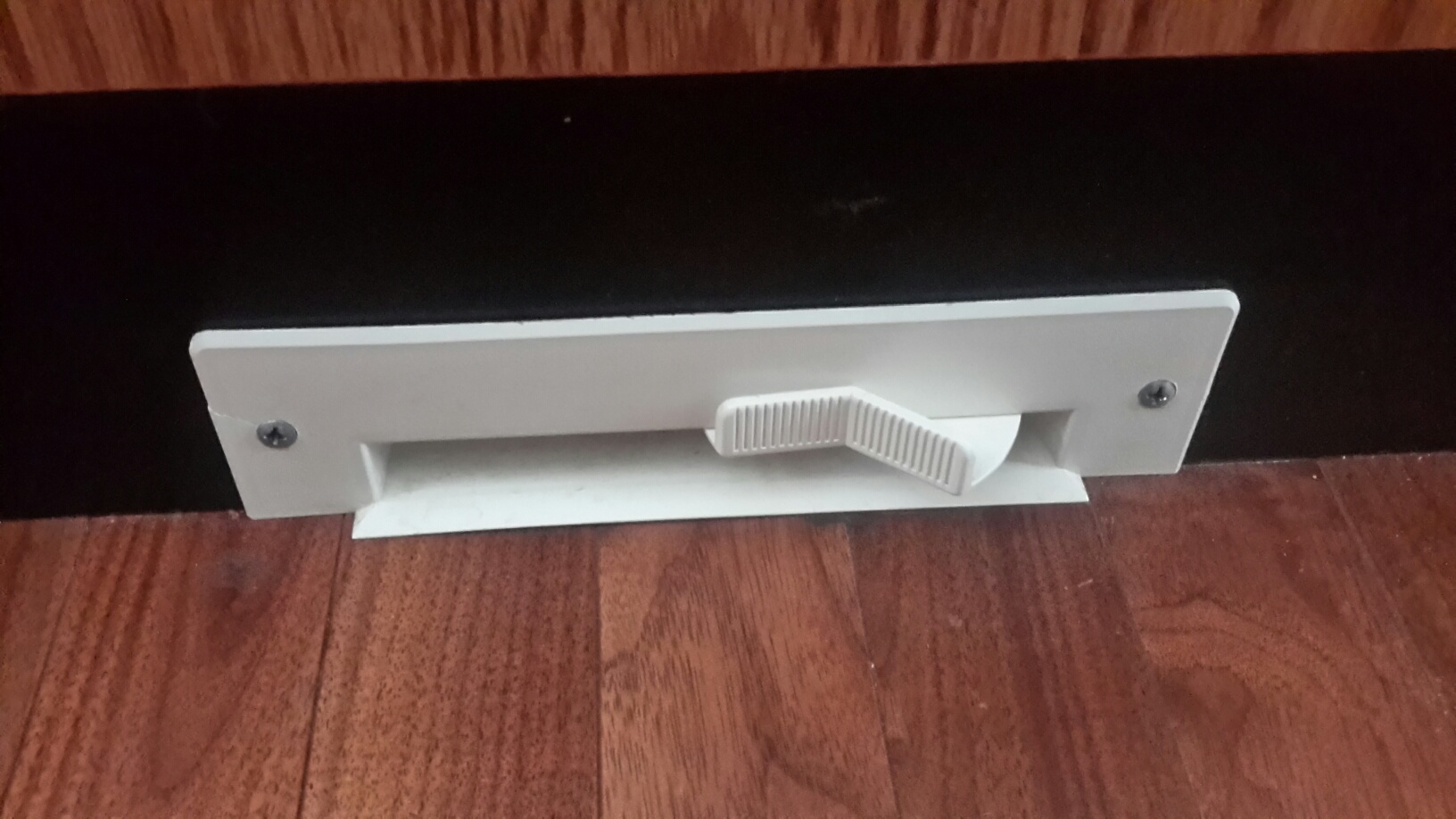
This might be our favourite thing about the new house. It’s a magic portal in the kitchen floor that sucks up dirt from an ordinary broom and hurls our filth into the void. It might be old technology to better housekeepers but I remain astounded by it.

rock

Sometimes a rock is just a rock

When my dear barely-older-than-me brother — my childhood animus — came to help us unload the moving truck, he said this towering rock in the front yard was the only thing he envied. Let’s not psychoanalyse this any further.

Tabula rasa

Tabula rasa

And last of all the quirky and darling things I could include in the tour of the house that has consumed all my time, energy, and money for the last month, here’s a 17 foot tall neutral-coloured wall I have no idea how to decorate. Leave suggestions in the comments, I beg you.

With that, here’s to clean slates and new beginnings and all things desperately optimistic.

Because Camping is Actually Writing

Me, arriving at camp with a bit of baggage

Me, arriving at camp with a bit of baggage

Two decades without camping didn’t seem like too many to me. I love being outdoors but I crave a proper roof overhead when it’s time to call it a night.

Then, this winter, I was asked to take over as leader of a youth group for 30 girls ages 12 to 17. It’s a great gig. It tempers the Smurfette vibe I’ve cultivated living alone in a pack of men for the last nineteen years. I’m honoured and happy to be there.

Still, I spent the spring dreading our youth group’s traditional annual camping trip. Fortunately, some of my fellow leaders are skilled, enthusiastic campers. They took over. My camp role was to sign off on expense claims, make a few rousing presentations, offer hugs to the homesick, and not sabotage the whole thing with my incompetence.

It was a simple role but I fretted anyway. What might have been more daunting than whatever challenges awaited at camp were the challenges I’d leave behind at home. Not getting things done can be just as hard as getting things done. My family is in the middle of moving house. It’s not a great time for me to flee into the wilderness. In order to take the girls camping, I left my house unpacked and unsold, left my kids, left a chance to see my commuter husband who was traveling home to stay with them. And, I left my second novel in the process of an intense unfinished edit.

For me – and probably for other writers who finish manuscripts – there’s no such thing as taking time off simply because life is busy. Activity inspires creativity and the paradoxical truth is I sometimes work best when it should be logistically impossible for me to get anything done. This summer, while single-parenting my five sons and trying to sell our house, I’ve written more, and more consistently than I have all year.

The prospect of my second novel is a bit terrifying. My first book has been well-received and part of its legacy is fear of a “sophomore slump.” I wrote the first version of my second novel before I’d found a publisher for my first book – before I knew who I was as a novelist. It was an experiment. The first version of it was plotty and funny and fairly glib. There were hardly any “that’s my soul up there” moments in it. It ate away at me a little – the secret that I didn’t love my second novel the way I love my first one. I liked it. But…

With this second book I have access to something I didn’t have when I wrote my first one. I have someone in the industry willing to read it and skilled enough to tell me what’s wrong with it. I knew the book was lacking but I couldn’t tell how or what to do about it. With good editorial feedback fueling my revision process, I hope I’m starting to understand.

The radical edits demanded I change something fundamental to the book – the title itself. Every time I opened the document I changed the title and every time I changed it, I hated it more and more.

campgroup

Me, when my hair was still clean, welcoming the campers

So I went to camp with my novel gutted, untitled. I went trusting my familiar paradoxes, sure a four day pajama party in the woods would improve everything unsettled in my life right now – maybe even my second novel.

Camp was fantastic. We should have called it “Camp Slacker.” There wasn’t much of a schedule, I kept driving the girls to the beach in the back of my pick-up truck, we stayed up all night every night, we never really stopped eating.

On the final morning of camp, I woke up underneath a brand new spider web, listening to music – not in my ears but in my mind. It was a song I hadn’t heard in a long time – one I first learned when I was a 16-year-old girl. It was Leonard Cohen’s “Suzanne.”

Now Suzanne takes your hand
And she leads you to the river…
And she shows you where to look
Among the garbage and the flowers
There are heroes in the seaweed
There are children in the morning
They are leaning out for love
And they will lean that way forever
While Suzanne holds the mirror…

It’s unlikely LC was thinking of youth camp leaders working to convince young girls of their worth and power and potential – to “show them where to look among the garbage and the flowers” – when he wrote these lyrics. But art is sublime and it doesn’t matter what he was thinking. For a moment, the song was about me and my “children in the morning” – the ones born to other mothers but sent into the woods with me for a few days in hopes we’d all come to understand ourselves a little better.

Suzanne loads you in her pick-up truck, and she leads you to the river

Suzanne loads you in her pick-up truck, and she leads you to the river…

My second novel – the awkward one with no name – it’s always been about sisterhood. And in the early morning sisterhood of my first camping trip in over twenty years, the paradox worked its perfection and I think I learned what I will call the book.

Photos by Naomi Stanford

Our Fairy Godmother is the Queen of England

The Lieutenant Governor of Alberta Emerging Artist Award

The Lieutenant Governor of Alberta Emerging Artist Award

It wouldn’t be true to say I chose an arty career just to impress my kids. But I was definitely gratified this week when, right before my kids’ eyes, the unglamorous sitting and typing I usually do was fairy-godmothered into a morning of sandstone balustrades, live harp music, and canapés garnished with purple pansies.
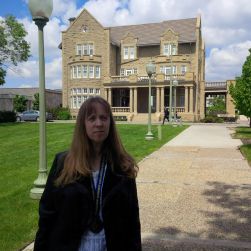
Me at Government House , Edmonton, Alberta

Me squinting in the daylight at Government House , Edmonton, Alberta

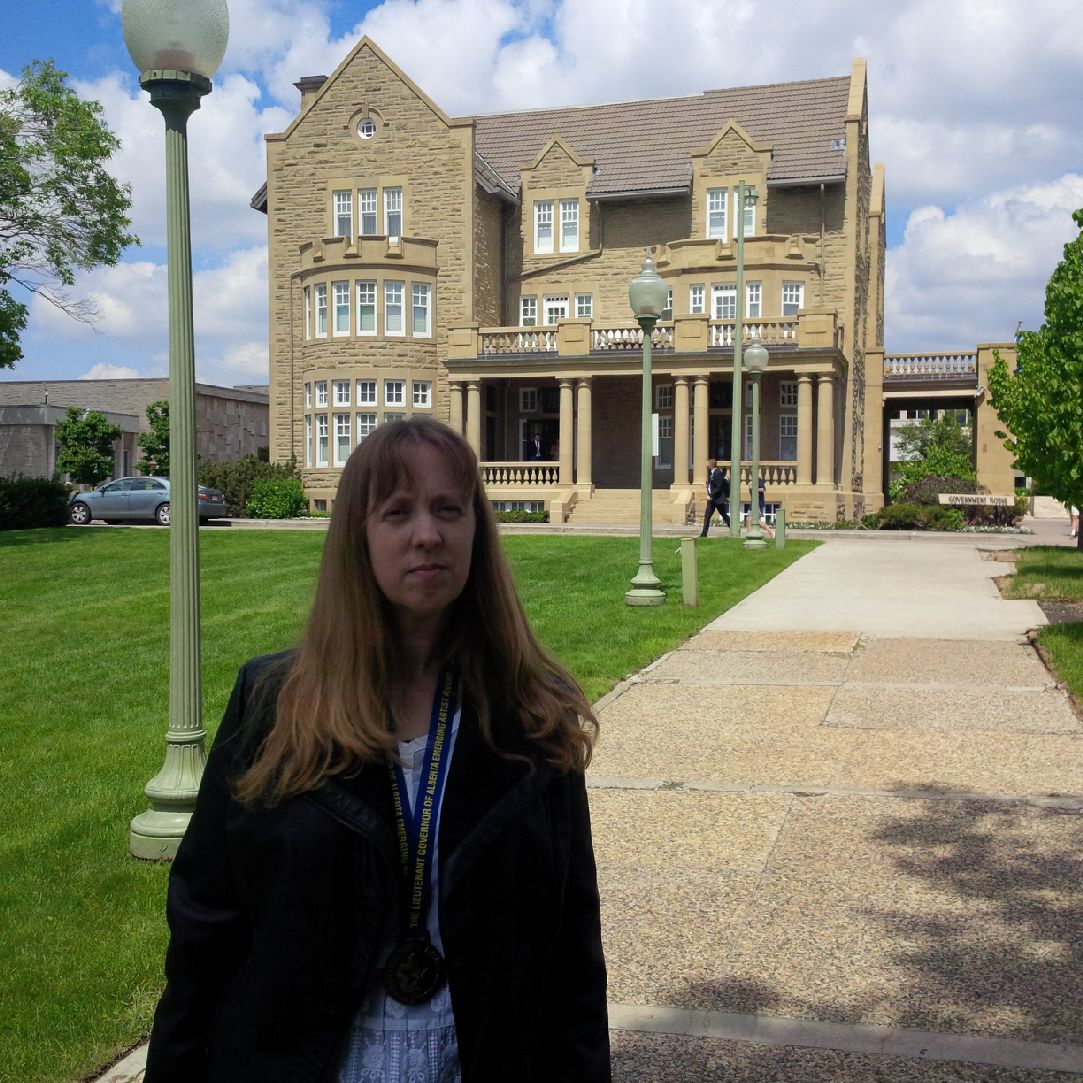
The fairy godmother who conjured this fantastic morning for my kids and me was actually the Lieutenant Governor of Alberta. I’m one of the recipients of the 2014 Lieutenant Governor of Alberta’s Emerging Artist Award. It’s a fabulous, generous programme and I’m thrilled and honoured to be included in it. Canada is a constitutional monarchy and some of our traditional royalist sensibilities, like art patronage, provide vital support and recognition for artists – a term it’s probably high time I stopped apologizing for applying to myself.

The award was presented to me and seven other recipients – accomplished singers, filmmakers, poets, visual artists – in a private ceremony. I was able to invite five guests so I brought my parents, my husband, and my 17-year-old and 15-year-old sons – the kids of mine least likely to turn the whole thing into a brawl.

I arrived at the Government House mansion before my family and waited in the green room until we were ushered upstairs where our guests were already seated. We all rose when the “viceregal salute” was played on the harp and Queen Elizabeth II’s local representative, the Honourable Donald Ethell (who is more like an impressive great-uncle than like the queen of anything), entered to officiate from a throne made of dark wood and green velvet.

How cool is that?

Each of the eight of us was formally presented to the gathering as our bios were read. It was the first time I’d heard the adjudicators’ remarks about my work. They said, “Her writing is extraordinarily strong, powerfully handled, and evidence of a rarely encountered original voice.”

Thanks!

We then came forward to greet His Honour and receive a medal – and a discrete folder containing our prize money. (Apparently, Government House lacks a giant novelty-sized cheque printer.)

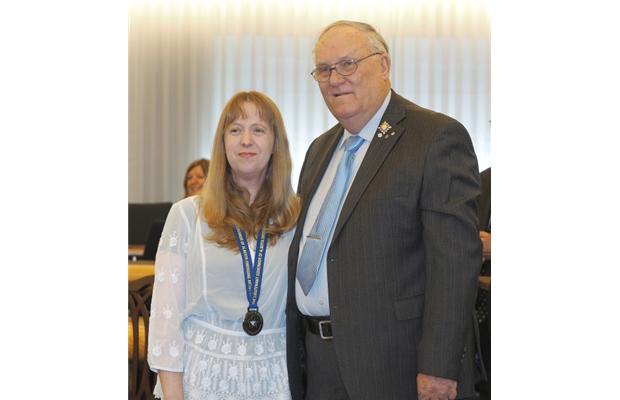
Me and the Honourable Donald Ethell, Lieutenant Governor of Alberta

Me and the Honourable Donald Ethell, Lieutenant Governor of Alberta

Just like the day years before when I was in this same room watching my extraordinary husband receive an award from the Department of Justice for his service as a prosecutor, the line from the bio that drew an audible murmur from the crowd was the one reporting our roster of sons. Lawyers, artists, everyone has something to say about a large young family.

Even His Honour mentioned it as he slipped my medal over my head. “With all the writing you do how did you find time to have so many children?”

“They were thrust upon me,” I said.

My mum loved that.

He recognized the pair of my boys sitting the audience. “Where are the other ones? In school?”

I shrugged. “I sure hope so.”

At the luncheon afterward, my boys didn’t fail to appreciate the never-ending platters of dainty sandwiches and sweets. No matter how nice they are, I have a hard time stomaching refreshments at events and it was good to see someone from the family eating my portion.

My sons met His Honour, Her Honour (his wife), their red-uniformed aide-de-camp, the Minister of Culture, the Mayor of the city of Red Deer, and a real live professor from the University of Alberta — the school my oldest boy will be attending in the Fall. The professor, Douglas Barbour, was there as a guest of one of the other artists but he also happened to be the instructor of the only senior-level English course I ever took.

My Family and the Lieutenant Governor

A Bit of My Family Meets the Lieutenant Governor

Several times during the boys’ fancy morning out, I overheard strangers asking them if they were proud of their mom. It can be an eye-roller question — even for me, someone who prefers the term “pleased” to “proud” since it travels without the negative baggage and misunderstandings that can come with “pride.”

People in their late teens aren’t renowned for being gracious. They don’t efface themselves like I do but they scoff and sigh and shrug. And the truth is, my accomplishments have meant the boys’ childhoods have been lean on motherly touches like homemade baking and chauffeur service to school.

I kept smiling but I braced myself as I listened to my boys make their answers at the Lieutenant Governor of Alberta Emerging Artist Awards luncheon. In replying to kind strangers who wished us nothing but the best, the boys set aside any cynicism, bitterness, or semantic fussiness to answer with pleasant enthusiasm – enthusiasm for me and the tumultuous, demanding arts career that may have affected their lives as much as mine.
“Award-winning” at the Last Minute: I Am No Paul Henderson But…

My dad has shown me enough inspirational sports movies and documentaries for me to know it’s best to wait until right before the buzzer sounds at the end of the game to score a big goal.
That’s the way the literary awards season for my debut novel has unfolded. The book was released in August 2013 and I sat here quietly and morosely ticking off each of the season’s awards as their short-lists were announced without my name on them. I got to watch kind well-wishers saying it was too bad I was overlooked and while that went a long way in buoying my spirits, it didn’t give me and my novel any grounds to be called “award-winning.”

Near the end of the season, I was named on one shortlist but, while I appreciated the honour, the award was a bad fit for me and I didn’t win it.

Since it’s Fathers Day this week, I’ll tell the rest of the story with a Canadian hockey history analogy.  Let’s just say it was the final seconds of the third period of the literary award season…

“Henderson made a wild stab for it and fell”

… when I got a phone call…

“Here’s another shot right in front of the…”

…congratulating me on winning the 2014 Lieutenant Governor of Alberta’s Emerging Artist Award.

“Score! Henderson!”

It finally happened. I won the last award I was a contender for this year – scored on my last chance to claim the “award-winning” designation, right before the final whistle. Along with the rights to “award-winning” it comes with a prize, a medal, media coverage, and a fancy ceremony with His Honor. I’m one of eight recipients chosen from a wide range of artistic fields to get the award. I’ll find out who the rest of them are at 10am today at Government House in Edmonton.

I couldn’t be more pleased or more grateful to the board for selecting me. Yay!


[Thanks (and apologies) to hockey legends Paul Henderson and Foster Hewitt.]

Morbid in the Mountains

April and Chris Demes’s guitar birdhouse in Hill Spring, Alberta as posted on canadiangardening.com

My May began with a literary festival in a world class city and ended with a book club in the village of Hill Spring, population not quite 200.

This book club was hosted by my friend and fellow writer April Demes.  Years ago, when we first met, April was an arty, precocious teenager and I was a newly married 21-year-old who knew EVERYTHING.  Now that we’re older, we have more in common: gardening, bird watching, CBC Radio, pretty blond children, and writing.

Despite their idyllic Rocky Mountain surroundings – a white house on the side of a green hill where a repurposed guitar is nailed to a tree as a birdhouse – April’s family hasn’t been luxuriating in a quiet simple life.  (Quiet simple life is a myth.  If we think we know someone living this way, it’s a sure sign we don’t know them very well at all.)  While still in his 30s, her husband was afflicted with cancer, right inside his skull. They nearly lost each other.  That my novel strikes any kind of chord with April is a great honour.

The Hill Spring book club was one of my favourites.  It was peopled with bright, interesting women of varied ages and backgrounds – some of whom may be distantly related to my well-connected husband.  They came prepared with questions and we had a great discussion about love and death and the writing process.  But it wasn’t because everyone unreservedly loved the book.

One of the ladies who enjoyed the book described her grownup daughter’s reaction to it.  They’d been reading aloud and the daughter stopped when the narrative got too “morbid.”  There is a fair bit of death and death paraphernalia in the novel.  It begins in the title and never really lets up.  It can be tough for some readers to see through it to the tenderness that is the real point of the book.  Sometimes, they dismiss it as “morbid.”

Strictly speaking the word “morbid” means sick, unhealthy.  I flinch when I hear this word used to describe my book.  Writing in frank, practical terms about loss is not something I consider unhealthy.  Not everything that’s uncomfortable – exercise, pelvic exams, insulin shots – is unhealthy.  Willfully ignoring the difficult and complicated process of dispatching our loved ones until we’re devastated by a crisis is what seems unhealthy to me.  As I wrote the book, “morbid” was not my aim – quite the contrary.

While I’m no longer surprised to hear “morbid” spoken at book clubs, I was surprised to hear which part of the book made the lady’s daughter squirm.  It was the chapter where the main female character is cutting up a grocery store chicken, making dinner.

I hate cooking more than most people.  I wrote about cutting chicken honestly, flaunting but not exaggerating my perceptions of it.  “Take that, cooking.  You’re gross.”  But even someone who abhors cooking as much as I do probably doesn’t find her own kitchen a morbid place.

Please enjoy this photo of a butchered chicken

Maybe death is the same.  Life on Earth means eating and it means dying.  Both are messy, inevitable, and natural.  It doesn’t matter how healthy or vibrant or “morbid” any of us is, we all have to eat and we all have to die.  It remains true even if we don’t want to know anything of the finer points of how either is done.

I don’t make money on book clubs but I did sell two books in Hill Spring.  One was to a lady who came to the meeting without finishing the book.  It was morbid, she said, but after hearing the rest of us talk about it she’d decided to give the book another chance and invest in her very own copy (personally defaced by me) instead of borrowing April’s.  She was willing to question her sense of what’s morbid and consider changing her mind.

It may have been the most gratifying book club comment ever.

Searching for Swag in Montreal

Me at the Blue Metropolis International Literary Festival in Montreal

Me at the Blue Metropolis International Literary Festival in Montreal

So my 17 year old son asked me, with all the irony he could muster, “Mom, which value is more important to you: YOLO or swag?”

If you’re over 25 and this question makes no sense, that’s exactly how it should be.  This is the current youth lexicon at work, reminding – or warning – us older people that we aren’t the sole proprietors of our language.  However, as the beloved parent of generous teenagers I’m given a pass in a few areas of youth culture including permission to know the meaning and social function of words like YOLO and swag.  Thanks, boys.

I won’t define YOLO here like the old sociologist dork I truly am (and as if there’s no Google).  It’s just a simple acronym anyways.  Swag is more complicated.  It’s concrete and ephemeral at the same time.  It can be stuff, but not stuff.  It arises from what’s inside and outside.  It comes and it goes.  What’s swag on one person may be sad or silly on another.  Sometimes the very best swag comes from the most humble sources.  There’s irony and self-consciousness in swag.  And it descends differently upon everyone.

Follow any of that?  I know, it reads like old theology – swag is invisible, uncreated.  It can be a bit of a riddle. Just ask my 35 year old friend Christi who’s been trying to use the word “swag” appropriately in conversation with teenagers since the New Year.  It’s a process of trial and error but don’t worry, she’s got swag enough to keep trying and will pull it off eventually.

I can use the word swag but that doesn’t mean I can command swag itself.  Sometimes I worry I’ve never had it — especially when I’m doing my writer-thing out in public.

If anyone wants to know what I mean when I talk about good writer swag, I recommend a look at the Blue Metropolis International Literary Festival in Montreal.  It’s a gathering of writers, publishers, media, and book lovers from all over the world held annually in one of the great cosmopolitan cities of my country.  The festival is peopled with top literary talent – and me.  Believe it or not, I was given spots at three of the festival’s venues this spring.

With a gig like that, it was time to stop being awe-struck and turn on the swag.

Rightly or wrongly, I believe my best hope for swag begins with boots.  I packed a couple pairs and headed off on a cross-country flight, alone.

My first impression of Montreal was that the city is serious about Canada’s second (or first, depending on who’s asked) official language: French.  I knew most people in Montreal can speak both English and French but I didn’t realize Montrealers’ default is French.  I also didn’t realize how profoundly my French has atrophied since I left eastern Canada twentysomething years ago.

My first Montreal venue: the Atwater Library

When I was a high school student in Nova Scotia, I spoke French all the time – horrible French.  I understood it was bad and did not care.  The badness was part of the sport.  What I lacked in ability I made up for with confidence, enthusiasm and – wait for it – swag.  That bad-French swag is now history and I’m left with my sheepish grownup French – stressing out over masculine and feminine nouns.  At least I still have the comprehension to tell the nice lady asking me to donate blood in the street “Non merci.”  And by the time I left the city I was comfortable enough to be using my natural Acadian quack for “oui” again.

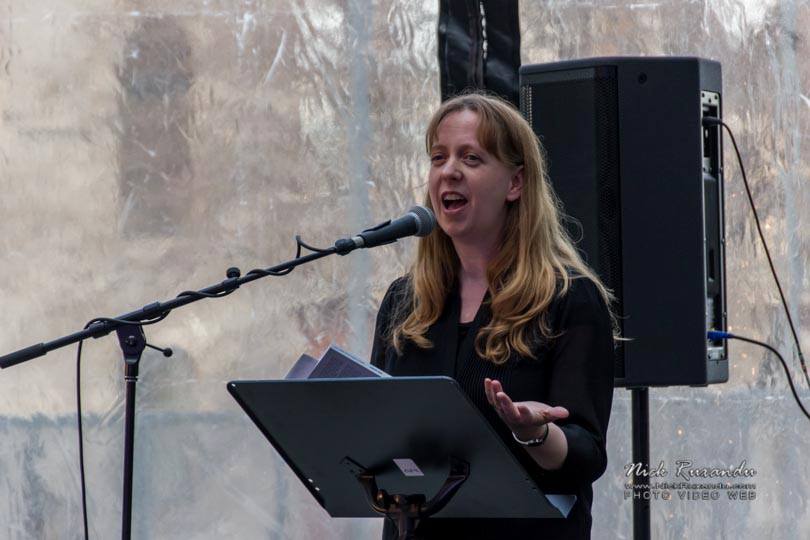
No matter how stupid I sounded, I loved the city.  I went to galleries, cathedrals, museums, and got to debut by reading my novel to a crowd at an old library.  At my publisher’s festival event, I witnessed the gorgeous writer-swag of some of my fellow Linda Leith Publishing authors.  As always, they astounded me.  They’re multi-lingual, well-traveled, well-educated, and each of them writes like a house on fire.  Even the new non-fiction book all about the prostate gland sounded amazing when I heard the doctor who wrote it presenting it at the festival.  Set on a sheltered patio, our party was everything I fantasized it would be.

I was set to appear late in the English portion of the programme.

Want swag even in death? You want a saint’s burial in a French-Canadian Catholic Church.

“Come on, Jenny.  Think swag.  Last winter the Montreal Gazette called your novel the ‘stand-out’ of this company.  Swag!”

I still don’t know if it was swag or not but I got up on stage and nodded to my misfit-ness in the Linda Leith Publishing stable of writers.  Unlike the others, I speak one language, have one degree, and have lived my whole life on one continent.  “But I have the same heart as everyone else,” I said, “and my heart is in this book.”

It wasn’t a confession or an apology.  It was more like bragging.  To be at the Blue Metropolis International Literary Festival with Linda Leith Publishing, I have to punch above my weight class.  There’s no shame in that.  It’s as if something has triggered a special dispensation.  The rules have been waived and I’ve been let into something I would normally have no right to approach.  It’s as if there’s something intangible about me and my work that lets me get away with this beyond all reason.

Must be swag after all.

I don’t know this woman but I do adore her.

If Looks Could Kill: Why My Characters Have No Eye Colours

In preparation for an upcoming multi-author book event, I’ve been reading novels outside my usual range of Can-lit and literary fiction.  The atypical reading choices I’ve been making have been eye-opening – literally.  So far, what’s struck me most in my venture into crowd-pleasing commercial fiction is the diligent reporting of characters’ eye-colours.

Maybe everything I know is wrong but for me, all on its own, the colour of a person’s eyes determines nothing about how they experience life.  Okay, I admit my blue-eyed family may do more than the average amount of squinting in bright light.  And if I ever produce a brown-eyed child while married to my fellow blue-eyed husband, it would add some horrible drama to our home-life.  But most of the time, iris pigment is not the crucial narrative factor a random sample of Western pop-fiction might lead us to believe it must be.

Mentioning eye colour in literature can be a nice touch — like writing at length about a sunset or the ocean or whatever. (Writers can get away with a lot in the name of world-building.)  And in the right context, eye colours can be important story elements.  In Irving Berlin’s Easter Parade, Judy Garland closes her eyes and tests Fred Astaire’s devotion by challenging him to remember her eye colour.  Even as a kid watching the old movie on TV with my mum, I knew this was an important moment.  It advances the plot, reveals something about each of the characters, and it’s hecka sweet.  Well done, 1940s film-makers.  Look at you, making eye color genuinely relevant and letting it arise organically from the narrative.  That’s how it’s done.

The same could be said for any detailed description of characters’ looks.  Descriptions can work to propel the story, motivate actions, explain character traits.  But sometimes they’re dumped into a story apropos of nothing.  It’s as if we’re driving along an icy street and someone yanks up the parking brake and we’re flying in a circle for a moment, calling out eye and hair colours, spinning out of the true direction we’d been traveling.  Or it’s like the story has deteriorated into a junior high school Language Arts lesson and we’re now outside the narrative reading a “character sketch.”  At their best, character sketches are just exercises meant for the writer’s purposes.  They’re notebook scribbles, not even first drafts, and certainly not good reading.

I hope all of that sounds technical and reasonable.  Here’s a personal reason why I write without bothering to explain the minutiae what everyone looks like: I don’t care.  I honestly do not care what people look like.  That’s not to say I’m any less shallow than anyone else – I care far too much about how people smell – but it is to say that when I’m choosing what to pay attention to, a person’s looks aren’t all that compelling.

When I’m acting as creator of a book-world, I let everyone look the way readers want to imagine them.  That’s done by forgoing physical descriptions I don’t need for plot and thematic reasons.  Giving up the creative control that comes with dictating everyone’s colour palette is worth the sacrifice if that’s what it takes to keep physical traits from interfering with everything else I’m trying to say.

Describing a human being’s looks – even a fictitious human being’s – is actually not like describing a sunset.  It might feel idle and innocuous but it’s not.  Sunsets don’t come with politics.  People do.  Spelling out physical descriptions can introduce prejudices and tropes that distance readers.  If that’s what an author wants (and sometimes it is), carry on, I guess.  Descriptions also run the risk of fueling male gazes and other sources of negative stereotypes. They can end up assuring readers certain appearance-based prejudices are right and fair.  I have a revulsion to abetting that.

In the novel Eleanor Rigby, Douglas Coupland deliberately withholds the information that the narrator, a woman, is overweight.  He allows the reader to discover her through what she does and says and only later introduces what she looks like.  The delayed fat-reveal is brilliant.  I was surprised at how it affected me.  I am not a fat-shamer.  I’m not fat myself (she rushed to say) but during my most intensive baby-raising years I was a bit of a chubby-chick.  It runs in my family.  I love fat people.  I understand on a deeply personal level that they are not lazy or greedy or bad.  And it meant I was shocked at how my vision of Coupland’s character unwittingly changed for the worse after I read she was fat.

To add another layer of complexity, Coupland’s narrator challenges the reader, saying we must have been able to tell she was fat before the reveal, as if something so fundamental must have been visible all along.  Of course, it wasn’t.  Her looks don’t make her any less human or relatable as a character.  But it’s only through withholding a physical description and showing us our own reactions to it that Coupland demonstrates the depths of our appearance-based prejudices and how easy it is for writers to be complicit in maintaining them.

By the way, Judy Garland’s eyes – they were brown.


Getting Ready for the Blue Met

I’ve booked my ticket and my cheap but not inexpensive hotel room and I’m all set to fly to Montreal in four weeks for the Blue Metropolis International Literary Festival.  It’ll be my first time in Montreal outside the airport or the freeway and my first visit to a literary festival in any capacity.  In keeping with my out-of-step career path, at my first literary festival I’ll be appearing as an author with three spots on the programme.  As always, I’m humble and happy to be included in such a great event — and glad everyone’s cool with me performing only in English.

Link to the festival programme