Me in my local. Click the link to read the online version.
The Edmonton Journal, my local daily newspaper with its robust books section, ran a feature on me and Sistering this week.
Michael Hingston (fellow Can-lit humour novelist) interviewed me and wrote the piece, and a nice photographer named Bruce met me outside the University of Alberta Humanities Centre, stood me up against a tree and shot pictures of me. I’ve never heard someone say, “You look like you’re pissed off at me” so pleasantly. I wasn’t, of course. I always hate pictures of myself, but at least my hair was full-throttle Smurfette that day.
They also posted a notice of my upcoming book event in Edmonton. We’ll be at Audreys Books on Sept. 29 at 7pm.
We were pleased to hear Angie Abdou reviewing Sistering on CBC Radio’s Daybreak Alberta programme. Here she is talking to host, Chris dela Torre, about my new novel. My favourite line? “Jennifer Quist makes you believe it.” Thinking of having a t-shirt made…
Summer 2013, my first novel is published. It’s a family saga about death and dying. The week it’s released, a close family member is diagnosed with a life-changing, life-expectancy altering illness.
Oliver, BC fire, 2015
Summer 2015–today, to be exact–my second novel is published. It’s another family story–a dark-hearted comedy instead of a light-hearted tragedy. It’s about sisters and fire and love and stuff. So, naturally, right in time for publication week, the mountain town where my sister Mary lives catches fire.
Ya can’t make this stuff up.
Upon waking on the morning of the unveiling of a five year project my future and my identity as an artist are inextricably linked to, my first thought wasn’t “book.” It was “Mary.”
The last images she left on Facebook last night included the one above. But while we slept, the lightning stopped, the rain started, the firefighters fought. This morning, my sister and her family (plus a second sister who just happened to be visiting this week, posting fire-photos on Instagram that ended up on the Global News website) have all reported in safely from their undamaged home.
I am relieved, finally ready to celebrate, and resolved that my next novel will be a tableau of fluffy bunnies nibbling wildflowers in peaceful meadows.
Oh yeah, and if you’d like to read my “wonderfully bizarre and surprisingly recognizable” book click the “Finding the Book” tab above.
It’s been observed in reviews of my work that the imagery I use isn’t the typical sort of literary imagery, rooted in visual experience–things that can be seen. Instead, it’s based on other senses (especially smell), simple minute experiences, and cultural allusions. I was surprised to read this about myself but I have to agree with it.
Maybe I was surprised because, no matter how I wind up expressing myself in the end, I do have albums of pictures in my head that inspire my writing. I’ve kept track of some of them and I’ve been posting them every few days as a countdown to the release of my second novel this August 15. A friend called them “clues” and I suppose they do serve to create a bit of mystery. They also satisfy my little kids, who are very diplomatic about their disappointment that my books don’t come with pictures.
Whatever the pictures do, there are still fifteen days before Sistering is released and in the meantime, here’s a recap of what I’ve posted in the past 15 days–my picture book.
Back Stairs, by Heather Horton
Vintage Paper Dolls
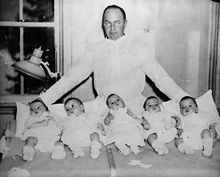
The Dionne Quintuplets (and the Premier of Ontario)
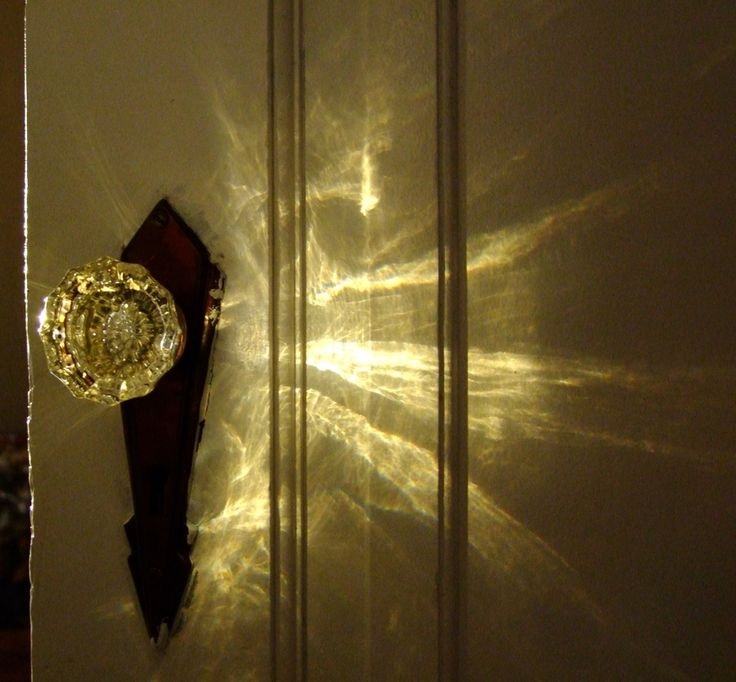
Sunlight through an old glass doorknob
Light gravestone maintenance
Queen of the Mist
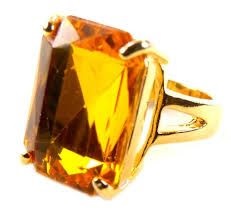
Big Ole’ Yellow Ring
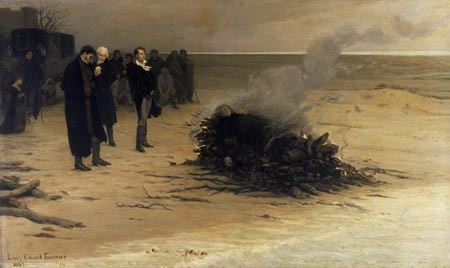
The Cremation of Percy Bysshe Shelley, by Fournier
Our professor renamed each of us in Chinese. This is what he called me. It sounds like “Jenny.”
In three months my second novel, Sistering, will be released. The manuscript has been sent to layout. The cover has been finalized. For now, there’s nothing to do but wait. Authors can go a little mad at this point, second-guessing ourselves, worrying all past successes were just flukes. We could reread our unreleased novels to reassure ourselves they’re good, but if that reading raises any doubts, highlights any passages we wish we could have one more go at, it’s too late. Reassurance could turn to regret. So we leave books caught in Limbo untouched, willing ourselves to trust our editors, our publishers, the promise readers said they saw in us when they reviewed our previous novels.
It’s a funny space to inhabit—too far into the publishing process to look at the book, but too close to publication to look away.
A friend of mine quelled her latest bout of pre-publication nerves with a trip overseas. That’s not possible for me but I couldn’t just sit here and wait. I needed to diminish my obsession with my sophomore book with a new, completely unrelated obsession.
Yes, I get obsessed with things. Most of the time, I like that about myself. Without a propensity for obsession I might not have finished any novels or stayed infatuated with the same man for twenty-one years. Obsessions demand time, attention, and energy. They rob other things, including other incompatible obsessions.
And I’ve found a new one. My current obsession—my respite from fretful excitement over my next novel—is Mandarin Chinese.
What the heck, eh? I’ve been asked that a lot since I enrolled in a Chinese course at the University of Alberta this spring. It began with my interest in getting a Masters of English degree from a school that requires its candidates graduate with intermediate-level knowledge of a language other than English. I don’t believe in fate but I do believe our lives have purpose. At times, we act and at other times we are acted upon. I think I may have been acted upon by the university’s lean spring semester selections and the daily schedules of the schoolboys in my family. Chinese became my only viable course option. If I wanted to sound silly, I’d call it destiny. Whatever it is, I spent my Saturday afternoon sitting in a barber shop while the boys took turns getting their hair cut and showing me flashcards of Chinese characters.
Unlike other east Asian languages, Chinese has no alternate phonetic writing system. Often, casual beginners’ Chinese courses stick to Pinyin (Chinese written in romanized letters familiar to English speakers) and leave characters to native speakers and scholars. That’s not how it is at the U of A. Their course is an intensive, integrated, academic study of Chinese without any room for the mystique that can surround characters. In the words of my professor, “People have to get over it.”
As a storyteller, I’m finding I wouldn’t want to learn the language any other way. Chinese characters are fascinating. They’re also easier to draw and remember than they first appear. My fresh-brained genius days are long past but still, after one week of class, I drove home through Edmonton’s Chinatown reading snips of signage along 97 Street. It’s the road my husband’s office is on, one I’ve traveled countless times. I’d always traveled it illiterate but this time I was cackling with outright glee, alone in my car. “Honorable! That character is honorable! See the cowrie shell radical?”
Traces of the culture and history of the people who developed the language are folded within the characters. The word for “me” has a sword in it. Meaning is lost when characters are ignored. For instance, the words for “he” and “she” are pronounced the same, spelled the same in Pinyin, and can only be distinguished by seeing the characters. It’s an elegant, organic way to express historical social values.
Characters are words made concrete in a way I never experienced writing only in a phonetic language. At breakfast this morning, I read the French written on the side of a jam jar, and thought of how reading in Chinese isn’t much like what I’ve known as reading at all. Reading French or German or even Pinyin is a completely different intellectual and artistic experience than reading characters. Reading characters seems to activate a separate mental faculty—one I’m just discovering in myself. It’s startling, mind blowing in a way that’s almost literal. I am in awe that people—a billion people—can do this. And I’m stunned and a little betrayed that I never knew the world was like this until now.
All of this turns my mind and heart back to my new, unreleased book. And not just that, but everything that lies in the future for me and everyone else. If the world has room for something like Chinese writing—something so huge and pervasive yet hidden by my ignorance—that I didn’t truly notice until halfway through my life, there’s got to be much more in store for us than just the good things we’ve already discovered and enjoyed.
We have a tidy little English word for that sentiment: hope.
Sesame Street’s Don Music with a bust of William Shakespeare
I remembered them from my days as a twentysomething undergrad: certain “mature” post-secondary students heck-bent on sharing their wisdom and experience. They stalled lectures, dominating professors’ attention with “the adults are talking” airs or by questioning everything professors professed—because what do those ivory-tower hacks know anyways?
This winter, I took a class called Advanced Creative Writing at my old university. It was a writing workshop—my first. Though I’m firmly on the path of free-range writing rather than a hot-house writing, it’s okay if my range overlaps a hot-house for a few hours every week.
As I walked up the Humanities Centre stairs, I knew I didn’t want to be “that” mature student. I said so when it was my turn to introduce myself to the class. My professor, a talented author who had kindly waived the portfolio prerequisite because he’d already read my novel, stopped me and told the class I was there “to help” as well as to learn.
This was generous of him. I’m not sure how well I walked the line between helping and infuriating my classmates. I’m pretty sure I used the phrase, “I already graduated, what do I care?” too many times.
Naturally, I gravitated toward class members most like my sons and my youngest sister. Though familiar, this was not my usual writing crowd—far from the scene of a Linda Leith Publishing vin d’honneur—but the honor of being among talented people before they’ve made it (whatever that means) wasn’t lost on me. In the end, I managed to leave the course with a good though moot grade, one hug, and some sweet goodbyes.
Now that it’s over, no more restraint. Here’s the list I’ve suppressed all semester—the things Mama Mature Student would have told the class if she hadn’t been checked by all this dang self-awareness. It’s not that I wasn’t asked questions—one about episiotomies leaps to mind—but the full force of my advice rampage has been held back until now.
If you are or ever plan to be a creative writing student, consider this:
Be nice – This echoes the university’s writer in residence who visited our class. He went so far as to recommend we read How to Win Friends and Influence People. It’s not bad advice. Some of the most cringe-worthy things I can’t forget myself saying were said in my early twenties. Remember Franzen made his name before the social media age, back when authors’ rough styles could be easily managed by publicists. Personal scrutiny has never been closer than it is now and in a competitive arts world full of very good work, a skill like not openly rolling our eyes might be a career tipping point. Unfortunately, arts careers are a little like small businesses and our personalities can combine with our art to form an unsightly hybrid product that’s difficult to sell.
Take heart. Canadian literary communities, particularly the Alberta one with which I’m most familiar, tend to be collegial. We cheer one another, writing blurbs and retweeting announcements along the way. It’s easy to be nice here.
Be generous – Our professor held a book launch during the semester and only three of us came. Not cool. Go to local book events. We don’t have to buy all the new books (with writer wages, we probably won’t be able to) but realize that many authors arrive at their events convinced they’ll be facing a room of empty chairs, peppered with a few blood relatives feeling sorry and embarrassed for them. If at all possible, do not let this happen. Anyways, it’ll be fun. It’s moving and fascinating to hear people offering vocal interpretations of their own work—not work they’ve been picking at for classes but work they’ve toiled over for years, work they’ve staked their futures on. Go ahead and laugh at their jokes, gasp at their horror stories. Weep openly, if you feel like it. Events are more fun, more productive, and more satisfying when we invest ourselves in them.
Don’t take the workshop process too seriously – I am an old woman raised in the pre-Elmo golden age of Sesame Street and one of my favourite characters was Don Music. He’s an angsty songwriter we find one word shy of completing perfect nursery songs like “Twinkle, Twinkle Little Star.” When his near-perfect songs get “help” from a visitor, they get mangled into parodies with details that make so much literal sense the artistry of the songs become absurd. Our workshops were like that at times. I saw (and benefitted personally from) great suggestions coming from workshop discussions. However, I also saw classmates balk at truly powerful and original aspects of their stories because of well-meant questions these risks raised during workshops.Critique is a vital tool in writing but so is the discretion to resist pressure when it’s pushing a story in the wrong direction–when we know it’s time to depart from expectations. Remember the lessons of Don Music.
Don’t take your parents too seriously – Everyone’s parents betray them in some way. That’s the rule, not the exception. We all sit down to write reeling from that trauma. But look at where we are. We’re not roughneck-ing in the oil patch, we’re in university. We’re in university not to get a traditionally marketable skill like teaching or engineering. We’re in the Faculty of Arts. And we’re not just in the Faculty of Arts, we’re studying the fine art of creative writing. There are reasons we are here and our parents are probably among them. Maybe they hate this field. Maybe they deserve to become caricatures lampooned or eviscerated in fiction. But they also deserve a nod for the privilege we enjoy as people having a go at an expensive, elite liberal arts education. The idea that this privilege is universal regardless of the circumstances and people we were born among–even in Canadian society, it’s false.
Explore the free range – Make sure life is built upon pillars other than reading and writing. Duck out of the academic hot-house for a while–and not just through travel stunts. The daily grind is an excellent teacher. Some of the most interesting fiction in the class came from people who work part-time in stores and bars, in the real world where they form and sustain relationships with people nothing like themselves.
There was great sensitivity in the class. Sensitivity to our own feelings needs to be augmented by sensitivity to other people’s feelings or it will never be enough to make our writing real and potent. Empathy is everything. As the man says, “You can’t write if you can’t relate…” Love people—everyone. That is how they are known. That is how they will come to know and love you and your art.
The US has it’s Oprah Winfrey book world–nods given by a bright, trustworthy, well-read media personality to books of note. In Canada, where everything but geography and weather unfold on a less flamboyant scale, we have a national radio book programme on the CBC called “The Next Chapter” anchored by a bright, trustworthy, well-read media personality named Shelagh Rogers. That’s her smiling face in front of my book cover in the Tweet. The book and I were the subjects of a feature called “How I Wrote It” on her programme this week. It was short and fun but a great moment nonetheless.
We’ve got a release date for Sistering, my upcoming novel.
Yes, “release date” can mean many things, especially in a family like mine where one of us works in the criminal justice system.
What I mean by it is the book will be available in print and ebook formats from Linda Leith Publishing, online bookstores, and on the shelves of fine bookstores beginning August 15, 2015.
That is, as long as I get off the Internet and get the latest revisions resubmitted on time. Fighting!
Last winter, I traveled to Calgary to do a live radio interview at CJSW about my debut novel. My hosts were Paul Kennett and Emily Ursuliak, a writer deservedly known as one of the most generous and hardest working people in the Calgary literary scene.
Since it was live, I didn’t get to hear the interview anywhere but in my headphones and I was pleased this week when Emily sent me a link to a podcast of our talk.
Here I am talking about the Catholic Church, my bff, and commenting on technical elements of the book that I’d never had a chance to speak about in public until this smart interviewer raised them.
It’s finally happened: the Canadian Broadcast Corporation is covering my debut novel. It’s starting with this feature on the CBC Canada Writes website composed of parts of the transcript from a bit of radio we recorded. The audio itself should eventually air on the programme that might be the gold standard of literary journalism in this country, CBC Radio’s The Next Chapter.
Things got a bit weird when they asked me what music I was listening to while writing the book. But let’s face it: weird, odd, strange, peculiar have been our watchwords all along this journey.






 Jennifer Quist, PhD