 I was born and spent my early childhood in northern boreal towns in western Canada—Prince George, Prince Albert, St. Paul, High Level—remote, freezing places bristling (if you’ll forgive the Can-lit cliché) with black spruce and lodge pole pine. These towns were the centres closest to large Indigenous communities my father worked with as part of the federal government, and later as an employee of First Nation governments themselves. My uncle, my father’s older brother, worked in the same field, in the same communities. As a little girl, I wasn’t sure exactly what my personal connection was to the local reserves or to the people who lived there. They were my father’s colleagues, his hockey and softball teammates, and often, as politics would allow, his friends. As a four-year-old, I didn’t understand anything about anything and ignorantly assumed from my sickly pale features—a genetic throwback to my parents’ Irish ancestors–that I probably wasn’t Indigenous myself. But I wondered about the rest of my family. I was a little girl taking the only surroundings I had ever known for granted, and I suspected my father and my uncle might be Indigenous.
Whatever they were, their connections to the communities seemed profound. Dad’s Indigenous colleagues were generous and he was given gifts of art and crafts like the hand-made beaded moose-hide jacket and gloves that hung in our storage room. My father treasured them, but felt unqualified to wear them in public, wary of “pretending.” Still, these articles were a part of our home. When we’d been away from home for a few days and came back no longer habituated to the smell of the house, I could smell my father’s moose-hide clothing from the front door.
Despite their time and goodwill, their gifts and service, my father and his brother were not Indigenous. Eventually, I figured this out without having to ask. Our family history includes rumors of a grandmother in New Brunswick in the 1800s—a midwife and accomplished canoeist—who was descended from Indigenous people. But I’ve researched the line and haven’t been able to substantiate the story. It remains conjecture—fascinating but certainly not something anyone in my family has ever staked anything on.
My husband’s family history is more illustrious and better researched. It unfairly benefits from romantic exceptions to old racist American policies. He and our sons are among the thousands of North Americans who can trace their ancestry to Pocahontas and her English tobacco magnate husband. It’s not a fairy tale–unlike the ridiculous gossip spread by John Smith and embellished and repeated by Disney itself. While I have not seen the Disney film (our twenty-two year boycott of the movie is going strong) I have seen the genealogy—name by name–that links my children to the most famous Indigenous woman on the planet. Even so, I wouldn’t presume to try to get my kids recognized as status Indigenous people so they could enjoy benefits meant to curb the marginalization of Indigenous communities while simultaneously enjoying the privileges of moving through Canadian society free from racial marginalization. Of course not.
Claims of aboriginality have become an issue in the world of Canadian literature lately as one of our celebrity writers has been challenged to provide clarity and credibility for branding himself as part of Canada’s Indigenous community. The writer in question is Joseph Boyden—a man who has recently also made a howling mess of a university’s labour tribunal against a male creative writing professor, leading a chorus of sexual harassment victim-blaming. In the latest controversy, the best Boyden has come up with in answering questions about his heritage is to make vague references to the same kinds of indigenous connections I have—murky ones on the east coast from generations ago—ones that in no way give people like us the right to presume to speak for (or, as one Anishinaabe/Metis writer has said, to speak over) Indigenous communities. Boyden has admitted that his roots are mostly “Celtic” but he hasn’t backed down from identifying as Indigenous.
Before all of this, I went to hear Boyden speak. It was in a large auditorium to a sold-out crowd. He read from The Orenda, from a chapter narrated in the first person by an Indigenous character. I remember him speaking the words in an accent most Canadians would identify as “Native.” It’s too much.
Boyden has said little in his defense but of what he has said, one statement keeps coming back to me. He said, “A small part of me is Indigenous but it’s a big part of who I am.” This may be something someone like my father could rationalize saying himself—only someone like my father would understand that it’s wrong.
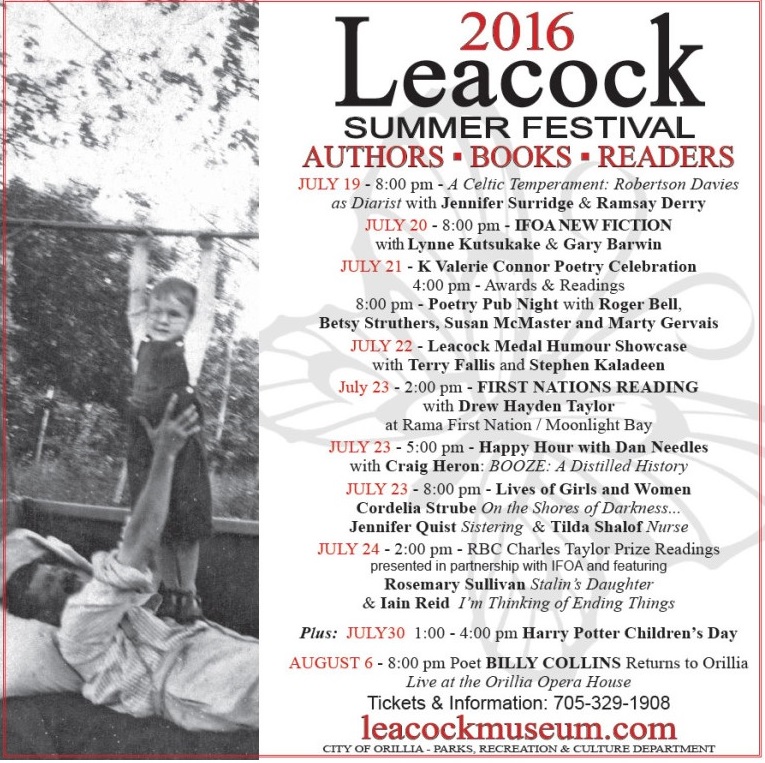
 Last night, right before lights-out, I checked the website of venerable old Canadian literary magazine Prairie Fire and found it had been updated to show the Fall 2016 issue–the issue featuring a short story called “Everybody’s Horror Movie,” new fiction written by me. The news meant I couldn’t sleep but I was happy enough not to mind. See, nothing is harder for me to write and to publish than fiction. I am always ecstatic when it happens. What makes this publication credit extraordinarily exciting for me is that the short story in Prairie Fire is the project from which my current novel-in-progress evolved. I needed an infusion of hope and encouragement that this novel will have a life outside my computer and the publication of this story did exactly that.


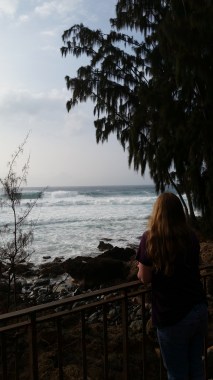
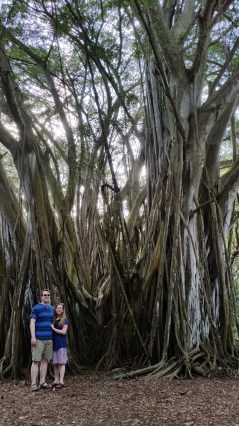 Outside the Honolulu airport, Hawaii is just as delightful as everyone says it is. Thanks to our Mormon ties we didn’t have to go full-tourist. Friends of ours–fellow Mormon-foreigners, a couple where the wife is South Korean and the husband is Japanese—have been living in Hawaii for years and showed us local favourites like a huge old banyan tree hidden off the side of the road, and a strip-mall restaurant serving massive “Hawaiian-sized” slabs of sushi. On Sunday, we wound up at a church service singing from a hymnal written all in Samoan and witnessing a congregation sending off a woman named Celestial to be a missionary abroad.
 Jennifer Quist, PhD