
My husb and I did not grow up blessed with international travel. Husb stayed in a motel with his parents precisely once. It was the Bluebird Motel in Claresholm, Alberta and it lasted as long as it took for their car to be repaired. My family did travel all over Canada and the US, always by car and almost always as part of a grueling long distance move.
In our 20s — prime backpacking age — husb and I were in school, then in diapers (our little kids were, that is), and deep in debt. For us, big-travel did not arrive until our 40s, beginning as a necessity of my career as a writer and scholar before becoming part of who we are now.
If you’re not a big-traveler yet, and especially if you’re like us — too young to throw in with the Boomers on the group tour packages, too old for flirty bedbug hostels — here’re some tips. If you’ve already got the GenX nihilism, whatever your age, then, whoa, you’re halfway there.
- If you’re traveling to try to revitalize a relationship, choose something easy and luxurious like an all-inclusive resort or a cruise. Do not attempt a DIY adventure in a foreign country with someone with whom you do not already enjoy spending a lot of time and with whom you are not really, really comfortable exchanging apologies. I have a sister who has yet to do big-travel but I know she and her husb will be great if they ever do because they happily summit local mountains together every weekend. Find a local “mountain” and take that relationship on a trial run before booking a flight.
- Give yourself lots of time for everything, especially airport connections. Faster is not always better. Don’t just take it from a girl who has run up stairwells in the Frankfurt airport lugging baggage, take it from the much younger and sweatier man we ran past in time to hear him tell his companions, “Just leave me. I’m not going to make it.”
- Get over car travel. You go everywhere by car at home where public transit is terrible and expensive but things may be different abroad. A ticket on a train in, say, Norway is a sacred trust and you will arrive at your destination promptly and safely even if the train you booked derails outside Oslo before you even board it. Norway Trains will provide a way. And when the Eurovision song comes on in a maxi-taxi with purple LED lights in the ceiling, blazing through the Swedish border without slowing down, everyone will be singing.
- Wear your wallet. This is what our 90s cargo pants were made for. Zip or button your passport and cards right into your clothes or get a belt bag and wear it across the front of your body where you can see it all the time, with or without the progressive lenses you should be wearing too. If you leave a bag behind in that Paris restaurant with the distracting wasp problem, it’s just going to be you and your high school French trying to convince the nice, somehow wasp-hardy immigrants who run the place that it’s yours.
- Be so for real about your not-young body. Sleep. Sit. Leave the pharmacy labels on your medication and bring all of it with you (including—especially—the good pain killers). For me, this has meant traveling with my big, cartoon syringe packed in ice on any trips over nine days. It can also mean lying under an overpass in the West End of London somehow overlooked by hostile architecture with your head in your loved one’s lap, or trying to soak in a bathtub in rural Scotland with your foot pressed to the stopper to keep the hot water from draining long enough for it to have its therapeutic effect.
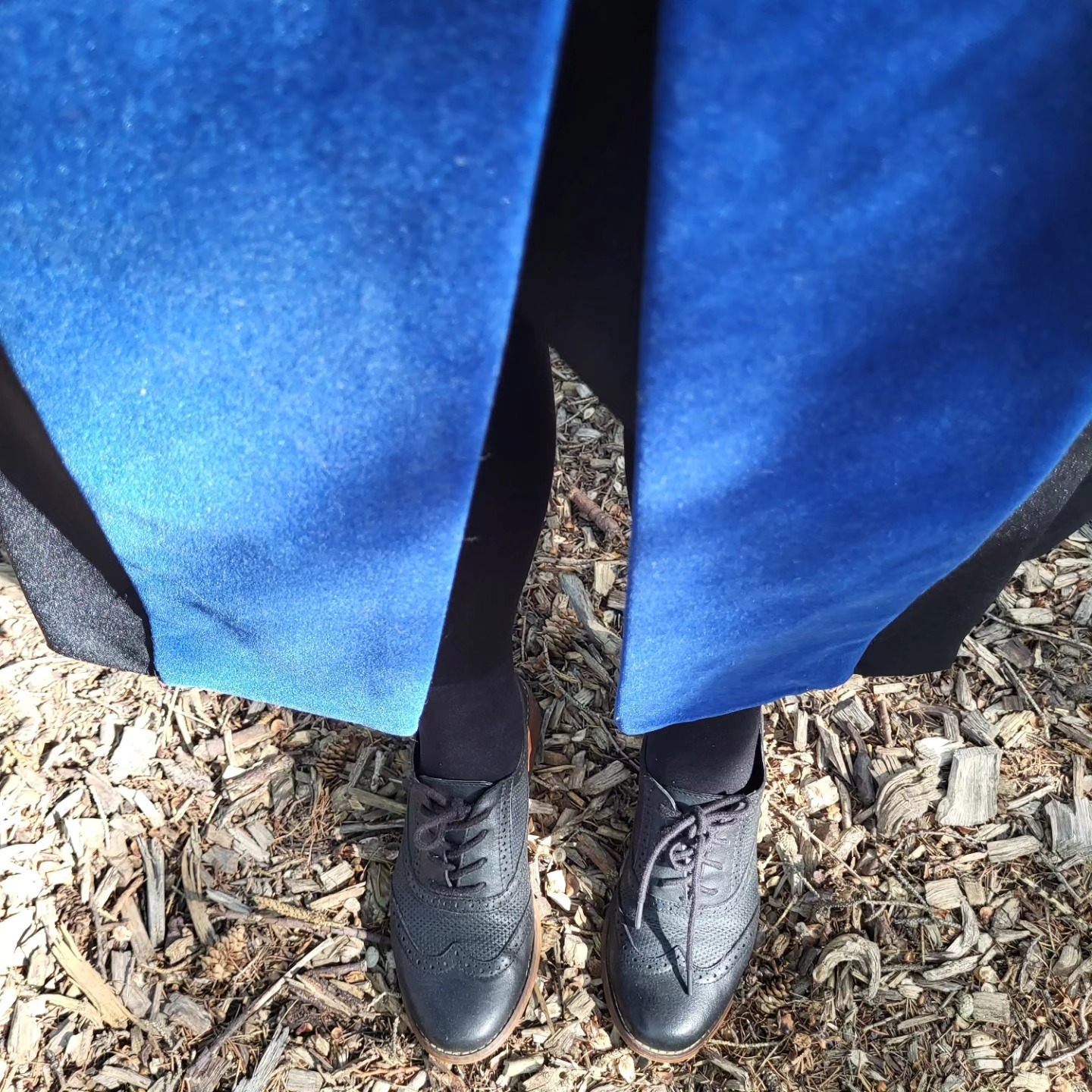
- Don’t bring those shoes. Your Docs are too bulky for your carry-on bag. Get some good sneakers, wear them everywhere, and get over the fact that they’re all you see when you look at photos of yourself.
- Take photos of each other. You’re the only one who expects photos of yourself to look like they would have when you were in your 20s. It might creep everyone out if they still looked like that. And there’s no point photographing empty landscapes anyone could find better shots of with a Google image search. When it comes to my husb’s Instagram, he acts like his sick little old lady companion is a supermodel. I am so not, but I stand up straight, try to open my eyes, dress mindfully, and so far, no one is impolite enough to mention it.
Travel is a privilege no one deserves and not everyone gets. 20s me with the kids and the debt—she never saw all of this coming. Old me is grateful for travel, getting better at it, and wishing you the same.


 Last week, I went to a conference in a small city best reached by an international flight to Las Vegas. It wasn’t a big conference, wasn’t particularly relevant to my current research, and in the end, I made my presentation to six other people, mostly conference organizers attending out of the kindness of their hearts. But that’s what conferences are really about anyway, right—the friends we make along the way? An important point of the trip was its function as a test-flight for my upcoming big conference trip across the Atlantic, to London. Air travel with a chronic illness—can I do it?
 I’ve been sick. I’m now well-medicated and functioning but I’m still sick-ish after two months—a personal record. It began early this Fall, when in the space of four weeks, I had two colds and one stomping stomach flu. It wasn’t an ordinary bug that razes everything for 24 hours before blowing over. It dragged through an entire week, attacking and then relapsing on all 30 of the people who caught it at our family’s Thanksgiving potluck. My immune system cleared all of that up then opted for something other than its usual return to idling in the bod’s background. Sensing the state of me, maybe—the stress and overwork of preparing for a looming week of PhD qualifying comprehensive exams, my grief at the hard times of some of my loved ones, or tens of thousands of things—my immune system cranked the throttle open, blew me into bedridden bits for weeks.
 The world of book marketing is fairly straightforward: the more money a book has behind it, the better it tends to sell. Does that sound cynical? Maybe, but it’s also evident in industry practices like giveaways for newly released books on the Amazon-acquired mega social network for readers, Goodreads.com. Not that long ago, during the heavy marketing phases of my first two novels, anyone could post a book giveaway on Goodreads and hundreds—hundreds—of people would see that book, look at its cover and title, read its synopsis, maybe even the author’s name, and add the book to their to-be-read list in exchange for getting a chance to win a free copy. All it cost publishers and authors, big or small, was the wholesale price of the book, and postage. But by the time my third novel was published, Goodreads was charging hundreds of dollars to give away books on the site. Isn’t that nice? It’s great to see big, well-funded enterprises sticking together.
 Jennifer Quist, PhD