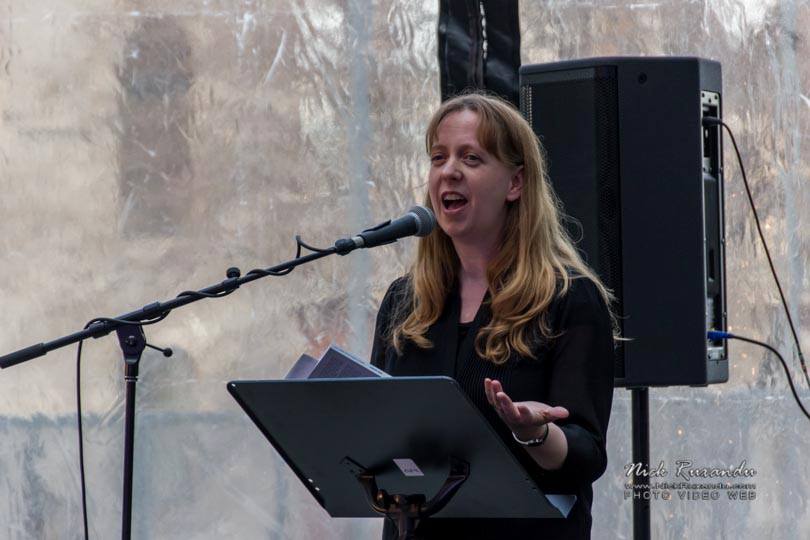
The Edmonton Launch of “Sistering”

audreyspic

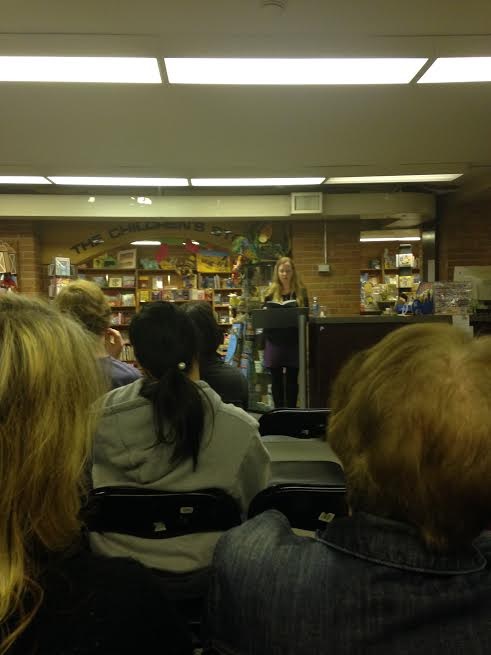
This is not what’s usually meant by books going viral

After spending the summer terrified, plunking through oral presentations spoken all in Chinese, this fall’s chance to appear in public, speaking to people about my novel in my native language seemed like a breeze.

Easy!

But there’s precious little in life that turns out to be easy. The week of my book launch, I came down with a cold. Grownups muscle through colds all the time. It’s not heroic or dangerous. However, my family, the MacKenzie family, has a talent for coughs and colds. We cough until we gag. We cough so loudly little children cover their ears. We cough until the blood vessels around our eyes break, giving us a scary petechiae–a rash of red-brown flecks on our skin. In the late 19th century, one of our great-great-grandmothers lost nine of her eleven young children to influenza. I’m not convinced there’s any such thing as a man-cold but I do believe in the Mac-cold: the MacKenzie cold.

So I turned up at my book launch at Audreys Books in Edmonton with a Mac-cold. I arrived still embarrassed about having to leave a lecture earlier that afternoon to go hack in the privacy of a stairwell. All the hopes I had for the event had been reduced to one simple goal. I wanted to make it through the reading without a spectacular, face-bleeding coughing spasm. All that mattered was breath.

I took my medicine, prayed, took comfort in the goodwill of the family, friends, and colleagues who came, and accomplished my reading in a low, smoky but cough-free voice.

Then I came home and crashed, just like the computers at the store.

From the fog of medication and illness, I missed a few event details that would have been nice. I couldn’t taste any of the cake my sister made for the guests. I also failed to set up any proper photos and am left with phone-shots to document the night.

That’s okay. Someone with a Mac-cold is best seen through a fuzzy screen at a far distance anyway. And the more adversity, the more thankful I am to be in the position to be headlining the launch of my own book, for the second time, in a venerable space, surrounded by people who wish me well.

Thank you, from the bottom of my lungs.

That Time I Stole a Truck

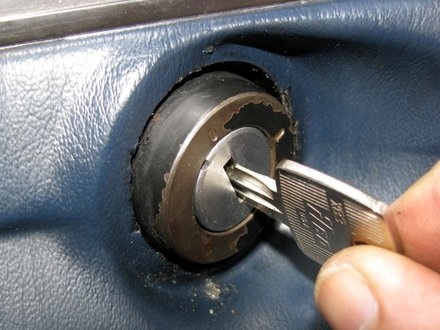
oldkeyOn the first day of this fall semester, I opened the door of my garage where, strangely enough, my car was parked. To my surprise, blocking the foot of my driveway was a skid-steer and a one-tonne flat-bed truck. I was trapped. Unless I was prepared to sprint twenty kilometres, I wasn’t going to make it to school.

The machinery belonged to the contracting company that had been repairing sidewalks on our street. But there was no trace of the men who had left it there to blockade my house. Except for me, the street was deserted.

“Hey!” I called out, just in case. “Is anyone here? Come on. You’re kidding me.”

No one was coming.

The name of the construction company was written on everything so I phoned their headquarters. I spoke to a guy who identified himself as “I Just Work Here at the Office” and I offered to arrange to have their gear towed away if it was too inconvenient to send someone back right away to move it for me.

Mr. I Just Work Here and I hung up. And while I waited to see what he could do, it occurred to me that fastidious craftsmen like these might be too meticulous to bother with details like securing their vehicles. Maybe my freedom didn’t depend on tow trucks or whims of construction workers. Maybe I could free myself.

Sure enough, the truck was unlocked and the keys were in the ignition. I climbed inside, cranked the key, backed up — beeeep, beeeep, beeeep – and, because I am a genius, moved the truck down the street to where it wouldn’t be obstructing anyone.

The work crew was back on the block by the time I had finished and walked back to my house.

“What were you thinking parking across my driveway? I had to move your truck myself.”

“You went in our truck?” the dude said. “That’s—not legal.”

Now, this is not a story of one of my finest hours. I am neither a gracious nor a composed character in this weird little suburban vignette. But give me a little credit for not saying the words “prosecutor’s wife.” Give me credit for not tossing my hair and saying, “Oh, you want to play that’s-not-legal with me, do you? Well, you forcibly confined me in my home by blocking the exit. That could be a criminal offense too, ya know.”

All I said was, “Yeah. Go ahead and recover your stolen property. It’s parked right there.”

“You can’t do that.”

“I did. And your correct response is, ‘Sorry for your inconvenience, ma’am.’”

He never said those words but he did move the skid-steer without my help and I did get to school. I felt a little bad about the scrappy conversation. The construction goofballs are just a bit older than my oldest kids, after all. I’m patient and empathetic when my own big kids mess up and this was a lapse in character for me.

But I didn’t feel sorry for moving the truck myself. Life—what’s left of my life, in particular—is too short for sitting around getting mad and late when the keys are right there, dangling from the ignition.

managehairWhile my oldest kid was working his first part-time job, as a stock-boy in a grocery store, he showed me this picture. It’s about unsatisfied but mostly civilized customers who don’t want to argue with teenaged frontline workers and primly insists on taking their extremely important retail grievances to a higher court. Notice the model in this picture is a probably little younger than me.

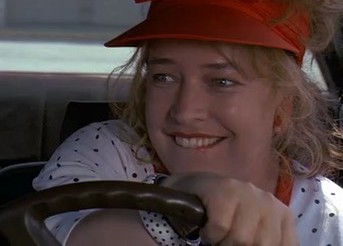
I’m getting closer to the age of the lady below. This is Kathy Bates in “Fried Green Tomatoes” acting out in a parking lot. I always thought this was a dumb scene – a grown-up smashing her car into someone else’s because they were rude and put her out and deserved it. The scene is still over-the-top but it’s starting to make more sense.kathy

I don’t want to talk to the manager. I don’t want to phone the office and wait for a guy. I don’t want answers anymore. I don’t want anyone to get in trouble. I just want results. It’s not about a haircut or hormones or insurance coverage (like it was for Kathy Bates’ character). It’s about time–four decades littered with the usual amount of smoking crap and a complete lack of desire to know where it came from or who put it there. I just want it gone even if I have to muck it out myself.

If the clichéd catch phrase of young women these days is supposed to be “I can’t even…” maybe the catch phrase of women my age should be “I can even…” And I if I can do it without someone  coming out of the office to help, I’d actually prefer that.

Beware women my age. Don’t box in our vehicles. Don’t start ridiculous arguments with us, panic when they’re not going well, and then try to say we came up with the whole feminism thing not because we’re actually suffering but so we can fib our way onto some bogus moral high ground. Women my age are not actually nasty or crazy. We have our wits about us. We also have skills and knowledge and experience. We aren’t hobbled by our sweet babies anymore. We have each other. We can see for miles. And we may insist on being called ma’am.

Ode to an #uglyfeminist

I do not wish to be beautiful. I’ve learned a lot and lost nothing of lasting importance by going through life far from beautiful. I am complaining about nothing. I wouldn’t be thinking about ugliness at all if it hadn’t come to the social media forefront recently with the Twitter hashtag #uglyfeminist.

The hashtag is as troll-ridden as it sounds. It’s not a springboard for enlightening discussion (something the Internet is not known for anyways) but a brawl. On one side of it are misogynists who think it’s clever to reduce millennia of struggle for safe and equitable conditions for half of humanity to a joke where women they do not find sexually attractive are simply frustrated at being unworthy of the social favour men mete out. On the other side are women posting pictures of themselves showcasing their conventionally attractive looks to—I don’t know—prove #notallfeminists are ugly. Some feminists actually do fulfill their social obligation to look the way men want them to, and shame on men for not fulfilling their side of the social contract, I guess.

Now, I won’t tear down my Twitter sisters any further for living their struggle in the ways they see best. I continue to believe that tossing out wedges for women to drive between each other—like the #uglyfeminist hashtag—is an old device men use to make peace for themselves by keeping women preoccupied attacking each other. I won’t do it. But I will share a few things I’ve learned about why ugliness matters.

Ugly is the opposite of beautiful – the opposing end of a crude, arbitrary, culturally constructed spectrum of physical attractiveness. As long as the lights are on, the appearance of beautiful humans affects the people around them. Beauties are able to change other people’s behaviours, beliefs, and sway their emotions just by looking the way they look. Don’t argue. If this wasn’t true, the multi-billion dollar advertising industry would not exist in the form we all know. Most of the time, being beautiful makes the daily hassle of social life easier. It’s a form of privilege and power.

On the opposite pole of the spectrum, we ugly folks have our own kind of power over people.  Like beautiful people, we affect other’s behaviours, beliefs, and emotions simply by showing up and looking the way we do. The effects are different in nature but not in potency.  But where the beautiful can inspire warmth and affection they may not deserve, we can inspire disgust and derision we don’t deserve.

I’ve experienced disgust and derision based on my looks. Most of it happened in junior high school when both my looks and the people around me were at their worst. I’ll spare us the details but on a rainy day in 1987 I was voted ugliest girl in school by a group of loud, rude boys who didn’t know me at all.

They were personally offended that a girl would let herself be so unattractive to them. My looks were transgressive. They flouted the social code that promises boys they’re important and social life ought to be constructed to keep them happy, comfortable, and gratified. As part of that social code, girls are expected to look the way boys want us to.

By being ugly, it was as if I didn’t know how important boys were—or worse—that I knew and I didn’t care. The boys knew in a tacit, latent way they probably didn’t fully realize they understood, that I needed to be punished for my transgressive ugliness. If looking bad all on its own wasn’t aversive enough for me (it was) they would provide the aversion themselves by humiliating me in public. And that’s what they did.

Girls responded to my ugliness differently. At nearly every all-girl-party I went to—especially ones with older, big sisterly girls—I would be given the gift of a makeover. Someone would stick my head in the sink and set about changing my life, just like in the movies. In the late 1980s this meant curling irons, hairspray, and loads of eye makeup. It was sweet and noble and futile. When the big makeover reveal moments fell flat (unlike my high, sprayed bangs) I felt an especial hate for my ugliness, for its imperviousness to makeovers—its rejection of my friends’ love and goodwill.

Sensing my parents’ reaction to my “awkward phase” was bittersweet too. “Awkward” is a term grownups apply to gently describe the unbalanced strangeness in the form and features of children they remember as silky, sparkly babies.  Adults say “awkward” like an apology, with longing and grief. Longing and grief spring from love. There’s heartbreak in the word “awkward.”

I wish I could say I was ugly as part of some precocious feminist stunt—that it was about rebellion and wilful disobedience to oppressive social norms. That wasn’t it at all. I was ugly because I needed my braces off. I needed my body to relinquish the emergency weight it added to get me through the growth spurt that never came. I needed my hair to grow out of the awful cut my well-meaning mother chose for me. I needed to start buying my own clothes. I needed the 90s to start so everyone else would wash off their eyeshadow, let the aerosol out of their bangs, and join me in low maintenance grooming regimens. I needed mean-boys to grow up. Eventually, all of that happened.

Is being ugly what made me a feminist? It must have been one of thousands of factors. Did it make me the frustrated, bitter, unwanted man-hating caricature of the #uglyfeminist hashtag? Clearly, it didn’t. Most of the people who mean the most to me are men—my husband, my five sons, my father, brothers, cousins, brothers-in-law, friends, mentors, colleagues. I don’t spend much time baking them cookies or ironing their shirts but I do love them in my own way.

And it goes like this: a few years ago, I caught one of my teenaged sons sharing an unflattering photo, a candid shot, of a 13-year-old girl we know, the daughter of a family friend. He and a male friend who had never met this girl were laughing, mocking, and posting the photo in a fairly obscure region of a social media website. The odds of the girl ever seeing it herself were low. That didn’t matter.

“Honey, don’t,” I said to my son. “That girl is me.”

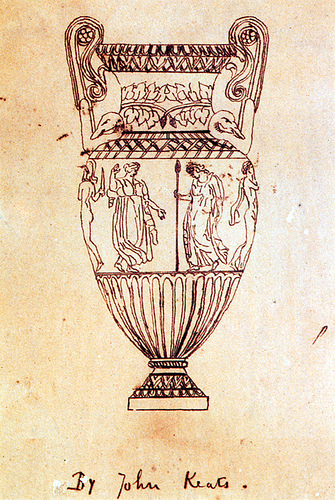
This is the gift I, an ugly feminist, try to give to men instead of beauty. It’s truth, which, as sweet, silly Keats says, is beauty after all.

“The Wrong Side of 40” or, the Peak of Our Powers

Mt. Robson, a few hundred kilometres from where I was born four decades ago.

Mt. Robson, a few hundred kilometres from where I was born four decades ago.

At any time in my young adulthood, I could have been found sitting awkwardly breastfeeding, sitting awkwardly writing, or standing outside shoveling. None of these things was easy, none of them was without lasting benefits, none of them was any good for my left shoulder. Not surprisingly, for the first two winters of my mid-adulthood, my left rotator cuff has wound up sprained—weak and sore–by the end of January.

Despite not having done much breastfeeding, my father and older brother have the same repetitive stress injury in their shoulders. When I commiserated with Dad, he seemed like he’d been waiting. “You’re on the wrong side of forty,” he said, recommending his favourite aromatic anti-inflammatory ointment. Every girl dreams of growing old smelling exactly like her even older male relatives. That’s not what I’m objecting to here. It’s “the wrong side of forty”—I’m not yet convinced there’s much wrong with forty.

Come back.

I know. As a younger person, I was irked by forty-somethings marveling about how their lives are better than the sluggish, disease-ridden ordeals they might have been expecting. The more they went on about it, the more pathetic it sounded to smug young me. And hearing 40-year-olds reject the term “middle-aged” when the average lifespan in our country is in the 80s is still annoying. Life does not begin at forty. Counting works. Math is real. Knock it off.

People my age are well and truly half-dead. But for many of us, life has developed into something surprisingly good—surprising to our broke, baby-bitten twenty-something selves with piles of student debt.

A lesson known to fortysomethings who won’t stop crowing about enjoying life is the realization that, “It won’t last” –whatever “it” is. The wisdom is bittersweet, delivering comfort and demanding resignation at the same time. Is that what maturity means?

Anyways, here are a few things in my life that didn’t last–for good, for ill, for real. [Keep in mind I can only speak for myself—that’s what a personal blog is for–and I didn’t craft this list to make anyone feel badly about theirs. I have one life and it reads like this.]

My kids’ baby-years didn’t last. When I was a new mother–25 years old with two little boys–I got weary of older parents urging me not to wish the boys’ babyhoods away. They were difficult little dudes and I wished their babyhoods away pretty much every minute they were awake. My friend Jeannie—a lady my mum’s age—saw into my black heart and promised me my kids could grow up to be my best friends. It’s turning out to be true. My kids and I hacked our way through their babyhoods to their personhoods. There are still two elementary students in our household keeping us deep in Kidsville. But I can go for days without having to see their butts and I’ve learned to laugh off what might have made me cry when I was a difficult young mother. For instance, with my oldest kid now studying chemistry at university, I have the track record and confidence to tell our grade two teacher that six worksheets of homework is too many, we’re only doing two, and no one’s future will be destroyed.

Youthful looks don’t last. I didn’t come out of the child-bearing years in the same physical condition I went into them—which is actually fine since I began motherhood looking like a 16-year-old, raking in all sorts of pitying disapproval from strangers. I’ll spare us the details of my decline. Suffice it to say, my mother-in-law—who’s is in the early stages of dementia–keeps being surprised that my skin looks so different now than it did when we met the summer I was twenty-one.

“Did you get a sunburn? Did you get hit in the face?”

“No, Sweetheart. We’re just old now.”

In some ways, I’m healthier than ever. My kids getting old enough for me to ditch them didn’t do a thing for my bad shoulder but finding time to work-out means I can outrun—literally—the diabetes, high blood pressure, and knee problems that would have come with being overweight in a half-spent body.

Trends don’t last. I can calm the frick down about how people and things are decked out. When we moved into a house decorated in early 1990s brass and oak last year, I didn’t panic and start redecorating. Brass is already back. Oak can’t be far behind—and even if it’s not, what do I care? Best of all, my favourite boots from the 90s are back in rotation in my wardrobe, authentically vintage.

Being flat broke didn’t last. When I was 28, living with three kids in a two-bedroom Fort McMurray apartment complex where people sometimes got stabbed, I used to say all I wanted of the comforts of life was a dishwasher, a second bathroom, and the ability to buy whatever goodies I wanted at the grocery store. Fait accompli.

The generation older than mine won’t last. The Baby Boomers haven’t been the easiest generation to follow through history but that doesn’t mean we want to get rid of them. So far, more than anything that’s degenerated in myself, the progression of my parents and parents-in-law into illness, disability, and death has been the most difficult part of growing older.

A few things have lasted. My husband is still with me, with all his teeth and hair, without his appendix.

My stories have benefitted from aging as well. When I was in my 20s, childfree, too broke to do anything but stay home reading and writing, I was frustrated at not having much to say. I wrote brutish poetry because it was short, well-suited for venting burst of poorly-formed literary energy. My voice had potential but most of what I wrote lacked the substance I knew I wanted to invoke. It took me a long time to be able to write fiction that didn’t make me cringe. The stories I wanted to tell came the only way they could for me: slowly.

But then, looking back and looking ahead from this point I hope is the middle of my time, nothing about four decades seems slow at all.

Matters of Discretion, or, One Way Writing is Like Dating

Along with my IRL friends, my kids’ friends, and my enormous family, I’m accumulating a growing number of writers on my social network feeds. I like it a lot. One of the newest additions to my Facebook friends list is American novelist Sarah Dunster. I’ve met her only once, but through her online voice I’ve grown to admire the heck out of her as a human being.
She’s currently pitching manuscripts to major literary agencies. I learned about it through her fascinating practice of reporting the responses she’s been getting to her queries. It only takes one positive response – one agent willing to take on a book project – to end the pitching process. Sarah hasn’t received that one response yet so the replies she’s been reporting have been what dour folks like me would call rejection letters.

That’s not what Sarah calls them — at least, not all of them. She seems to prefer the term “polite letters.” She announces them and will sometimes share excerpts of them – anything positive or personalized. Perhaps it’s a way of celebrating warmth, encouragement, and humanity in a process that usually ends in dismissive dead silence. It’s one of the loveliest, most surprising acts of making lemonade out of lemons I’ve seen in a working writer.

When a “polite letter” arrives at my house, I log it, shred or delete it, don’t mention it to anyone but my husband, and only after I refuse to cook and insist he go out to dinner with me.

Maybe I lack the sweetness to make lemonade. I, the girl who, thanks to my parents, went to eleven different schools before I graduated, learned to cope with disappointment by moving on, starting over. When it comes to something like a book proposal, there’s nothing wrong with that strategy. The sooner a rejection is obliterated, the better for me and everyone around me. Get on with it!

I’m convinced both Sarah’s way and my way are fine approaches to rejection. As long as we go on writing and improving our writing, it doesn’t matter how we handle setbacks. Into the shredder or onto Facebook – either one is fine. Looking for the bright side or the blank slate — there’s no wrong choice.

Sarah’s sharing of her rejections on a social network is, by definition, social. My choice to not share mine isn’t meant to be social – but it is.

When an acceptance letter, an award nomination, a good review, or any helpful press coverage comes my way, I tell everyone. I hit Facebook, Twitter, Tumblr, and this blog to let everybody know my good news. And then I refuse to cook and insist we go out for dinner.

Sarah shares her good news too. It’s on her Facebook feed right along with her “polite” letters. Every writer does this. It’s 2015. The world is chock-full of books and if writers won’t talk about our own work, no one else will.

It’s especially true for writers working with small presses with constrained marketing resources. There are publishing companies (not mine, thank goodness) that require authors to prepare “marketing plans” and submit them along with manuscripts when there’s still no publishing agreement in sight.

My small publisher makes a little go a long way. Thanks to their efforts, I had good publicity for my novel’s debut. Still, my personal contributions of time and online platform-space were indispensable in promoting the book. That’s how this industry works. We may cloak it in humblebrags and earnestly sheepish modesty but writers cannot opt out of our own buzz and expect it to continue.

Buzzing really bugs some people. And not everyone caught in my social network puts up with me by choice. Many are connected to me by birth or other kinds of social superglue. They’d have a hard time tuning out my book promotion racket if they found it annoying. I know it. I’m sorry. And if I want to keep working in this field, I have to subject them to it anyway.

This is where not sharing my rejection becomes social after all. If I was more like Sarah — reporting setbacks with frank optimism, not fishing for compliments — maybe my good news would be easier for onlookers to stomach when it finally comes along. Talking about it would seem more balanced, less like a double standard. I wouldn’t be a humblebragger. I’d be simply humbled. Maybe it’s selfish — even dishonest — of me to advance only good news.

Here’s some honesty. I’m not yet emotionally equipped to post my rejections. I probably never will be. While doing so may be useful for writers like Sarah, and satisfying for a few fed-up readers, it has no value for me. It hurts. I won’t do it.

It’d be like publicly posting something about asking someone to love me and having them turn me down. Marketing writing is actually a lot like dating. Some people want to chronicle every detail of the chase, every high and low; some don’t. In my dating days I was never one to announce I liked a guy until he’d already made a very clear first move. It’s not that I never pined for anyone. It’s just that I didn’t talk about it. That’s how I write too – never announcing my submissions until a successful deal is struck. Neither approach to dating or to writing makes anyone selfish or bad. It’s a matter of discretion, not a character flaw.

I’ll always have more to lose, more to suffer, in flaunting my failures than anyone will have to gain in inspecting them. I still just need to move on. This is a tough business. Trust me: I do get bad news, plenty of it. In lieu of public rejection letters, let’s let this post stand as the official, general acknowledgement of all my bad news, past, present, and in perpetuity. It will remain here for easy reference any time my good news feed gets insufferable.

Enough Envy for Everybody

Big stage for big literary celebrity

Maybe there comes a time in every writing career when quiet, solitary writer-person gets curious about the literary world’s version of hype — popular, public, celebrity hype.

It’s true for me, anyways. So before they were sold out, I bought a ticket to see a celebrity author passing through my city. He’s a Canadian now living in the United States who appeared before a crowd of 500 people a few blocks from my house.

The author and I are strangers. I haven’t read his books. I didn’t go to see him as a fan or as a friend. Maybe I was falling back into my social science habits – acting the clinical outsider, coolly observing the phenomenon of celebrity enacted literary-style. There’s something nobly aloof about telling it that way. It lifts my delicate, fretting artist’s heart out of the story.

I arrived at the theatre just as “please find your seats” was announced. Arriving late at a sold-out event means making a rough, rude spectacle, crawling over people to lone seats in the centres of rows. I hadn’t dressed up and I arrived smelling like the onion I’d diced making dinner. That was me — rude, sloppy, late-coming, envious spectacle.

Goodwill and admiration don’t negate envy. Envy, my dad taught me, is different from jealousy. Envy is simply wanting the same thing other people have. Jealousy is wanting to get it by taking it away from them. Jealousy is hating them for having it. Those were the semantics I was raised on.

I knew sitting in a crowd gawking at a celebrity author wouldn’t get all the people who read and talk about his books to read and talk about my book too. Still, reading seems to work on a positive feedback cycle (social science!). The more people read, the more they keep reading. Reading is always good for writers.We lose nothing in supporting our colleagues — even when we’re just a tiny, anonymous faces on the far side of the footlights. There’s something slightly less noble about telling it that way.

Onstage, he read from his latest work. It was masterful and when I applauded, I felt like I meant it more than anyone else in the theatre. Then he talked. He talked about choices he’d made in his career that I wish I’d known to make in mine. He talked about disadvantages I don’t have that make his work rich and stirring and advantages I don’t have that make his work rich and stirring. He has more sisters than me. That stung. He must’ve mentioned his sisters three times — just like I would have.

Near the end, a book club leader from the audience asked him what he’s been reading lately. This isn’t the kind of amazing story where he answers, “Love Letters of the Angels of Death by Jennifer Quist. Check it out.”

That’s not what he said. He answered he doesn’t read other writers’ fiction very often. Especially when talking to a book club member, it’s a claim that demands defending. The author explained, “You read it and it’s like, ‘ah, they’re so good, why do I even bother?’”

That’s what a celebrity author looks like, lit onstage with his delicate, fretting artist’s heart. He looks a lot like the rest of us – rough and envious, unsure. I hadn’t known when I left my house that night, but this was what I’d come hoping to see for myself. There might not be much that’s noble about telling it this way.

How to Read Minds in the Check-out Line: Hints for Parents of Toddlers

My uber-toddler. It was the best of times, it was the worst of time.

My uber-toddler. It was the best of times, it was the worst of times.

Those social media posts and blog entries written by moms of young children, complaining about the way strangers interact with them in public spaces — I could have written those. In fact, I once wrote and voiced a five minute piece for CBC Radio about a low point in my public mothering of little kids.

My youngest child is the ripe old age of six and doesn’t attract much attention in grocery stores or restaurants anymore. However, in order to arrive at this time of life, I first had to run the gauntlet of five toddlers.

All five of my kids had monster moments but two of my toddlers – the first and the fourth – consistently and horrendously stood out when we were in public. They were what kind people called “handfuls” or “going concerns” and what not-so-kind people might’ve considered proof that there’s no hope for the future of humanity. Thanks to bad mate-selection on their father’s part, these two also out-class me in every measure of relative size and strength and I often looked more like their underqualified, overwhelmed, soon-to-be-fired nanny than their biological mother.

What I mean to say is I fought in the trenches of toddler-motherhood for as long and as hard as just about any other women ever to complain about it. I hear you, sisters. I remember. Three short years ago, I was you.

I want to show support for mothers of younger children – treat toddler-moms and their kids the way I wish people had treated us. I want to give the assurances I wish someone had given me – even if it’s going to be a few years before toddler-moms will be able to believe me.

Of course, what I have to say might not be true for everyone witnessing the struggle. I know that. I went on the radio and testified about it to the whole country. Yes, there are plenty of grownup weirdos who have no idea how to behave in public and feel they can scold other adults for things that do not concern them. I don’t know what they’re thinking.

But I can speak for myself. And between me and more than a few other parents with older kids, it’s safe to assume there are allies among the onlookers. It’s safe to assume:

No one cares about the noise and mess kids make as much as their parents do. Everyone in line at the Wal-Mart has ninety-nine problems and someone else’s little kid isn’t one. To strangers, little kids are pretty much white noise – alright, maybe beige noise but definitely not the red noise they sound like to their own parents. What might be interpreted as hostile glaring from strangers is likely just bored staring, idle bemusement, a lack of anything else to look at. We won’t remember or resent a noisy little kid. But thanks for the floor-show while we wait in line.

Wanna know what we’re thinking of that noisy little kids’ parents? I’ll tell ya. Nothing. We’re usually not thinking about them at all. Like most people, we have no trouble staying busy thinking all about ourselves. Most experienced parents are only too happy to let newer parents enjoy absolute rule in their own jurisdictions. There’s nothing we want more for toddler-wranglers than the free exercise their own good judgment. Maybe we’re jerks but compassion isn’t the only thing on our minds when faced with someone else’s struggle. Sometimes, it’s more like, “Better them than me.”

Our smiles for goofy little kids aren’t supposed to encourage them to keep acting up. We usually give frazzled moms space, willfully trying not to notice them. But kids don’t understand space the same way we do and can wind up too close to ignore. At times like these, our smiles and friendliness are meant to show goofy kid’s mom that he’s not bothering us nearly as much as she might worry he is. It’s a simple sign of good will. His mom is having a hard time and a common, deeply ingrained social reaction to seeing one of our kind in distress is to offer non-verbal reassurance and comfort with a smile. We don’t expect those moms to smile back at us – heck knows we never did – but if they did, it’d probably relieve some tension. It’d feel better than scowling and making a retort about how it’s not okay. The truth is, if no one’s being hurt, it probably is okay.

Sometimes someone is being hurt and it’s hard for moms of older kids to ignore years of well-learned reflexes and let it go. Raising toddlers leaves us with something like a post-traumatic stress disorder, hurling us into flashbacks of our very worst days – the ones when we went to the emergency room hoping the medical staff wouldn’t call the police about our kids’ bizarre but completely accidental injuries. When a fellow mom is distracted and her little kids look like they’re in danger, we might break down and squawk out a warning.

This was me, a few weeks ago. I was waiting in a slow, painful line while a mom with two young kids was paying for her purchases. She was focused on the cashier, trying to move along as quickly as possible, and her older daughter was pushing the baby back and forth in a shopping cart. It was a harmless, boring game. It was so boring the little girl added a new element. She pushed the cart as hard as she could and let go of the handle. The baby was launched toward a metal shelf. His mom was still busy with the cashier and hadn’t seen any of it. So this horrible voice called out “Excuse me, your daughter…” It was my voice. The mother whirled around, lunged for the handle of the cart, and turned back to the cashier without looking at me. She wasn’t grateful. She was ticked off. I get it. It’s embarrassing to feel like we’ve been called out in public for making a mistake. It’s embarrassing to be the one doing the calling. But accidents happen to everyone, even good parents. People jump in to help not because they don’t care about adults but because they do care about kids. That sounds sappy but it’s true.

We’re not trying to sabotage other parents. Everyone in the mall is muddling through, trying to figure out his or her own humanity. For me, being a good human means if I see a toddler standing alone screaming in a big space full of strange adults I will always rush up to him and say, “Hey, honey, are you okay? Are you by yourself?” Among a thousand reasons, I will do this in case someone who may not be such a softie steps in to take advantage of the situation. There is no way for me to know the kid’s mom is standing behind a nearby planter trying to teach him a lesson about the perils of being a doofus who won’t stop running away. I raised a kid exactly like that. I know how frustrated and desperate he can make his poor mother. But I also know how relieved and grateful I was every time my son truly was lost and someone reached out and rescued both of us. Personally, I’m happier living in a world where the “natural and logical consequences” of my kids’ bad behaviour is encountering compassion from someone with no specific duty to love and care for them who’s willing to love and care for them anyway.

Toddler-mothering sisters, we’re in this together, though maybe not at the same time. We’ve obsessed over the same little failures, exulted in the same small successes. Maybe no one has more confidence in young mothers’ abilities to overcome than mothers just a few years ahead of their schedule. We’ve lived through toddlers and emerged largely undamaged. More importantly, so have our freshly civilized older kids.

Final Post Before Moving House: On Depression and Sadness

My house from the creek-bed below it.

My house from the creek-bed below it.

With less than a week before my family moves house — leaving the town we’ve lived in for eight years, longer than I’ve lived anywhere, ever in my entire life – I’m feeling kind of depressed. I love this place.  I love my friends here. I love my kids’ friends. I love the atom football team. I love the trees we raised from saplings. It makes sense to be sad about a departure from a happy hometown. As one of the characters in my novel says, “I’d be more worried about my state of mind if something like this failed to upset me.”

So this is not a confession of an artist speaking frankly about her troubled mental health. That artist is real but I am not her. While I’m definitely feeling depressed today, it’s not the same thing as having the disease of depression.

When it comes to mental health, I’ve got nothing to complain about. It’s not because I’m smarter or better than people who do have valid complaints. I think it might be little more than an endowment from my mother –an ability to shout or cry away bad feelings before they settle in for torturous long-term engagements.

Even so, I do get sad. Over my lifespan, I’ve probably lost months-worth of sleep to grief and worry. My personal best record for uninterrupted crying exceeds three hours. One summer, my daily routine included standing alone in my garage painting boards for the epic fence we were building, quietly weeping over them.

None of this was depression. It wasn’t an illness. It was a reaction to well-defined, acute stress and tragedy. It’s like the difference between bruising for a few days after bashing a knee on something and bruising maybe until death because there’s something fundamental missing from the blood that keeps it from clotting.

With the recent death of a famous entertainer, a lot has been said about depression as a dangerous disease. All of that needs to be said. Depression is still far too stigmatizing. I have a close friend who suffered depression after each of her kids was born. She still worries someone will find the medical records of her diagnosis and medication and use the information as prejudice. “All your history of depression really shows,” another friend explained to her, “is that you were smart enough to go get treated for it.” She’s got nothing to be ashamed of and much to be commended for.

While not everyone suffers from depression as a chronic debilitating illness, everyone (except maybe, I don’t know, people with anti-social personality disorders) feels sad sometimes. Sadness is part of the human condition. It’s inevitable and normal. There is nothing strange or sickly about the sadness most of us encounter.

Here, in the middle of my move, I was talking with another friend who suffers from depression. She saw my mood was low and jumped to recommend treatments she uses when she feels herself falling – when her disease flares up. But I don’t have her disease. I don’t need to fight sadness as quickly or as fiercely as she does. I thanked her anyway. And above my pangs of healthy-person-guilt I was surprised to hear myself telling her I don’t mind letting myself experience a bit of my own sadness. It hurts but it doesn’t damage me. There’s value in it. I can trust I’ll survive it. My preferred treatments are patience and time, love and companionship, faith, music, food someone else has cooked, fresh air, and new things I discover every time circumstances demand my character adapt and change.

For people with severe depression, sadness can be, very literally, the end of the world. They need to fight it with heavy medical and social artillery and no one should fault them for it.

For the rest of us, sadness, deep at its core, is a horrible, putrid, unwanted gift. It’s okay to unwrap it and handle it. And no one should fault us for that – trying to convince us we’re deluded or unhealthy or callous when we take our sadness into our own hands to see what we can learn from it.

Sadness is part of our life stories. Its gift to us is our stories.

Because Camping is Actually Writing

Me, arriving at camp with a bit of baggage

Me, arriving at camp with a bit of baggage

Two decades without camping didn’t seem like too many to me. I love being outdoors but I crave a proper roof overhead when it’s time to call it a night.

Then, this winter, I was asked to take over as leader of a youth group for 30 girls ages 12 to 17. It’s a great gig. It tempers the Smurfette vibe I’ve cultivated living alone in a pack of men for the last nineteen years. I’m honoured and happy to be there.

Still, I spent the spring dreading our youth group’s traditional annual camping trip. Fortunately, some of my fellow leaders are skilled, enthusiastic campers. They took over. My camp role was to sign off on expense claims, make a few rousing presentations, offer hugs to the homesick, and not sabotage the whole thing with my incompetence.

It was a simple role but I fretted anyway. What might have been more daunting than whatever challenges awaited at camp were the challenges I’d leave behind at home. Not getting things done can be just as hard as getting things done. My family is in the middle of moving house. It’s not a great time for me to flee into the wilderness. In order to take the girls camping, I left my house unpacked and unsold, left my kids, left a chance to see my commuter husband who was traveling home to stay with them. And, I left my second novel in the process of an intense unfinished edit.

For me – and probably for other writers who finish manuscripts – there’s no such thing as taking time off simply because life is busy. Activity inspires creativity and the paradoxical truth is I sometimes work best when it should be logistically impossible for me to get anything done. This summer, while single-parenting my five sons and trying to sell our house, I’ve written more, and more consistently than I have all year.

The prospect of my second novel is a bit terrifying. My first book has been well-received and part of its legacy is fear of a “sophomore slump.” I wrote the first version of my second novel before I’d found a publisher for my first book – before I knew who I was as a novelist. It was an experiment. The first version of it was plotty and funny and fairly glib. There were hardly any “that’s my soul up there” moments in it. It ate away at me a little – the secret that I didn’t love my second novel the way I love my first one. I liked it. But…

With this second book I have access to something I didn’t have when I wrote my first one. I have someone in the industry willing to read it and skilled enough to tell me what’s wrong with it. I knew the book was lacking but I couldn’t tell how or what to do about it. With good editorial feedback fueling my revision process, I hope I’m starting to understand.

The radical edits demanded I change something fundamental to the book – the title itself. Every time I opened the document I changed the title and every time I changed it, I hated it more and more.

campgroup

Me, when my hair was still clean, welcoming the campers

So I went to camp with my novel gutted, untitled. I went trusting my familiar paradoxes, sure a four day pajama party in the woods would improve everything unsettled in my life right now – maybe even my second novel.

Camp was fantastic. We should have called it “Camp Slacker.” There wasn’t much of a schedule, I kept driving the girls to the beach in the back of my pick-up truck, we stayed up all night every night, we never really stopped eating.

On the final morning of camp, I woke up underneath a brand new spider web, listening to music – not in my ears but in my mind. It was a song I hadn’t heard in a long time – one I first learned when I was a 16-year-old girl. It was Leonard Cohen’s “Suzanne.”

Now Suzanne takes your hand
And she leads you to the river…
And she shows you where to look
Among the garbage and the flowers
There are heroes in the seaweed
There are children in the morning
They are leaning out for love
And they will lean that way forever
While Suzanne holds the mirror…

It’s unlikely LC was thinking of youth camp leaders working to convince young girls of their worth and power and potential – to “show them where to look among the garbage and the flowers” – when he wrote these lyrics. But art is sublime and it doesn’t matter what he was thinking. For a moment, the song was about me and my “children in the morning” – the ones born to other mothers but sent into the woods with me for a few days in hopes we’d all come to understand ourselves a little better.

Suzanne loads you in her pick-up truck, and she leads you to the river

Suzanne loads you in her pick-up truck, and she leads you to the river…

My second novel – the awkward one with no name – it’s always been about sisterhood. And in the early morning sisterhood of my first camping trip in over twenty years, the paradox worked its perfection and I think I learned what I will call the book.

Photos by Naomi Stanford

Searching for Swag in Montreal

Me at the Blue Metropolis International Literary Festival in Montreal

Me at the Blue Metropolis International Literary Festival in Montreal

So my 17 year old son asked me, with all the irony he could muster, “Mom, which value is more important to you: YOLO or swag?”

If you’re over 25 and this question makes no sense, that’s exactly how it should be.  This is the current youth lexicon at work, reminding – or warning – us older people that we aren’t the sole proprietors of our language.  However, as the beloved parent of generous teenagers I’m given a pass in a few areas of youth culture including permission to know the meaning and social function of words like YOLO and swag.  Thanks, boys.

I won’t define YOLO here like the old sociologist dork I truly am (and as if there’s no Google).  It’s just a simple acronym anyways.  Swag is more complicated.  It’s concrete and ephemeral at the same time.  It can be stuff, but not stuff.  It arises from what’s inside and outside.  It comes and it goes.  What’s swag on one person may be sad or silly on another.  Sometimes the very best swag comes from the most humble sources.  There’s irony and self-consciousness in swag.  And it descends differently upon everyone.

Follow any of that?  I know, it reads like old theology – swag is invisible, uncreated.  It can be a bit of a riddle. Just ask my 35 year old friend Christi who’s been trying to use the word “swag” appropriately in conversation with teenagers since the New Year.  It’s a process of trial and error but don’t worry, she’s got swag enough to keep trying and will pull it off eventually.

I can use the word swag but that doesn’t mean I can command swag itself.  Sometimes I worry I’ve never had it — especially when I’m doing my writer-thing out in public.

If anyone wants to know what I mean when I talk about good writer swag, I recommend a look at the Blue Metropolis International Literary Festival in Montreal.  It’s a gathering of writers, publishers, media, and book lovers from all over the world held annually in one of the great cosmopolitan cities of my country.  The festival is peopled with top literary talent – and me.  Believe it or not, I was given spots at three of the festival’s venues this spring.

With a gig like that, it was time to stop being awe-struck and turn on the swag.

Rightly or wrongly, I believe my best hope for swag begins with boots.  I packed a couple pairs and headed off on a cross-country flight, alone.

My first impression of Montreal was that the city is serious about Canada’s second (or first, depending on who’s asked) official language: French.  I knew most people in Montreal can speak both English and French but I didn’t realize Montrealers’ default is French.  I also didn’t realize how profoundly my French has atrophied since I left eastern Canada twentysomething years ago.

My first Montreal venue: the Atwater Library

When I was a high school student in Nova Scotia, I spoke French all the time – horrible French.  I understood it was bad and did not care.  The badness was part of the sport.  What I lacked in ability I made up for with confidence, enthusiasm and – wait for it – swag.  That bad-French swag is now history and I’m left with my sheepish grownup French – stressing out over masculine and feminine nouns.  At least I still have the comprehension to tell the nice lady asking me to donate blood in the street “Non merci.”  And by the time I left the city I was comfortable enough to be using my natural Acadian quack for “oui” again.

No matter how stupid I sounded, I loved the city.  I went to galleries, cathedrals, museums, and got to debut by reading my novel to a crowd at an old library.  At my publisher’s festival event, I witnessed the gorgeous writer-swag of some of my fellow Linda Leith Publishing authors.  As always, they astounded me.  They’re multi-lingual, well-traveled, well-educated, and each of them writes like a house on fire.  Even the new non-fiction book all about the prostate gland sounded amazing when I heard the doctor who wrote it presenting it at the festival.  Set on a sheltered patio, our party was everything I fantasized it would be.

I was set to appear late in the English portion of the programme.

Want swag even in death? You want a saint’s burial in a French-Canadian Catholic Church.

“Come on, Jenny.  Think swag.  Last winter the Montreal Gazette called your novel the ‘stand-out’ of this company.  Swag!”

I still don’t know if it was swag or not but I got up on stage and nodded to my misfit-ness in the Linda Leith Publishing stable of writers.  Unlike the others, I speak one language, have one degree, and have lived my whole life on one continent.  “But I have the same heart as everyone else,” I said, “and my heart is in this book.”

It wasn’t a confession or an apology.  It was more like bragging.  To be at the Blue Metropolis International Literary Festival with Linda Leith Publishing, I have to punch above my weight class.  There’s no shame in that.  It’s as if something has triggered a special dispensation.  The rules have been waived and I’ve been let into something I would normally have no right to approach.  It’s as if there’s something intangible about me and my work that lets me get away with this beyond all reason.

Must be swag after all.

I don’t know this woman but I do adore her.