How I (Almost) Botched My Writing Career

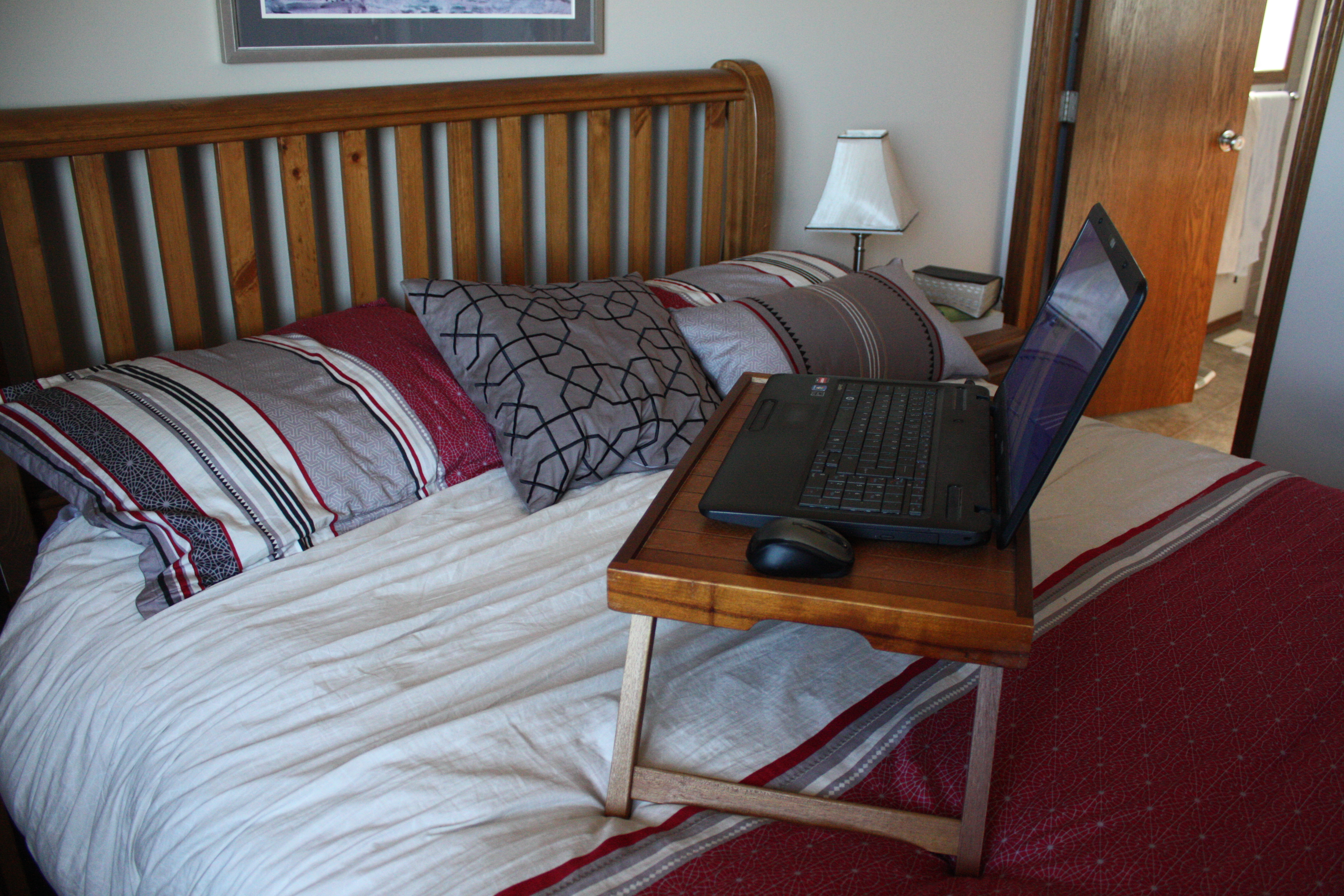
IMG_7226

Writing in bed on a tea tray — like a boss

Last night I attended my very first writers’ group meeting – a “writers’ salon” at the home of a local wire-tap-transcriptionist turned edgy poet.  And I’m realizing now that my late entry into a writing group is yet more evidence that I have gone about my writing career the wrong way – the hard way, the backwards way.

Let me explain exactly how I’ve botched it – so far.

1)      I should have joined a writers’ group years and years and years ago.  All you kids at home, don’t wait until the advance reading copy of your first novel arrives in the mail before joining a writers’ group.

I’m in the habit of not showing my serious writing to anyone – not my husband, not my sisters, no one.  My utter lack of writing colleagues meant I mistook my work-in-progress manuscript for a finished book, started submitting it too early, and inadvertently ended up work-shopping it with the few gatekeepers at literary agencies and publishing houses who were thoughtful enough to jot a line or two (never any more) about why they were rejecting it.  It was a traumatic, slow, costly, and stupid way to get feedback.

Don’t be like me.  Before anyone in the business reads your work, make friends with writers with similar interests and better abilities than your own.  Read each other’s work and offer feedback.  Share contacts and news.  Learn to be gracious.

2)      I’ve never taken a creative writing course.  When my publisher and I were looking for a “blurb” for my book, Linda suggested I consider my former creative writing teachers.  It would have been a good suggestion if I’d had any.  It’s not that I didn’t take university-level literature classes.  I took them and I did well.  But I never took any courses dedicated to creative writing.  I’ve never had my work assessed and graded in an academic setting.

It’s not a fatal mistake.  Many writers spring up outside post-secondary creative writing programs — but not as many as I used to think.  So far, most of the people I’ve met in the working writing community have some past or present connection to writing as an academic field.  They don’t talk about writing as a vocation merely in a romantic, figurative sense.  They mean it the same way plumbers talk about their vocations – as papered credentials and regular, paying gigs.  There is middle ground between an institution-centred career in writing and never enrolling in a class.  And I should have spent some time there.

3)      I haven’t read much of the current literature in my field.  Instead of keeping up with the industry, I’ve used my precious reading time to polish off classics and to survey the YA books my kids are reading.  By now, I’m pretty well-versed in Dostoevsky and Dickens.  And I know my way around J.K. Rowling and Daniel Handler.  But I don’t know much about – whoever the heck has been important in literary fiction since the 1990s.

This was a bad move.  Stay tuned to the tone and the content of the industry.  Don’t raise your head only to when the mainstream media starts clamouring about yet another wave of erotica.  And don’t worry about being unduly influenced by other artists.  It’s the post-modern age – a time when humans have been reading and writing long enough for all of us to be a little derivative.  There’s no way to avoid it and the best we can hope for is to be able to admit it when our work looks like a freaky chimera of Carol Shields, Emily Brontё, and Napoleon Dynamite.

4)      I don’t have a physical space set aside especially for writing.  I write on my lap, sitting on my pillow, leaning against the head-board of the bed where I sleep at night.  It started as a desperate play for peace and quiet in a large, busy household.  I guess that’s still what it is.  It’s bad for my mattress, my spine, my wrists, and my temper.  Get a desk – or at least a chair.

That’s a short list of a few of my most obvious missteps.  I won’t repeat them during my next project — except for the bed-desk.

But there’s something like irony at work here.  I failed in all these ways yet I continued to publish anyway.  All my stumbling around with an unsuitable manuscript served to match my timing up with Linda’s and we found each other at just the right moment.  There’s no fail-safe formula for good fortune.

And on top of all these errors, I did do something right – something vital.  I finished the dang book.  I took good advice when I was finally given it.  I kept revising and submitting.  I kept fighting.  Of all the things I’ve heard people name as the undoing of their literary ambitions, not finishing their projects has got to be the most common.

Maybe that’s the biggest, most valuable lesson of all the ones I’ve learned so far — the one I’d leave with everyone, the one I kept repeating like a holy mantra at the writers’ group last night.  Finish it.  Keep going.

Carbon Copying Vulcan – Shreds of Reality in Fiction

The Roman God Vulcan, smashing stuff

If my youngest brother-in-law was a Roman god, he’d be Vulcan.  Wait — let’s not let Star Trek confuse us.  I’m not trying to say he’s cold and hyper-rational and his sleeves are too short.  He’s like the original, Classical Vulcan — fiery and powerful and smart.  Like Vulcan, he makes his living building things out of metal with torches and hammers.  When he’s having fun, he still likes to yell and hit things.  I adore him.  And if I was a goddess, I’d be Juno, the shrill but scary wife of the boss-god Jupiter (Zeus, to all you Greek fans).  I also like to yell and hit things.  It’s a sign of enthusiasm and love.  Both Vulcan and I understand that very well.

In the years and years I’ve known him, Vulcan has not been a voracious reader of contemporary Canadian literary fiction.  It’d be out of character for him to rush out and buy my novel when it’s released this August.  But I hope he will.  In order to encourage him, I did what Juno would do: I got up in his face and bullied him about it.

“Hey, are you going to buy my book when it comes out?”

He paused.  “Uh — how much money will you get from each one?”

It wasn’t the response I expected.  “I don’t know,” I said.  “About two dollars maybe?”

He reached into his pocket.  He said, “How about I just give you two dollars right now?”

“What?”

The Roman goddess Juno

He was laughing at me.

“You have to read it!” I bawled at him.  “You have to.  Because…”

This is where my Juno started to lose her nerve.  Even with my loved ones, I am a shy, apologetic promoter of my work.  I tell my friends and family where to find it and then I leave them alone.  There’s no follow-up – no awkward audit of their patronage of my art.  My loud, bossy questioning of Vulcan was not about getting him to cough up a twoonie.  It was about something much more delicate.

He was standing in front of me, towering over me, one hand still in his pocket.  He was looking down with his big brown face, waiting for me to finish.

I began again.  This was important – something between a warning and a gift and a confession.  “There’s this character in the book – and – he might seem like he’s kind of like you.”

Vulcan’s eyes got a little bit bigger.

“But he’s not you,” I hurried.  I explained there’s a scene in my novel where a woman meets her in-laws for the first time.  That meeting is written a lot like the time I first met Vulcan, when I was twenty-one and he was not quite ten years old.

“They’re not us.” I said again.  “They just look like us for a minute.  The little boy grows up and does things you don’t do.  He’s not you.”

“But someone might think he’s me.”

“Yeah.”

“Would he be in the book if you didn’t know me?”

Strictly speaking, it’s an impossible question.  How can I say whether I could have imagined someone so much like my brother-in-law ex nihilo now that I already know him?

What I could say was this.  “If I hadn’t lived the life I’ve lived, I wouldn’t have written the book the way I have.”

This was honest and fair to both of us.  The fact is I could have this same conversation (hopefully without the offer to pre-emptively buy me off) with dozens of people.  There are sparks and shreds and sometimes even long swaths of all sorts of real people in my work.  It feels inevitable.  Even if I switched genres and started writing hardcore science fiction, the spaceships and alien planets would still be full of traces of my friends, family, neighbours – everyone.

I’m certainly not the only writer who’ll admit this.  In an excellent essay, novelist Corrina Chong reflects on “writing as thievery.”  She says, “here’s the truth behind the fiction: as a writer, I am a thief…My writing is a collage of the bits and pieces I’ve stolen.  Once your piece is glued on, it’s no longer yours.  Finders keepers, I say.”

She sounds flippant but writing real life into fiction isn’t something done lightly.  We agonize over it.  We weigh the benefits of doing it against the risk.  And we understand the people unwittingly serving as our literary models might not agree we’ve struck the balance right.  Frankly, it’s scary.

Chong goes on to acknowledge that this theft is actually more like an exchange – a swap.  She says, “the very act of writing a story and releasing it out into the world assumes that readers will be able to see something of themselves in the characters, thereby stealing their own little pieces as keepsakes…any idea that rings true in your universe becomes your own.”

Maybe that’s what makes it possible for my self-consciousness at my own thieving audacity to be outweighed by my sense that it’s important for my reluctant, metal smashing baby-brother-in-law to read my novel – the one with a scene rooted in our shared history.  It’s not about the two dollars.  It’s about us.  Maybe that’s why I want all of the poor souls I’ve pilfered to read it.  I want to complete the second half of the exchange.  I want them to take something from me now – something bigger than my thanks for the inspiration.  Take yourself back, I say, and with it, take a piece of me.

Confessions of a Slow Reader

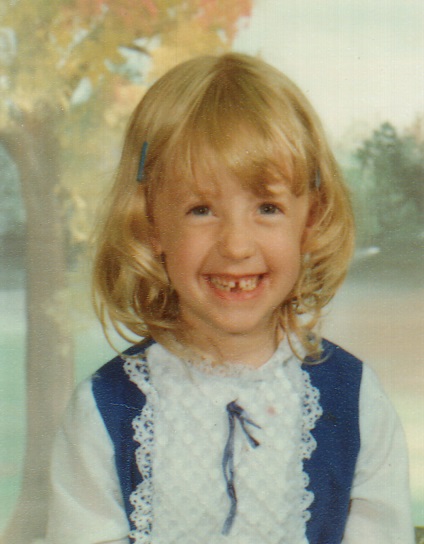
If this old picture of me could talk it would say, "What?"

If this old picture of me could talk it would say, “What?”

I am a slow reader – painfully, tediously slow.  It’s been true since I was in grade two and it’s still true today.  Whether I’m reading aloud or not, I can’t move through a book any faster than the speed of speech – not nearly quickly enough.

If you’re one of the people who’s surprised to learn this about me, thank you.  Most people assume writers are also accomplished readers.  I am not.  I have read and understood a lot of very good books.  But it’s taken me a long time.

Why am I talking about it now?  I just read book blogger Laura Frey’s Can-Lit confessions – a list of hard truths about her experience with our country’s literary canon.  She admitted to not liking, not reading, and being slow to hear about a few of the authors and books considered Canadian classics.  I enjoyed her candor so much I made my own confession about getting through my entire adolescence without reading a single word written by Farley Mowat (as proof of my ignorance, I think I even misspelled his name in my comment).

And then I started considering the short-comings in my own career as a reader.

Early elementary school – the learn-to-read years — was a hard time for me.   In grade one, the fluid left behind my eardrums by a streak of bad ear infections made me mostly deaf.  For about a year, nobody noticed.  That’s how it is with hearing loss.  No one’s to blame.  The loss meant I spent my time at school listening to the dull tides of my pulse moving through all that fluid – fwum, fwum, fwum.  I didn’t realize there was anything more to hear and I thought school was just really boring.  It seemed like we sat in our desks or on the carpet doing nothing at all.

In the second grade, I had surgery, the deafening fluid drained away, and I came back to the land of the hearing to find I’d been bumped from my place in the reading group meant for the best readers in our class.  After all the loud reprimands I remembered little deaf-me getting for not paying attention and not following directions, I figured I deserved the demotion and slunk away with my mediocrity.

Indignant current-me isn’t so sure I deserved it.  I have always understood and retained what I read.  But I will concede this: if we were being ranked based on our reading speed alone, mediocre was a generous assessment of my skills.  Grade two is when I remember Her coming.  She’s this voice in my head – an adult woman’s voice, I don’t know whose – that spoke every word I saw with my eyes.  I couldn’t read any faster than she could talk.  I still can’t.

After grade two, we moved to a new school where my teacher was just as interested in our writing as our reading skills.  She told me I was talented and I became her unofficial language arts protégé – the student invited to the front of the class to read creative writing out loud, at the glorious pace of speech.  No one ever mentioned my reading speed again.  It was my secret to keep.

And I did keep it.  I never cheated but I did learn how to read enough of a book to be able to sound informed about it and no more.  During my Arts degree, I learned how to wade through enough of the material on a course reading list to still get an A.  It was risky and stressful but I simply could not complete all the “required” readings.  There wasn’t time for someone moving at my pace to finish it.

Thanks to the years and years I spent pinned under nursing babies, forced to sit down and hold still and listen to Her, I have ended up fairly well-read.  It was another unexpected irony of motherhood – the way the babies who were supposed to stifle and suppress me ended up being what made it possible for me to become what I wanted all along.  Eventually, I did read everything on the lists from my university classes.  I’ve read hundreds of pounds of thick, daunting prose, poetry, and non-fiction.  And I’ve loved it.

Now that I’ve finished my reading lists — now that the Bachelor of Arts degree hanging in my kitchen doesn’t seem so much like a sham anymore — I can freely admit to anyone that I’m not what people might think I am.  I am a working writer but I am not what my early elementary school teachers considered a gifted reader.  I am not incorrigibly bookish.  I’m still poking my way through the literary landscape, warning my friends I’ll just drag their book clubs down with my sluggish ways.  But I’m working in this field anyway, in spite of my nature.  I’m reading and writing anyway. Maybe it’s true for anyone who tries to write as a vocation.  We’ve probably all got something deep-seated and shame-laden that we had to overcome before we could do this.

I know, it reads like a sports cliche.  But that’s the thing about cliches — they’re tired because they’re usually true.

A Rush and a Push: The Making of a CBC Radio Piece

CBC Radio’s Sook Yin Lee, host of Definitely Not the Opera

If you’re ever in the Edmonton City Centre and you see a person sprinting past the stores and coffee shops, pounding over the hard tile floors, doing that funny, ginger stomp down moving escalators, either you’re witnessing the flight of a very bad shoplifter or the frenzy of someone late for a taping at the Canadian Broadcast Corporation studios located at the far eastern end of the building.

Last Friday, that CBC bound mall-sprinter was me.

It was the seventh time I’ve done work for CBC Radio.  Sure, the very existence of Canada’s public broadcaster is considered controversial by some and acknowledged as tenuous by just about everyone.  But for now, it’s still a functioning organization that treats its contributors with respect and class.  I’ve always enjoyed working with them.

My first CBC gig was with the Sunday afternoon spirituality and religion program, Tapestry.  I put on a big, foamy headset, leaned into a microphone and read an essay I’d written about my grandmother – an essay I eventually re-read at her funeral as an exhausted 30-year-old involuntarily fasting with grief.

The six other pieces I’ve done for the CBC have been for the Saturday afternoon story-telling magazine, Definitely Not the Opera (DNTO).  As my producer told me the first time we met, “DNTO is way cooler than Tapestry.”  That’s not to say none of my DNTO work will ever be part of a eulogy but it does tend to be lighter and less lyrical.

A DNTO piece isn’t supposed to sound like it’s being read.  There’s no script and no rehearsal.  It’s supposed to sound spontaneous and conversational.  But like my sister-in-law, a veteran on-air personality of the University of Alberta’s student radio station says, “The best off-the-cuff speaking is the kind that isn’t really off-the-cuff at all.”

She’s right.  And though I can’t make any pre-show notes, I can’t help spending the hour-long car ride from my house to the studio babbling to myself, ironically practicing sounding breezy and conversational. As I speed along the Alberta Autobahn, I compose and repeat the story to myself until the sad parts don’t make me cry and the stupid parts don’t make me sound quite so stupid and every extraneous “um” goes away.

I begin the trip convinced that, this time, I’ve left early enough that there’s no chance of me having to make that desperate, frantic dash from the crowded downtown Edmonton parkade to the studio at the far end of the building.  This time, I won’t be standing in the elevator, trying to catch my breath, aware that the producer is already on the line from Winnipeg, waiting for the hack freelancer to appear.  But it never happens the way I’ve planned.  The mad rush to the finish is just part of the experience for me, I guess – just another pre-game adrenaline spike.

The recording itself is the easy part.  DNTO pieces are personal stories and there’s nothing most of us are better at talking about than ourselves.  The producers prompt with questions and politely ask for clarifications.  The process takes about forty very pleasant minutes.

And from that forty minutes, the story is edited into a tight five minute item.  I’m always nervous during the editing process.  I’m not included in it.  The whole thing happens in a black box about a thousand miles away from where I wait for the results.  It’s not until I tune in my radio with the rest of the country on Saturday afternoon that I hear how my rambling story-telling has been carved up and digested.  The waiting and fussing — it’s scary.  But I haven’t been disappointed yet.

The CBC and I are on again this Saturday, March 30 2013 at 1:30pm.  Hope to talk to you then.

Until then, here’s something from the archives, a previous DNTO piece featuring me:

http://www.cbc.ca/player/Radio/DNTO/Warm+your+Cold+Heart/   Click on the link called “The Joy of Silence.”

UPDATE: The episode of DNTO I’m talking about above has now been posted.  Here’s the link.  It’s not a hardship to listen to a whole episode but if you’re my mom or something and you just want to get to my bit, it’s at about 38.5 minutes into the program.

http://www.cbc.ca/dnto/episode/2013/03/20/when-did-you-face-the-odds/

Judging My Book by Its Cover

The Cover of "Love Letters of the Angels of Death"The book itself won’t be out until August 2013 but this week my publisher released the image that will be the front cover of my debut novel, Love Letters of the Angels of Death.   And I couldn’t be happier with it.

Before the cover was created, my publisher, Linda Leith was generous enough to ask for my thoughts.  She asked me even though visual design is not a talent of mine.  It’s the same with me and music.  I know what’s good and what I like when I actually encounter it but creating something from my own imagination is a dodgy venture.  Not surprisingly, my first few suggestions were way off the mark.  But Linda still didn’t dismiss me from the process.

Finally, I said, “I wouldn’t mind a pair of birds as long as they weren’t too maudlin.”

It seemed risky to me — the possibilities for sentimentality putting two birds on the cover of a book about a marriage could inflame.  It’s not that I actually feared I might end up with a book cover with a pair of pastel, cartoon lovebirds canoodling on it.  But just to be sure we all understood what I meant, I did an image search and came up with a picture posted on a British wildlife photography website called Warren Photographic.  As time went on, we agreed we didn’t just want something like this photograph.  We wanted this photograph for the cover of the book.

The birds – with their long tails and iridescent blue-green plumage — are magpies.  Even though this pair has probably never set foot on the North American continent, western Canada, where most of my book is set, is teeming with their far-flung cousins.  They don’t migrate with the seasons.  They stay here all winter long making noise, scavenging food, and cleaning up the remains of other animals naturally selected out of the harsh environment.  They’re the most beautiful carrion birds I know — especially when they’re quiet.

The first time I noticed magpies – as an angry teenager newly arrived in southern Alberta from Nova Scotia – they were perched on some statuary outside a Lethbridge cemetery.  I assumed the city must have planted them there – like the swans in the Halifax Public Gardens – to make the urban landscape more exotic and elegant.  Every Albertan I’ve ever told this story laughs at me.

Like other corvids – ravens and crows and jays – magpies live in mated pairs.  And what I love about the pair on my book cover is the way they’re facing different directions but looking at the same thing.  The smaller one (which my prejudices tell me to call the female) is closer to what they see and the male is watching her as part of what he sees.  It’s like the narrative structure of my novel where the male narrator addresses his vision of the world directly to the female – the “second person” to whom he is narrating, the one individual who’s included in everything he sees.

I love the rest of the cover too.  I’m thrilled to have a blurb by Padma Viswanathan as the header.  Even after seeing it in print, I didn’t have a fit of self-consciousness and start hating the title (something that would not have been uncharacteristic of me).  And I’m grateful the surname I lifted from my husband when I married him is distinctive (unlike my first name and my McMaiden-name) while still being short and easy to say.  Hooray for my fine, Swedish in-laws, doggedly justifying the existence of the little-used “Q” section at the dry-cleaner’s – and now, hopefully, at the bookseller’s.

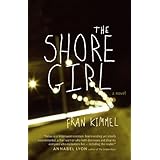
Review: “The Shore Girl” by Fran Kimmel, NeWest Press

Fran Kimmel’s new novel, “The Shore Girl”

I’ve had my head down, raising my kids, for a long time.  It meant that, when my publisher asked if I knew any well-known writers who could provide “blurbs” (that’s fancy-shmancy publisher talk for short reviews) to put on the cover of my book, I had to confess I didn’t know anyone.

It was a revelation for me.  The silly mystique of writers toiling away in thoughtful silence and social isolation really is a sham.  People who hide by themselves have nothing to write about – except maybe science fiction.  I’ve done all my writing in crowded, noisy houses.  The only thing I’ve been isolated from was other people doing the same thing.  And the time had come to find them.  My publisher was able to take care of the book blurb herself but I still needed to lift my head out of my laundry pile and meet my colleagues.

I didn’t expect it to be easy.  Canada is huge and sparsely populated and its artistic communities are densest in urban areas.  What were the odds there would be another literary fiction novelist living in my obscure little town?

Apparently, they were amazingly good.

After about two minutes on the Internet, I discovered Fran Kimmel.  She’s the author of The Shore Girl, a novel released in Sept 2012 by NeWest Press.  And she’s also my neighbour.  We had “coffee” at our local library’s café where she signed my brand new copy of The Shore Girl.  I liked Fran right away.  She’s closer to my mom’s age than to mine but, thanks in part to my big sister complex, I felt comfortable and happy to be with her.  She was gracious and generous with her encouragement and advice.  I came away scolding myself for not finding her sooner.

There was just one lingering worry for me.  I hadn’t yet finished Fran’s book.  By page eighty-eight, I liked it.  But would I keep liking it all the way to the end?  Not knowing any writers personally meant I could always say whatever I wanted when I finished a book without any fear that the old authors from pre-revolutionary Russia, or wherever, would get their feelings hurt.  What would it mean for our new friendship if I got to the end and realized I didn’t like it?

I read Fran’s book anyway.  I trusted her.  I trusted her publisher.  I read.  And I thoroughly enjoyed The Shore Girl.

It’s told in polyphony, through the voices of half a dozen different first person narrators.  They vary in age and gender but they all have two things in common: a girl named Rebee and the question of whether surrendering power to other people by loving them is worth the burden it brings.

I won’t risk trying to write a detailed plot summary.  I’m afraid I’d botch it and make the book with its unstable mothers, homelessness, and all that alcohol sound like an old after-school television special bemoaning the effects of dysfunctional families on developing children.  That’s not what this is.   Somehow, Fran has taken a set of circumstances that are usually treated in sentimental, tiresome terms and knocked the cloying clichés off them.  The clarity of the details of everyday life – the fingernail clippings and the insides of refrigerators – along with the stoic resignation with which the characters negotiate their difficult landscapes allow a story that could have been mired in gratuitous melancholy to become a story told with sincerity, warmth, wisdom, and even hope.

“It’s not a happy story,” Fran warned me.  She’s right.  But that doesn’t mean it couldn’t leave me feeling hopeful about the resilient, resourceful people who can grow out of tumultuous home environments.  Imperfect, incomplete love is still love.  And maybe — miraculously — it’s enough.

It was with perfect sincerity that I emailed Fran the morning I finished The Shore Girl and congratulated her for writing a very fine novel.  Just one more thing remains unsettled between us: Fran has yet to read my still unreleased novel.  Now that’s scary.

Speaking the Unspeakable: Sex in Books

Anna Karenina – Literary Sex and Death without the heebie-jeebies

It’s an odd talent.  I can stand at a shelf, pick up a book I’ve never read before and, if there’s a sex scene written in it, I can instantly turn right to it.  It’s a mixed blessing, I guess.  Books don’t come with parental guides so if I’m trying to see if a book is “appropriate” for my kids, my amazing talent saves me a lot of time.  But it also means I inadvertently end up looking at book-sex when I’d really rather not.

There are a lot of reasons why I’m not a consumer of the new wave of erotica that’s flooding the book market right now.  I keep away from it even though it’s leveled squarely at my demographic – the settled lady with a mortgage demographic.  I keep away from it even though, thanks to ereaders, it can be indulged in more discreetly than ever before.  I am not involved in erotica either as a reader or as a writer.

But stay with me.

This isn’t a polemic about obscenity.  I won’t bother outlining all my reasons for opting out of erotica here.  Instead, please bear with some thoughts about why, despite its popularity, sexual content is so challenging for writers.

Sex is a bit of a mess.  Attempts to write about sex tend to be messes too.  It’s a problem so notorious Literary Review has been doling out an annual award for bad sex in literature since 1993.  The award began as an indictment of “crude, tasteless, and often perfunctory use of redundant passages of sexual description in contemporary novels.”  Despite the threat of receiving an award like this one, raunchy writing – or at least its profile in the mainstream – seems to be at a cultural high mark.  Since I still only read it when I stumble across it with my magic dirty-book opening trick, I can only wonder if this latest proliferation of book-sex means writers are getting any better at composing it.  But the lively competition for the bad sex in literature award seems to suggest that writers are just as inept at depicting sex as ever.

In the past, writers’ attempts to deal with sex in the context of books may have read as prudish and evasive.  The language used to cloak sex was often so oblique it sounded awkward and far-fetched.  We can’t relate to it and end up laughing and scoffing at it.

On the other hand, more recent attempts to write about sex are ridiculous in a different way.  Conventional smutty romance writers tend to mete sex out with silly jargon and clichés used only in their own genre.  More literary books – especially, as some commentators have noted, ones written by men – offer graphic book-sex that reads like nature film narrations filtered through the imaginations of teenaged boys.  It’s crippled by a detached matter-of-factness, dwelling on body parts and fluids.  The very realism of it makes it alienating for readers and we end up laughing and scoffing at it all over again.

Why doesn’t it work?  This might sound maudlin, but there’s a quality to real-life sex that’s ineffable and transcendent.  It goes without saying that it’s hard to talk about what is by its nature unspeakable.  A good writer can write about a transcendent phenomenon but it’s usually done by writing about everything the phenomenon touches and influences rather than by dissecting the actual phenomenon itself.

Think of some of the very best death scenes ever written – like the scene in Anna Karenina where a man dies of tuberculosis.  The reality of the impending death comes across most clearly for me when a servant attending the sick man mirrors his motion of pulling at his own clothes to try to get more air.  The dying man’s body – including the physical mechanisms that are actually killing him – isn’t the central object of the scene.  A lesser writer might have thought he had to make it so.  But even without a narrative full of nothing but choking and coughing, the gravity of the situation – the fear and hopelessness, the final collapse — is still crushing.

I think the same kinds of principles that helped Tolstoy express the impact of death need to be used when authors want to genuinely and sincerely invoke sex in literature.  Sexual content resonates better when it’s barely there – when it’s offered with a reticence that highlights the power sex has to exceed what it physically touches and pervade all the spaces in between everything in its domain.

To write about sex in graphic detail is to demystify it.  Some writers might crow that this is exactly what they intend.  But once sex is demystified, it’s probably not true to our most meaningful and powerful experiences with it anymore.  Real sex should have a mystical element to it.  Without one, it’s just another mess.

The Guardian’s Fifty Most Influential Books By Broads

Harper Lee, the girlie author of To Kill a Mockingbird

If you’re one of the sexist boors in my life (and I do keep a few around) you’ll probably argue that it’s not fair of me to still be feeling peevish about this article by Robert McCrum, a Guardian book columnist and blogger.  All he did was compile a list of fifty literary “turning points.”   In other words, he set out to define the most influential books ever written in English.  But out of his fifty selections, a mere seven were authored by women.  These seven are good, obvious entries like Jane Austen and Mary Wollstonecraft – people we don’t need much experience or education to have heard about if we’ve lived and read for long enough in an English-speaking country.  We could call them no-brainers.  But when it comes to finding traces of women in any kind of history, no-brainers are seldom sufficient.

Upon posting the list, poor McCrum was promptly smacked around by women not unlike me for making a list of influential books that’s light on writers who were also women. His answer to this criticism was another no-brainer.  He made another list – a list of fifty influential books authored by women.

And I hate it.

Go ahead, Boor-Boys, tell me I’m deliberately creating a situation where it’s impossible for me to be satisfied.  Tell me I enjoy complaining and I should accept this man’s goodwill toward women.  Tell me I’m “hiding behind” the myth of female oppression just to maneuver into a position of strength.  And then, keep reading.

I do appreciate McCrum’s attempt to correct the oversights of the original list.  Some of them, like the omission of Harper Lee’s To Kill a Mockingbird (a novel just about every grade ten student in my country has read), are downright embarrassing.  In McCrum’s own words, “My previous list reflected patriarchal values and a male-dominated literary culture.”

That’s a fine admission – and an accurate one.  But does making a list exclusively for women remedy the overbearance of patriarchal values in the original list?  Or does a separate list push women writers further into the margins of literary history?  This is the question nagging at me when I read the list.  Relegating women to a separate list buttresses the idea that writing done by women flows through a different stream than the one dominated by men.  Oh, we can write.  We can write really well.  Men will admit that.  But that this is not the same thing as admitting us into the real list.

A list made up only of women writers abets a version of literary history that’s too much like public washroom facilities.  If we designate one bathroom (or list) as being for girls and a separate one as being for boys, we might wind up with a whole lot of elementary school shame and freakiness for people prone to indiscriminately wander through either door.  We risk creating a system where male readers might avoid female writers for fear of getting a bad case of literary cooties.

One of the commenters on McCrum’s online article had the same reaction I have.  He or she remarked that the implication is that the second list isn’t equal to the first one – to the real one.  This commenter was quickly warned by a fellow commenter that artificially including women on the real list just because we’d be more comfortable if they appeared there naturally would be “tokenism.”  That term, of course, is a negative one meant to remind us that, before the twentieth century, women played a minor role in literary history.  We were anomalies and curiosities and we called ourselves George.

I don’t accept avoiding tokenism as an excuse for making separate lists for men and women.  The fact that it was so very difficult for women to write and to have their work published and read throughout literary history means the achievements of women writers are profoundly influential simply by virtue of the fact that they exist at all.

So what do I want from people like McCrum who have access to a forum powerful enough to turn a quick list into a lively, public discussion of the gender politics of literary history?  Do I want him to commit some kind of intellectual dishonesty and jam a bunch of women writers he may not care for into his first list just to make things look fair?

No,that’s not it.

What I want is an acknowledgement of bias.  McCrum admits that his list “makes no claim to be comprehensive” but he doesn’t tell us why.  He doesn’t identify the margins his opinions could be pushed behind.  Instead of speaking for the entire English-reading world, it’d be nice if he’d just speak for himself.  When we read his list, I want it to have a long, difficult title like “The Fifty Most Influential Books for White British Men.”  The same way he identified my demographic when he wrote the pink list, he should identify his own when he writes the blue list instead of assuming we all agree that his male perspective is the most valid perspective.

An Adapted Novel Excerpt Kindly Published by “Filling Station”

http://www.fillingstation.ca/archive/contributor/jennifer-quist-725

A couple of years ago, while my lonely literary novel was still soaking in publishers’ slush piles, I adapted one of its chapters into a short story and submitted it to a cool, experimental literary magazine  based in Calgary.  (Yes, there’s actually a very fine literary scene in Alberta.)

I called my novel-chapter-posing-as-a-short-story “Pterodactyl Egg” (I still have to spell check “pterodactyl” every time I type it).  The title is a pregnancy reference, obviously.  I don’t like pregnancy but I love this story.  It’s almost completely autobiographical — which means, of course, that I had to tone it down or it would have seemed too far-fetched.

Reality seems so contrived sometimes.  Like the time I went to visit my old lady friend in the hospital where she was trying not to die of some ridiculous infection and I found her unraveling a hand-knit sweater — that was way too real.

And no, that’s not my face on the cover of the mag.

Acceptance Letter Day

The Forty-Below Project, coming November 2013

The Forty-Below Project, coming November 2013

I don’t think I’ve ever got an acceptance letter as long and thoughtful as the one I got this week from Jason Lee Norman’s “40 Below Project.”  Jason is putting together an anthology of stories and art about life in the city of Edmonton, Alberta during the winters. 

Don’t know Edmonton?  Well, I’m confident in saying it’s the only metropolitan area with a population of over a million people at this latitude or higher anywhere in the western hemisphere of this planet.  Sounds like a blast, eh?  A big, icy blast…

The project accepted my submission, a short bit of creative non-fiction called “Bleeders.”  There was some talk on Twitter about the vampire story someone submitted.  The title notwithstanding, mine was not the vampire story.

The 40 Below anthology is going to be produced in book form and it’s scheduled for release in November 2013.  Don’t worry, Edmonton should be well into winter by then.

http://www.40belowproject.ca/about/