Confessions of a Slow Reader

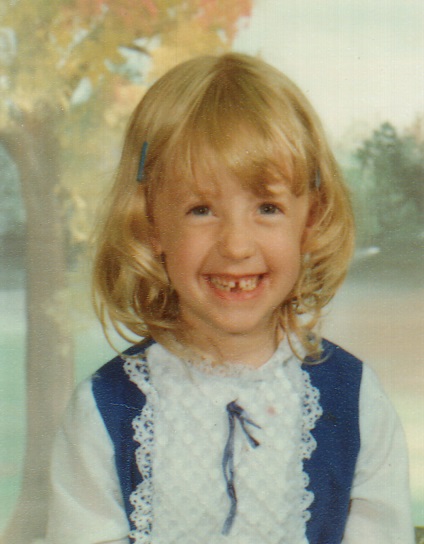
If this old picture of me could talk it would say, "What?"

If this old picture of me could talk it would say, “What?”

I am a slow reader – painfully, tediously slow.  It’s been true since I was in grade two and it’s still true today.  Whether I’m reading aloud or not, I can’t move through a book any faster than the speed of speech – not nearly quickly enough.

If you’re one of the people who’s surprised to learn this about me, thank you.  Most people assume writers are also accomplished readers.  I am not.  I have read and understood a lot of very good books.  But it’s taken me a long time.

Why am I talking about it now?  I just read book blogger Laura Frey’s Can-Lit confessions – a list of hard truths about her experience with our country’s literary canon.  She admitted to not liking, not reading, and being slow to hear about a few of the authors and books considered Canadian classics.  I enjoyed her candor so much I made my own confession about getting through my entire adolescence without reading a single word written by Farley Mowat (as proof of my ignorance, I think I even misspelled his name in my comment).

And then I started considering the short-comings in my own career as a reader.

Early elementary school – the learn-to-read years — was a hard time for me.   In grade one, the fluid left behind my eardrums by a streak of bad ear infections made me mostly deaf.  For about a year, nobody noticed.  That’s how it is with hearing loss.  No one’s to blame.  The loss meant I spent my time at school listening to the dull tides of my pulse moving through all that fluid – fwum, fwum, fwum.  I didn’t realize there was anything more to hear and I thought school was just really boring.  It seemed like we sat in our desks or on the carpet doing nothing at all.

In the second grade, I had surgery, the deafening fluid drained away, and I came back to the land of the hearing to find I’d been bumped from my place in the reading group meant for the best readers in our class.  After all the loud reprimands I remembered little deaf-me getting for not paying attention and not following directions, I figured I deserved the demotion and slunk away with my mediocrity.

Indignant current-me isn’t so sure I deserved it.  I have always understood and retained what I read.  But I will concede this: if we were being ranked based on our reading speed alone, mediocre was a generous assessment of my skills.  Grade two is when I remember Her coming.  She’s this voice in my head – an adult woman’s voice, I don’t know whose – that spoke every word I saw with my eyes.  I couldn’t read any faster than she could talk.  I still can’t.

After grade two, we moved to a new school where my teacher was just as interested in our writing as our reading skills.  She told me I was talented and I became her unofficial language arts protégé – the student invited to the front of the class to read creative writing out loud, at the glorious pace of speech.  No one ever mentioned my reading speed again.  It was my secret to keep.

And I did keep it.  I never cheated but I did learn how to read enough of a book to be able to sound informed about it and no more.  During my Arts degree, I learned how to wade through enough of the material on a course reading list to still get an A.  It was risky and stressful but I simply could not complete all the “required” readings.  There wasn’t time for someone moving at my pace to finish it.

Thanks to the years and years I spent pinned under nursing babies, forced to sit down and hold still and listen to Her, I have ended up fairly well-read.  It was another unexpected irony of motherhood – the way the babies who were supposed to stifle and suppress me ended up being what made it possible for me to become what I wanted all along.  Eventually, I did read everything on the lists from my university classes.  I’ve read hundreds of pounds of thick, daunting prose, poetry, and non-fiction.  And I’ve loved it.

Now that I’ve finished my reading lists — now that the Bachelor of Arts degree hanging in my kitchen doesn’t seem so much like a sham anymore — I can freely admit to anyone that I’m not what people might think I am.  I am a working writer but I am not what my early elementary school teachers considered a gifted reader.  I am not incorrigibly bookish.  I’m still poking my way through the literary landscape, warning my friends I’ll just drag their book clubs down with my sluggish ways.  But I’m working in this field anyway, in spite of my nature.  I’m reading and writing anyway. Maybe it’s true for anyone who tries to write as a vocation.  We’ve probably all got something deep-seated and shame-laden that we had to overcome before we could do this.

I know, it reads like a sports cliche.  But that’s the thing about cliches — they’re tired because they’re usually true.

Judging My Book by Its Cover

The Cover of "Love Letters of the Angels of Death"The book itself won’t be out until August 2013 but this week my publisher released the image that will be the front cover of my debut novel, Love Letters of the Angels of Death.   And I couldn’t be happier with it.

Before the cover was created, my publisher, Linda Leith was generous enough to ask for my thoughts.  She asked me even though visual design is not a talent of mine.  It’s the same with me and music.  I know what’s good and what I like when I actually encounter it but creating something from my own imagination is a dodgy venture.  Not surprisingly, my first few suggestions were way off the mark.  But Linda still didn’t dismiss me from the process.

Finally, I said, “I wouldn’t mind a pair of birds as long as they weren’t too maudlin.”

It seemed risky to me — the possibilities for sentimentality putting two birds on the cover of a book about a marriage could inflame.  It’s not that I actually feared I might end up with a book cover with a pair of pastel, cartoon lovebirds canoodling on it.  But just to be sure we all understood what I meant, I did an image search and came up with a picture posted on a British wildlife photography website called Warren Photographic.  As time went on, we agreed we didn’t just want something like this photograph.  We wanted this photograph for the cover of the book.

The birds – with their long tails and iridescent blue-green plumage — are magpies.  Even though this pair has probably never set foot on the North American continent, western Canada, where most of my book is set, is teeming with their far-flung cousins.  They don’t migrate with the seasons.  They stay here all winter long making noise, scavenging food, and cleaning up the remains of other animals naturally selected out of the harsh environment.  They’re the most beautiful carrion birds I know — especially when they’re quiet.

The first time I noticed magpies – as an angry teenager newly arrived in southern Alberta from Nova Scotia – they were perched on some statuary outside a Lethbridge cemetery.  I assumed the city must have planted them there – like the swans in the Halifax Public Gardens – to make the urban landscape more exotic and elegant.  Every Albertan I’ve ever told this story laughs at me.

Like other corvids – ravens and crows and jays – magpies live in mated pairs.  And what I love about the pair on my book cover is the way they’re facing different directions but looking at the same thing.  The smaller one (which my prejudices tell me to call the female) is closer to what they see and the male is watching her as part of what he sees.  It’s like the narrative structure of my novel where the male narrator addresses his vision of the world directly to the female – the “second person” to whom he is narrating, the one individual who’s included in everything he sees.

I love the rest of the cover too.  I’m thrilled to have a blurb by Padma Viswanathan as the header.  Even after seeing it in print, I didn’t have a fit of self-consciousness and start hating the title (something that would not have been uncharacteristic of me).  And I’m grateful the surname I lifted from my husband when I married him is distinctive (unlike my first name and my McMaiden-name) while still being short and easy to say.  Hooray for my fine, Swedish in-laws, doggedly justifying the existence of the little-used “Q” section at the dry-cleaner’s – and now, hopefully, at the bookseller’s.

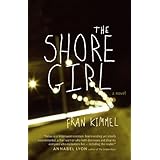
Review: “The Shore Girl” by Fran Kimmel, NeWest Press

Fran Kimmel’s new novel, “The Shore Girl”

I’ve had my head down, raising my kids, for a long time.  It meant that, when my publisher asked if I knew any well-known writers who could provide “blurbs” (that’s fancy-shmancy publisher talk for short reviews) to put on the cover of my book, I had to confess I didn’t know anyone.

It was a revelation for me.  The silly mystique of writers toiling away in thoughtful silence and social isolation really is a sham.  People who hide by themselves have nothing to write about – except maybe science fiction.  I’ve done all my writing in crowded, noisy houses.  The only thing I’ve been isolated from was other people doing the same thing.  And the time had come to find them.  My publisher was able to take care of the book blurb herself but I still needed to lift my head out of my laundry pile and meet my colleagues.

I didn’t expect it to be easy.  Canada is huge and sparsely populated and its artistic communities are densest in urban areas.  What were the odds there would be another literary fiction novelist living in my obscure little town?

Apparently, they were amazingly good.

After about two minutes on the Internet, I discovered Fran Kimmel.  She’s the author of The Shore Girl, a novel released in Sept 2012 by NeWest Press.  And she’s also my neighbour.  We had “coffee” at our local library’s café where she signed my brand new copy of The Shore Girl.  I liked Fran right away.  She’s closer to my mom’s age than to mine but, thanks in part to my big sister complex, I felt comfortable and happy to be with her.  She was gracious and generous with her encouragement and advice.  I came away scolding myself for not finding her sooner.

There was just one lingering worry for me.  I hadn’t yet finished Fran’s book.  By page eighty-eight, I liked it.  But would I keep liking it all the way to the end?  Not knowing any writers personally meant I could always say whatever I wanted when I finished a book without any fear that the old authors from pre-revolutionary Russia, or wherever, would get their feelings hurt.  What would it mean for our new friendship if I got to the end and realized I didn’t like it?

I read Fran’s book anyway.  I trusted her.  I trusted her publisher.  I read.  And I thoroughly enjoyed The Shore Girl.

It’s told in polyphony, through the voices of half a dozen different first person narrators.  They vary in age and gender but they all have two things in common: a girl named Rebee and the question of whether surrendering power to other people by loving them is worth the burden it brings.

I won’t risk trying to write a detailed plot summary.  I’m afraid I’d botch it and make the book with its unstable mothers, homelessness, and all that alcohol sound like an old after-school television special bemoaning the effects of dysfunctional families on developing children.  That’s not what this is.   Somehow, Fran has taken a set of circumstances that are usually treated in sentimental, tiresome terms and knocked the cloying clichés off them.  The clarity of the details of everyday life – the fingernail clippings and the insides of refrigerators – along with the stoic resignation with which the characters negotiate their difficult landscapes allow a story that could have been mired in gratuitous melancholy to become a story told with sincerity, warmth, wisdom, and even hope.

“It’s not a happy story,” Fran warned me.  She’s right.  But that doesn’t mean it couldn’t leave me feeling hopeful about the resilient, resourceful people who can grow out of tumultuous home environments.  Imperfect, incomplete love is still love.  And maybe — miraculously — it’s enough.

It was with perfect sincerity that I emailed Fran the morning I finished The Shore Girl and congratulated her for writing a very fine novel.  Just one more thing remains unsettled between us: Fran has yet to read my still unreleased novel.  Now that’s scary.

Speaking the Unspeakable: Sex in Books

Anna Karenina – Literary Sex and Death without the heebie-jeebies

It’s an odd talent.  I can stand at a shelf, pick up a book I’ve never read before and, if there’s a sex scene written in it, I can instantly turn right to it.  It’s a mixed blessing, I guess.  Books don’t come with parental guides so if I’m trying to see if a book is “appropriate” for my kids, my amazing talent saves me a lot of time.  But it also means I inadvertently end up looking at book-sex when I’d really rather not.

There are a lot of reasons why I’m not a consumer of the new wave of erotica that’s flooding the book market right now.  I keep away from it even though it’s leveled squarely at my demographic – the settled lady with a mortgage demographic.  I keep away from it even though, thanks to ereaders, it can be indulged in more discreetly than ever before.  I am not involved in erotica either as a reader or as a writer.

But stay with me.

This isn’t a polemic about obscenity.  I won’t bother outlining all my reasons for opting out of erotica here.  Instead, please bear with some thoughts about why, despite its popularity, sexual content is so challenging for writers.

Sex is a bit of a mess.  Attempts to write about sex tend to be messes too.  It’s a problem so notorious Literary Review has been doling out an annual award for bad sex in literature since 1993.  The award began as an indictment of “crude, tasteless, and often perfunctory use of redundant passages of sexual description in contemporary novels.”  Despite the threat of receiving an award like this one, raunchy writing – or at least its profile in the mainstream – seems to be at a cultural high mark.  Since I still only read it when I stumble across it with my magic dirty-book opening trick, I can only wonder if this latest proliferation of book-sex means writers are getting any better at composing it.  But the lively competition for the bad sex in literature award seems to suggest that writers are just as inept at depicting sex as ever.

In the past, writers’ attempts to deal with sex in the context of books may have read as prudish and evasive.  The language used to cloak sex was often so oblique it sounded awkward and far-fetched.  We can’t relate to it and end up laughing and scoffing at it.

On the other hand, more recent attempts to write about sex are ridiculous in a different way.  Conventional smutty romance writers tend to mete sex out with silly jargon and clichés used only in their own genre.  More literary books – especially, as some commentators have noted, ones written by men – offer graphic book-sex that reads like nature film narrations filtered through the imaginations of teenaged boys.  It’s crippled by a detached matter-of-factness, dwelling on body parts and fluids.  The very realism of it makes it alienating for readers and we end up laughing and scoffing at it all over again.

Why doesn’t it work?  This might sound maudlin, but there’s a quality to real-life sex that’s ineffable and transcendent.  It goes without saying that it’s hard to talk about what is by its nature unspeakable.  A good writer can write about a transcendent phenomenon but it’s usually done by writing about everything the phenomenon touches and influences rather than by dissecting the actual phenomenon itself.

Think of some of the very best death scenes ever written – like the scene in Anna Karenina where a man dies of tuberculosis.  The reality of the impending death comes across most clearly for me when a servant attending the sick man mirrors his motion of pulling at his own clothes to try to get more air.  The dying man’s body – including the physical mechanisms that are actually killing him – isn’t the central object of the scene.  A lesser writer might have thought he had to make it so.  But even without a narrative full of nothing but choking and coughing, the gravity of the situation – the fear and hopelessness, the final collapse — is still crushing.

I think the same kinds of principles that helped Tolstoy express the impact of death need to be used when authors want to genuinely and sincerely invoke sex in literature.  Sexual content resonates better when it’s barely there – when it’s offered with a reticence that highlights the power sex has to exceed what it physically touches and pervade all the spaces in between everything in its domain.

To write about sex in graphic detail is to demystify it.  Some writers might crow that this is exactly what they intend.  But once sex is demystified, it’s probably not true to our most meaningful and powerful experiences with it anymore.  Real sex should have a mystical element to it.  Without one, it’s just another mess.

Korean Boy-Bands and Their Feminist Sub-text

I have never actually touched an issue of Tiger Beat magazine – or anything like it.  Even though I was a teenage girl in the days of New Kids on the Block and the Corey phenomenon, I was never into the boy-idol scene.  At the time, it all just seemed totally embarrassing – totally.

But that was before I started raising boys of my own.

Years before I had any kids, I already knew I would try my best to raise them as feminists.  Since it was a decision about my own behavior, it was a promise I could keep and control.  What I couldn’t control was my kids’ genders.  All of my children turned out to be boys.  The utter lack of peer females in our family makes teaching feminism more challenging than I expected.  At the same time, living with my boys has come with some surprising lessons for me about my own feminism.  I’ve found I learn how to be a better girl by raising my boys.

But it doesn’t always happen easily.  I need help.  And sometimes it comes from unlikely places – like East Asian pop-culture.

One night, when the boys were away learning manly things, camping at a mountain lake with their father, I was left alone, wandering through the Internet when I stumbled across this.  This was Super Junior – a staple of the recent East Asian boy-band movement.  It was spectacular and surreal and staggering — thirteen young South Korean men dressed up, made up, dancing, singing and posing while I sat transfixed, half a world away.  At the time, I couldn’t understand a word of anything they said – not even their English.  But that just made the group more charming.  Where the Coreys had failed, Super Junior succeeded.  I was an instant fan – an Anglo-Ahjumma.

When my menfolk got back from the wilderness, I didn’t show them what I’d discovered right away.  I guess I was a bit embarrassed.  Eventually, I showed them anyway.  And their reactions surprised me.

Based on the boy-band trash-talk of the male peers of my youth, I expected my family to hate Super Junior.  I expected to hear echoes of the hostile jealousy of male journalists who still write scathing critiques of boy-bands – rants about not playing their own musical instruments or writing their own songs, gravely benevolent warnings about how their charm is actually a corporate tool meant to exploit the hopes of real girls.  But that wasn’t how my boys reacted at all.  Instead, they seemed just as delighted with Super Junior as I was.

After watching the “Mr. Simple” music video a few times, my husband pleased the heck out of me by announcing it was time for each of us to pick our favourite group member.  Most of our boys chose Eunhyuk.  He’s the one with his hair dyed blonde, like theirs.  He’s the lead dancer who stands at the front of the formation doing tricks.  My husband chose Siwon, the one who comes across as masculine and powerful.  And my favourite was Heechul, the one heckling the rest of the group, being careful not to be caught trying too hard.  I found out later he’s also the one most likely to perform dressed as a woman – a very pretty woman.

Even when not in drag, there is an androgynous quality to all the group members – Siwon’s formidable eyebrows notwithstanding.  Their features are clean and delicate and enhanced with plenty of guy-liner.  Their hair is long and perfect and does not grow out of anywhere but their brows and scalps.  Their outfits are tailored and generously embellished with fancy accessories.

And we all loved it.  There was no shame in our enjoyment of it – no sense of competition, no stupid homophobic self-loathing.  There was just earnest admiration for the amazing show the young men and their stylists and producers put on for us.

The conventional wisdom of social theories about boy-bands usually talks about the pretty-boys as risk-free love objects we girls can cast in fantasy rehearsals of our earliest romantic relationship scripts.  I’ve always found this interpretation kind of sad and patronizing.  There might be some truth to it but I think it misses an important point – a point my heterosexual husband and teenaged sons demonstrated for me.  I could sense it in my own completely non-sexual fascination with the flower-boys too.  We didn’t choose our favourite Super Junior members based on characteristics we’d like to find in a romantic partner.  That wasn’t it at all.  We chose our favourites based on which members had characteristics we’d most like to see in ourselves.  My sons saw themselves in the hot-shot at the front.  My husband saw himself in the self-assured masterful one.  I saw myself in the bossy sophisticate.

Maybe our rationale can be extended to other boy-band fans – even the typical fan-girl who thinks she ought to be in love with them.  Maybe, on some level, she doesn’t admire the member she’d most want to date.  Instead, she might admire the one she’d most like to become.  Apart from being some pathetic attempt to prepare themselves for romance, maybe following a boy-band lets girls try on a male role – a fabulous one.  They’re reaching past the limits of their roles as girls – roles that are usually more constrictive when they’re young than at any other time.  They’re experimenting with being someone else, someone who is a boy.

Is that what male critics of boy-bands truly fear?  Are they afraid the gorgeous androgyny of boy-bands, the generous offering of their fabulousness, opens a breach in the brotherhood?  Maybe the biggest problem some men have with boy-bands has nothing to do with creative integrity or even with jealousy.  Maybe it’s that boy-bands are too dangerously easy for girls to relate to.  They make being a boy – looking like boys look, acting like boys act, controlling what boys control — seem like a role any of us could fill.

And who would want that?

Update: After reading this, a good friend of mine, the biggest Donnie Osmond fan I know, sent me a birthday present.  I am now the owner of a copy of Tiger Beat magazine dated September 1974.  The Tampax ads are spectacular.

The Guardian’s Fifty Most Influential Books By Broads

Harper Lee, the girlie author of To Kill a Mockingbird

If you’re one of the sexist boors in my life (and I do keep a few around) you’ll probably argue that it’s not fair of me to still be feeling peevish about this article by Robert McCrum, a Guardian book columnist and blogger.  All he did was compile a list of fifty literary “turning points.”   In other words, he set out to define the most influential books ever written in English.  But out of his fifty selections, a mere seven were authored by women.  These seven are good, obvious entries like Jane Austen and Mary Wollstonecraft – people we don’t need much experience or education to have heard about if we’ve lived and read for long enough in an English-speaking country.  We could call them no-brainers.  But when it comes to finding traces of women in any kind of history, no-brainers are seldom sufficient.

Upon posting the list, poor McCrum was promptly smacked around by women not unlike me for making a list of influential books that’s light on writers who were also women. His answer to this criticism was another no-brainer.  He made another list – a list of fifty influential books authored by women.

And I hate it.

Go ahead, Boor-Boys, tell me I’m deliberately creating a situation where it’s impossible for me to be satisfied.  Tell me I enjoy complaining and I should accept this man’s goodwill toward women.  Tell me I’m “hiding behind” the myth of female oppression just to maneuver into a position of strength.  And then, keep reading.

I do appreciate McCrum’s attempt to correct the oversights of the original list.  Some of them, like the omission of Harper Lee’s To Kill a Mockingbird (a novel just about every grade ten student in my country has read), are downright embarrassing.  In McCrum’s own words, “My previous list reflected patriarchal values and a male-dominated literary culture.”

That’s a fine admission – and an accurate one.  But does making a list exclusively for women remedy the overbearance of patriarchal values in the original list?  Or does a separate list push women writers further into the margins of literary history?  This is the question nagging at me when I read the list.  Relegating women to a separate list buttresses the idea that writing done by women flows through a different stream than the one dominated by men.  Oh, we can write.  We can write really well.  Men will admit that.  But that this is not the same thing as admitting us into the real list.

A list made up only of women writers abets a version of literary history that’s too much like public washroom facilities.  If we designate one bathroom (or list) as being for girls and a separate one as being for boys, we might wind up with a whole lot of elementary school shame and freakiness for people prone to indiscriminately wander through either door.  We risk creating a system where male readers might avoid female writers for fear of getting a bad case of literary cooties.

One of the commenters on McCrum’s online article had the same reaction I have.  He or she remarked that the implication is that the second list isn’t equal to the first one – to the real one.  This commenter was quickly warned by a fellow commenter that artificially including women on the real list just because we’d be more comfortable if they appeared there naturally would be “tokenism.”  That term, of course, is a negative one meant to remind us that, before the twentieth century, women played a minor role in literary history.  We were anomalies and curiosities and we called ourselves George.

I don’t accept avoiding tokenism as an excuse for making separate lists for men and women.  The fact that it was so very difficult for women to write and to have their work published and read throughout literary history means the achievements of women writers are profoundly influential simply by virtue of the fact that they exist at all.

So what do I want from people like McCrum who have access to a forum powerful enough to turn a quick list into a lively, public discussion of the gender politics of literary history?  Do I want him to commit some kind of intellectual dishonesty and jam a bunch of women writers he may not care for into his first list just to make things look fair?

No,that’s not it.

What I want is an acknowledgement of bias.  McCrum admits that his list “makes no claim to be comprehensive” but he doesn’t tell us why.  He doesn’t identify the margins his opinions could be pushed behind.  Instead of speaking for the entire English-reading world, it’d be nice if he’d just speak for himself.  When we read his list, I want it to have a long, difficult title like “The Fifty Most Influential Books for White British Men.”  The same way he identified my demographic when he wrote the pink list, he should identify his own when he writes the blue list instead of assuming we all agree that his male perspective is the most valid perspective.

Writing by the Outline


spiderweb

I’m thinking of one of my many friends who’d like to be a career writer.  This person is particularly serious about his work.  And he’s talented too.  Sometimes, he’s got this fascinating, original voice that makes me envious as heck.  I admire him a lot.  Here’s where his story gets frustrated: he never completes anything.  He’s written a few unpublished short stories but, so far, all his book-length projects burn out and blow away.  And I think I might know why.

I’ve got another friend who’s also working at making writing into a career.  Last year, one of her novella projects was taken on and released as an ebook by a digital publishing company.  Her enviable strength is story-telling and her work has strong commercial appeal – vampires, paranormal romance, girls with superpowers.  Years and years before there was EL James, this writer’s greatest success was writing PG-rated fan-fiction based on anime series.

Before she told me about it, I didn’t even realize such a market existed.

What surprised me most about her writing projects weren’t all the Japanese names in them but the way the stories are released.  Most of my friend’s books – which typically finish at a whopping 100,000 words — are released online, one chapter at a time, every Thursday.  They’re like old-fashioned serials.  She’s the Charles Dickens of anime fan-fiction.  When she starts writing, she has a general idea of where the story needs to go and how it will get there but she still sits down at her computer each week willing to surprise herself.

Here’s how my burn-out writer friend differs most from my serial-writer friend: outlining.  While the serial writer is free-wheeling, taking her story one week at a time, Mr. Burn-out is outlining.  When he finally cracks open his computer to write his books, he’s already tacked down every element of the story like it’s an entomological display – an array of dead, labeled specimens pinned to a blank field.  He outlines plots and characters until it’s hard for me to imagine how there could be anything left in them to surprise him.

By the time he’s ready to turn his voice and the rest of his talent on his outline, there’s nothing else to discover in his story.  Frankly, I think it might bore him.  Or maybe it’s something more complicated – like the perfect, linear vision in the outline starts to seem too sublime to actually approach.  Maybe it triggers something like an anxiety reaction and paralyzes all that talent of his.

I’ve talked to him about it, tried to get him to write with more of an open-mind.  But he says he enjoys writing the outlines.  When I suggest the outlines might be part of what keeps him from ever finishing a project, he’s unconvinced – for now.

I don’t get it but I’m trying to understand.  Yes, I hate outlines.  Sometimes, when a writing project is getting long and disordered, I’ll grudgingly make notes about plot points on index cards, spread the cards out of my bed, and move them around until I can see how the structure of the story needs to be strengthened.  But that’s the extent of my outlining.  For me, an outline is like punishment for falling into disorganized writing.  It’s remedial and necessary sometimes but it’s not a large or pleasant part of the process.  I don’t know.  Maybe I’d be a better writer if I took the advice of my kids’ elementary school language arts teachers and drew a good “thought-web” every now and then.  But until someone else makes me do it, I’ll just keep typing.

An Adapted Novel Excerpt Kindly Published by “Filling Station”

http://www.fillingstation.ca/archive/contributor/jennifer-quist-725

A couple of years ago, while my lonely literary novel was still soaking in publishers’ slush piles, I adapted one of its chapters into a short story and submitted it to a cool, experimental literary magazine  based in Calgary.  (Yes, there’s actually a very fine literary scene in Alberta.)

I called my novel-chapter-posing-as-a-short-story “Pterodactyl Egg” (I still have to spell check “pterodactyl” every time I type it).  The title is a pregnancy reference, obviously.  I don’t like pregnancy but I love this story.  It’s almost completely autobiographical — which means, of course, that I had to tone it down or it would have seemed too far-fetched.

Reality seems so contrived sometimes.  Like the time I went to visit my old lady friend in the hospital where she was trying not to die of some ridiculous infection and I found her unraveling a hand-knit sweater — that was way too real.

And no, that’s not my face on the cover of the mag.