
There’s a rather lovely glossy print lifestyle magazine published in my town every month. The December 2015 issue features an interview with me. Thanks so much to t8n.
Click here for the interview.
There’s a rather lovely glossy print lifestyle magazine published in my town every month. The December 2015 issue features an interview with me. Thanks so much to t8n.
Click here for the interview.
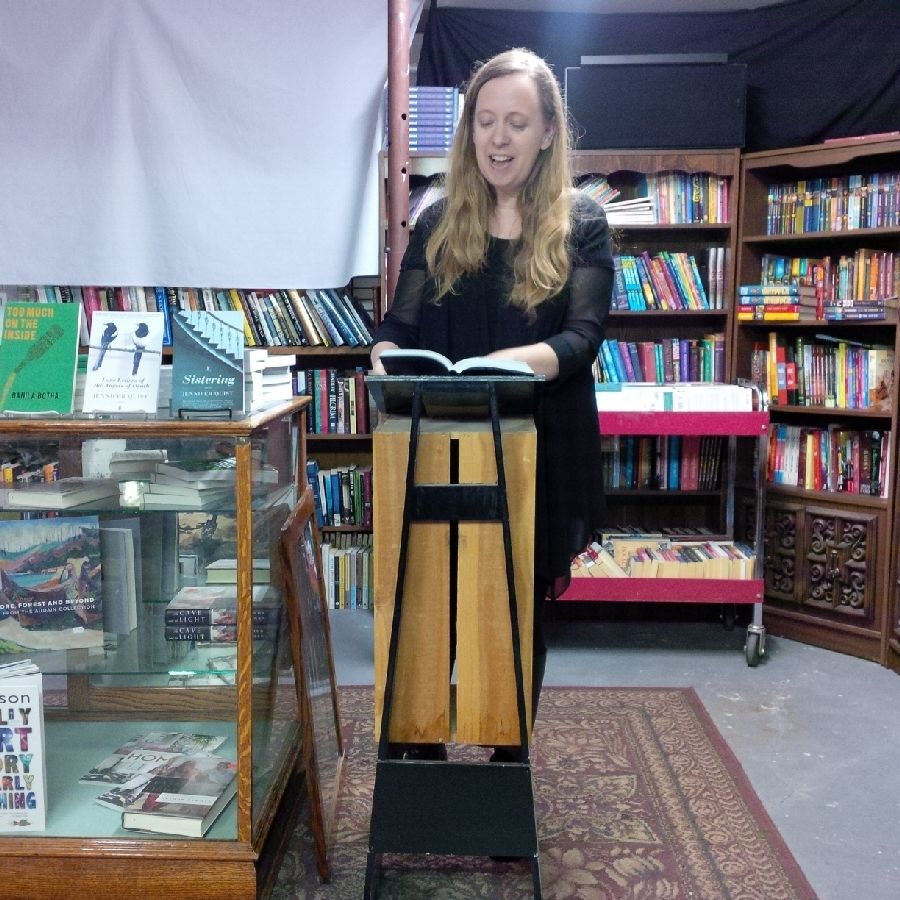 If anyone thinks Calgary is all pancake breakfasts, politicians in Stetsons, and dubious animal handling ethics, they don’t know Calgary. It’s home to a great literary arts scene–poets, writers, literary mags, university programs, the whole package. It’s a pleasure to get to travel there as part of my own book tour. Last night, I was part of filling Station magazine’s Flywheel Reading Series along with fellow writers Erin Emily Ann Vance and Bren Simmers. It was the first time this tour I wasn’t either sick or late, making the event a triumph. I had a great time, was the subject of some horrible photos as I hammed my way through my reading, went back to the hotel, ordered room service with my sponsor (my husby), and crashed. Thanks, YYC!
 I emerge from 准备考试 (where I’m all about midterms in a class of super-smart people all clutching raw scores of over 90% which will eventually be hammered into a horrifying curve) to share this post from the Literary Press Group’s All-Lit-Up blog. It’s about both of my books.
Go ahead and read it here.
The author, Leonicka Valcius, compares my novels’ treatments of themes of family, love, and death. She even picks a favourite of the two books–and it’s not the same as mine. The piece is long and thoughtful and I enjoyed it immensely, reading as my bus rolled along Jasper Avenue, away from the restaurant where I’d had lunch with my tall, fancy husband and, for the first time this month, we hadn’t been asked if we wanted separate bills.
I got home and made dinner for my family, almost from scratch. And in the evening, whilst watching Chinese TV on the exercise bike, I understood not only a phrase but its cheeky play on words that doesn’t translate into English–because no matter what grade I end up with I am learning something.
That’s a good day.

Me in my local. Click the link to read the online version.
The Edmonton Journal, my local daily newspaper with its robust books section, ran a feature on me and Sistering this week.
Michael Hingston (fellow Can-lit humour novelist) interviewed me and wrote the piece, and a nice photographer named Bruce met me outside the University of Alberta Humanities Centre, stood me up against a tree and shot pictures of me. I’ve never heard someone say, “You look like you’re pissed off at me” so pleasantly. I wasn’t, of course. I always hate pictures of myself, but at least my hair was full-throttle Smurfette that day.
They also posted a notice of my upcoming book event in Edmonton. We’ll be at Audreys Books on Sept. 29 at 7pm.
Here’s the link to the easy-to-read online version: Sistering in the Edmonton Journal
Summer 2013, my first novel is published. It’s a family saga about death and dying. The week it’s released, a close family member is diagnosed with a life-changing, life-expectancy altering illness.

Oliver, BC fire, 2015
Summer 2015–today, to be exact–my second novel is published. It’s another family story–a dark-hearted comedy instead of a light-hearted tragedy. It’s about sisters and fire and love and stuff. So, naturally, right in time for publication week, the mountain town where my sister Mary lives catches fire.
Ya can’t make this stuff up.
Upon waking on the morning of the unveiling of a five year project my future and my identity as an artist are inextricably linked to, my first thought wasn’t “book.” It was “Mary.”
The last images she left on Facebook last night included the one above. But while we slept, the lightning stopped, the rain started, the firefighters fought. This morning, my sister and her family (plus a second sister who just happened to be visiting this week, posting fire-photos on Instagram that ended up on the Global News website) have all reported in safely from their undamaged home.
I am relieved, finally ready to celebrate, and resolved that my next novel will be a tableau of fluffy bunnies nibbling wildflowers in peaceful meadows.
Oh yeah, and if you’d like to read my “wonderfully bizarre and surprisingly recognizable” book click the “Finding the Book” tab above.

The cover for my upcoming novel, “Sistering,” Aug 2015 from Linda Leith Publishing
I’m not usually fussy about design. There is photographic proof of it. When my in-laws-to-be generously organized decorations for my wedding reception while I was consumed with final exams at a university hundreds of kilometers away, they went for the crepe paper aesthetic—streamers and accordion bells. My in-laws are lovely but the crepe paper could only be horrible. I managed not ruin the day or our relationship over it (don’t worry, the person who did the shopping is dead and won’t be reading this). On my wedding day, I stood in crepe paper carnage, held onto the beautiful husband these nice people had made for me, and smiled for the pictures.
Those easygoing design sensibilities of mine become brittle when it comes to my own book covers. Stakes are high with book covers—not as high as at a wedding ceremony but definitely higher than at the crepe-paper reception afterwards. Book covers can tip the scales for readers choosing from a market full of good books. Covers usually convey something about plot—especially in genre fiction—but more importantly, they communicate tone and theme. They hint at the state of mind and heart readers can expect to inhabit. They make vague but real promises. They’re meant to elicit emotional connections. We’re supposed to have feelings about book covers—especially when we’ve authored the stories between them. For a second outing in an author’s career, getting a new cover is a little like getting a new face. And I loved my old face.
Like my first novel, the tone of the second novel is (wait for it) unusual. The structure and storyline are quite different from my first book but I hope my signature oddness (whatever it is, I’m too close to sense much of it) has endured. However, strangeness makes the book hard to characterize with a single illustration. My new book is grave but funny enough that a spooky cover wouldn’t be appropriate. The main characters are women but it’s got nothing like a chick-lit vibe so a cover full of flowers or lipsticks or purses doesn’t make any sense. It’s got elements of a warm, family story but images of sunlit kitchen windowsills would be bad fits too.
I set up my first ever Pinterest board and asked my sisters (blood sister and sisters-in-law, after twenty years with my in-laws, unless I’m looking for a kidney donor, it’s all the same) for cover suggestions and for their opinions on my ideas. But I asked them to do it blindfolded, knowing little more about the book than its title. I’m unreasonable that way.
A few days before the latest Linda Leith Publishing catalogue was finalized, Linda was kind enough to send me two designs being considered for my book cover. Nothing in our official agreement obligates my publisher to ask me anything about design. As is typical in the industry, the publisher buys the rights to produce the book however they see fit. This cover preview was a courtesy and one not every publisher extends. I am grateful for it. And that gratitude made me feel like a terrible person when I admitted I didn’t feel right about either of the designs. The kinds of images we were using—stairways—were the right kind. The concept was good and it was one I hadn’t been able to come up with myself. But I was being fussy about colour schemes and other fiddly details.

Quit trying to cute it up, Cat
With the deadline for the catalogue looming, we all kept working. In desperation, I even recruited my sister Sara, a photographer, to take photos of the stairwell in her house in case we couldn’t find anything that worked. Her kitten didn’t make it easy, frolicking into the shot over and over again. “Hey, it’s not that kind of book,” I kept telling it. On my way home, I stopped at my sister Amy’s house to take photos of her stairs, as a backup plan for the backup plan.
In further desperation, I reached further into my wealth of sisters. While Sara and I were trying to light her stairwell, my sister-in-law, Stephanie, was picking through the Internet for me. Steph is a writer too—urban fantasy and romance with commercial appeal. She does most of her publishing independently and her best book covers are the ones she designs herself. She has a few favourite resources and on one of those, she unearthed the image of stairs our designer transformed into the book cover.
I love it. The blue-green tones are moody and a bit haunted without being gloomy or melodramatic. The architecture is pretty and visually interesting but not too fanciful or domestic. The title’s font—one of the LLP standbys that give the company’s books their unified look—blends well with the image. And best of all for my poor sophomore nerves, this cover has a comforting sisterly resemblance to my first novel’s cover—the novel that was well-received and not just a fluke, right?
When I posted the finished cover on social media, someone cool and smart said, “I’m picturing the Brady Bunch sisters lined up on those stairs. Except they’re all goth.” I didn’t know until I read it that this was exactly what I wanted to hear.
 Along with my IRL friends, my kids’ friends, and my enormous family, I’m accumulating a growing number of writers on my social network feeds. I like it a lot. One of the newest additions to my Facebook friends list is American novelist Sarah Dunster. I’ve met her only once, but through her online voice I’ve grown to admire the heck out of her as a human being.
She’s currently pitching manuscripts to major literary agencies. I learned about it through her fascinating practice of reporting the responses she’s been getting to her queries. It only takes one positive response – one agent willing to take on a book project – to end the pitching process. Sarah hasn’t received that one response yet so the replies she’s been reporting have been what dour folks like me would call rejection letters.
That’s not what Sarah calls them — at least, not all of them. She seems to prefer the term “polite letters.” She announces them and will sometimes share excerpts of them – anything positive or personalized. Perhaps it’s a way of celebrating warmth, encouragement, and humanity in a process that usually ends in dismissive dead silence. It’s one of the loveliest, most surprising acts of making lemonade out of lemons I’ve seen in a working writer.
When a “polite letter” arrives at my house, I log it, shred or delete it, don’t mention it to anyone but my husband, and only after I refuse to cook and insist he go out to dinner with me.
Maybe I lack the sweetness to make lemonade. I, the girl who, thanks to my parents, went to eleven different schools before I graduated, learned to cope with disappointment by moving on, starting over. When it comes to something like a book proposal, there’s nothing wrong with that strategy. The sooner a rejection is obliterated, the better for me and everyone around me. Get on with it!
I’m convinced both Sarah’s way and my way are fine approaches to rejection. As long as we go on writing and improving our writing, it doesn’t matter how we handle setbacks. Into the shredder or onto Facebook – either one is fine. Looking for the bright side or the blank slate — there’s no wrong choice.
Sarah’s sharing of her rejections on a social network is, by definition, social. My choice to not share mine isn’t meant to be social – but it is.
When an acceptance letter, an award nomination, a good review, or any helpful press coverage comes my way, I tell everyone. I hit Facebook, Twitter, Tumblr, and this blog to let everybody know my good news. And then I refuse to cook and insist we go out for dinner.
Sarah shares her good news too. It’s on her Facebook feed right along with her “polite” letters. Every writer does this. It’s 2015. The world is chock-full of books and if writers won’t talk about our own work, no one else will.
It’s especially true for writers working with small presses with constrained marketing resources. There are publishing companies (not mine, thank goodness) that require authors to prepare “marketing plans” and submit them along with manuscripts when there’s still no publishing agreement in sight.
My small publisher makes a little go a long way. Thanks to their efforts, I had good publicity for my novel’s debut. Still, my personal contributions of time and online platform-space were indispensable in promoting the book. That’s how this industry works. We may cloak it in humblebrags and earnestly sheepish modesty but writers cannot opt out of our own buzz and expect it to continue.
Buzzing really bugs some people. And not everyone caught in my social network puts up with me by choice. Many are connected to me by birth or other kinds of social superglue. They’d have a hard time tuning out my book promotion racket if they found it annoying. I know it. I’m sorry. And if I want to keep working in this field, I have to subject them to it anyway.
This is where not sharing my rejection becomes social after all. If I was more like Sarah — reporting setbacks with frank optimism, not fishing for compliments — maybe my good news would be easier for onlookers to stomach when it finally comes along. Talking about it would seem more balanced, less like a double standard. I wouldn’t be a humblebragger. I’d be simply humbled. Maybe it’s selfish — even dishonest — of me to advance only good news.
Here’s some honesty. I’m not yet emotionally equipped to post my rejections. I probably never will be. While doing so may be useful for writers like Sarah, and satisfying for a few fed-up readers, it has no value for me. It hurts. I won’t do it.
It’d be like publicly posting something about asking someone to love me and having them turn me down. Marketing writing is actually a lot like dating. Some people want to chronicle every detail of the chase, every high and low; some don’t. In my dating days I was never one to announce I liked a guy until he’d already made a very clear first move. It’s not that I never pined for anyone. It’s just that I didn’t talk about it. That’s how I write too – never announcing my submissions until a successful deal is struck. Neither approach to dating or to writing makes anyone selfish or bad. It’s a matter of discretion, not a character flaw.
I’ll always have more to lose, more to suffer, in flaunting my failures than anyone will have to gain in inspecting them. I still just need to move on. This is a tough business. Trust me: I do get bad news, plenty of it. In lieu of public rejection letters, let’s let this post stand as the official, general acknowledgement of all my bad news, past, present, and in perpetuity. It will remain here for easy reference any time my good news feed gets insufferable.
Last winter, I traveled to Calgary to do a live radio interview at CJSW about my debut novel. My hosts were Paul Kennett and Emily Ursuliak, a writer deservedly known as one of the most generous and hardest working people in the Calgary literary scene.
Since it was live, I didn’t get to hear the interview anywhere but in my headphones and I was pleased this week when Emily sent me a link to a podcast of our talk.
Here I am talking about the Catholic Church, my bff, and commenting on technical elements of the book that I’d never had a chance to speak about in public until this smart interviewer raised them.

After writing, my favourite medium is radio — no make-up, all talk. Podcasting is a lot like radio — radio without all the “ums” edited out, long-form radio where guests can really cut loose and do some damage. This is a podcast I recorded last month with Nick Galieti, a book industry guy in Utah.
We talk about my accent, my family, Mormonism, literary elitism, the Republican Party (a first for me in an interview, for sure), my marriage and the lighter side of death schtick, and the mysterious geography of the second largest country on the globe.
Nick: So how is Canada today?
JQ: Canada is — is enormous.
Nick was a fine interviewer and it turns out he served with my cousin-in-law when they were missionaries.
Check out the podcast if you’d like to hear some unfortunate, spontaneous voice acting, a little bit of Mormon jargon, and my six-year-old coughing through a door. Must have been a good time; my final word was “Woo hoo!”

The Lieutenant Governor of Alberta Emerging Artist Award
It wouldn’t be true to say I chose an arty career just to impress my kids. But I was definitely gratified this week when, right before my kids’ eyes, the unglamorous sitting and typing I usually do was fairy-godmothered into a morning of sandstone balustrades, live harp music, and canapés garnished with purple pansies.
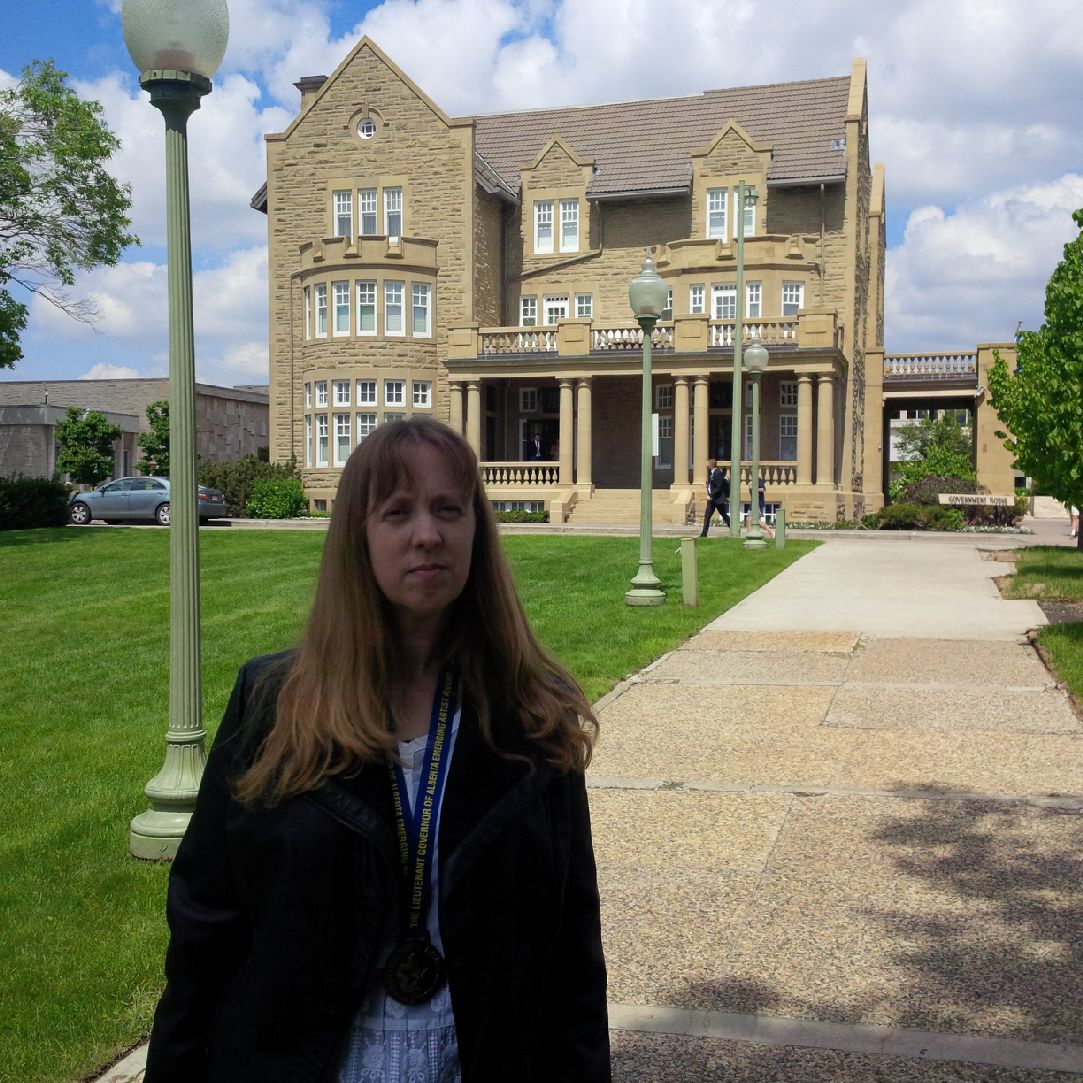
Me squinting in the daylight at Government House , Edmonton, Alberta
The fairy godmother who conjured this fantastic morning for my kids and me was actually the Lieutenant Governor of Alberta. I’m one of the recipients of the 2014 Lieutenant Governor of Alberta’s Emerging Artist Award. It’s a fabulous, generous programme and I’m thrilled and honoured to be included in it. Canada is a constitutional monarchy and some of our traditional royalist sensibilities, like art patronage, provide vital support and recognition for artists – a term it’s probably high time I stopped apologizing for applying to myself.
The award was presented to me and seven other recipients – accomplished singers, filmmakers, poets, visual artists – in a private ceremony. I was able to invite five guests so I brought my parents, my husband, and my 17-year-old and 15-year-old sons – the kids of mine least likely to turn the whole thing into a brawl.
I arrived at the Government House mansion before my family and waited in the green room until we were ushered upstairs where our guests were already seated. We all rose when the “viceregal salute” was played on the harp and Queen Elizabeth II’s local representative, the Honourable Donald Ethell (who is more like an impressive great-uncle than like the queen of anything), entered to officiate from a throne made of dark wood and green velvet.
How cool is that?
Each of the eight of us was formally presented to the gathering as our bios were read. It was the first time I’d heard the adjudicators’ remarks about my work. They said, “Her writing is extraordinarily strong, powerfully handled, and evidence of a rarely encountered original voice.”
Thanks!
We then came forward to greet His Honour and receive a medal – and a discrete folder containing our prize money. (Apparently, Government House lacks a giant novelty-sized cheque printer.)
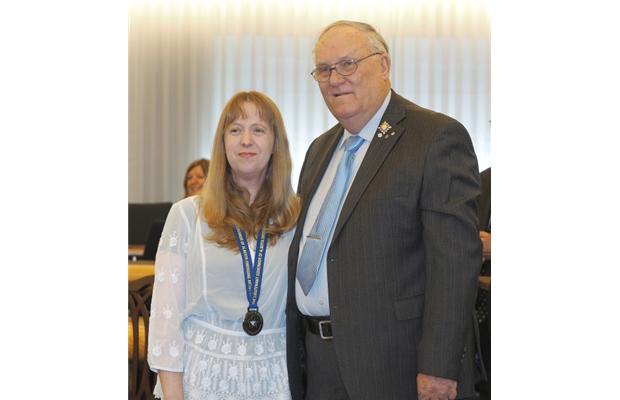
Me and the Honourable Donald Ethell, Lieutenant Governor of Alberta
Just like the day years before when I was in this same room watching my extraordinary husband receive an award from the Department of Justice for his service as a prosecutor, the line from the bio that drew an audible murmur from the crowd was the one reporting our roster of sons. Lawyers, artists, everyone has something to say about a large young family.
Even His Honour mentioned it as he slipped my medal over my head. “With all the writing you do how did you find time to have so many children?”
“They were thrust upon me,” I said.
My mum loved that.
He recognized the pair of my boys sitting the audience. “Where are the other ones? In school?”
I shrugged. “I sure hope so.”
At the luncheon afterward, my boys didn’t fail to appreciate the never-ending platters of dainty sandwiches and sweets. No matter how nice they are, I have a hard time stomaching refreshments at events and it was good to see someone from the family eating my portion.
My sons met His Honour, Her Honour (his wife), their red-uniformed aide-de-camp, the Minister of Culture, the Mayor of the city of Red Deer, and a real live professor from the University of Alberta — the school my oldest boy will be attending in the Fall. The professor, Douglas Barbour, was there as a guest of one of the other artists but he also happened to be the instructor of the only senior-level English course I ever took.

A Bit of My Family Meets the Lieutenant Governor
Several times during the boys’ fancy morning out, I overheard strangers asking them if they were proud of their mom. It can be an eye-roller question — even for me, someone who prefers the term “pleased” to “proud” since it travels without the negative baggage and misunderstandings that can come with “pride.”
People in their late teens aren’t renowned for being gracious. They don’t efface themselves like I do but they scoff and sigh and shrug. And the truth is, my accomplishments have meant the boys’ childhoods have been lean on motherly touches like homemade baking and chauffeur service to school.
I kept smiling but I braced myself as I listened to my boys make their answers at the Lieutenant Governor of Alberta Emerging Artist Awards luncheon. In replying to kind strangers who wished us nothing but the best, the boys set aside any cynicism, bitterness, or semantic fussiness to answer with pleasant enthusiasm – enthusiasm for me and the tumultuous, demanding arts career that may have affected their lives as much as mine.
 Jennifer Quist, PhD