Betty, Veronica, and My First Book Club

When looking back far enough to recall our teen years, it can be hard not to see them as a little mythic.  It’s not just athletes forced into retirement upon their high school graduations who’ll do it.  Adolescent psychology is marked by egocentric tropes like “personal fables” and “imaginary audiences.” To some degree, all kids believe they play a lead role in a Very Important drama staged before an audience of Everyone Ever.  This was true even before kids could tally their tumblr followers and Instagram likes.  I guess it was true for me too.

I went to two high schools.  The first was a huge school in an urban centre on the east coast.  While I was there, it made the national news for a racially motivated brawl.  It wasn’t a place known for school spirit.  We spent our days clustered in cliques, trying not to bother anyone, and then scuttled home.

My second high school was in a small prairie town founded by Christian farmer teetotalers.  The school was an Archie comic.  It came complete with pep rallies, junior prom, football players in lettered jackets, and a fight-song meant for sports events, not in-school race-riots.

The school culture was richer but it was also simpler.  Unlike my eastern school which demanded a slate of all-around stellar achievements from the kids selected for valedictorians, my western school had only one criterion: grades.  Ever since our class had been in elementary school, the contenders for valedictorian were clear.  By grade twelve, the contest had been narrowed down to two very smart girls.  In a closed system like an Archie comic, all the factors were familiar and easily tracked.  It was as if the two smart girls were Betty and Veronica and the object of their affection was the role of valedictorian.

Things stayed that simple until a friend of mine – the high school’s valedictorian from the class senior to ours – told me, “You know, there’s no reason you couldn’t be valedictorian too.”

I scoffed.  In grade eleven, I’d been a solid but lacklustre student.  A combination of the harder, faster, stronger Alberta math curriculum along with that dang mandatory gym class had torpedoed my average.  Archie didn’t even know I was alive.

Still, by the end of the first semester, the name at the top of the school’s honor roll was mine.  If nothing changed, I was on track to unseat the hometown smart girls.  The town’s competitive culture was closing in on me.  I was getting called an underdog, a dark horse.  Adults I didn’t even know personally were talking about me.  I had hype.  I had critics.  I had rivals.

The idea of rivals would play well if my high school drama was nothing but a story someone made up.  But it really happened.  And in real life, Betty and Veronica were more my helpers than my rivals.  If it wasn’t for Betty being my study partner in math, I never would have done well in the class.  I spent the whole course turned around in my chair with my elbow on her desk while we worked together.  The competition between the three of us was real but it was friendly and collegial.  I took it as a compliment when I came through the door of our social studies class in time to hear Veronica complaining, “What do I have to do to get a decent mark on an essay around here?  Pass it in with Jennifer MacKenzie’s name on it?”

Eventually, Archie ended up with me.  No one likes it when a non-canonical character is tacked on to blast away the integrity and continuity of an old story-line.  What made it worse was I didn’t deserve him – everyone knew that.  I was proof that the valedictorian criterion was flawed.  Betty and Veronica were much more accomplished and deserving than me.  Veronica was elected the equivalent of Homecoming Queen and Betty played so hard on all the sports teams she broke her cute nose.  All I could do was schoolwork.

I accepted the certificate, the cheque, the page in the yearbook, and the speaking gig at our graduation ceremony anyway.  And truthfully, I’m still glad I did.  There were grumbles in the crowd when I gave the speech at our graduation.  I couldn’t hear them but my parents sitting in the audience could.  I have a cousin-in-law who still talks about it to this day.

That was the last big drama of my teenaged years – the noisy, public finale.  But, as they say, high school never ends – not completely.

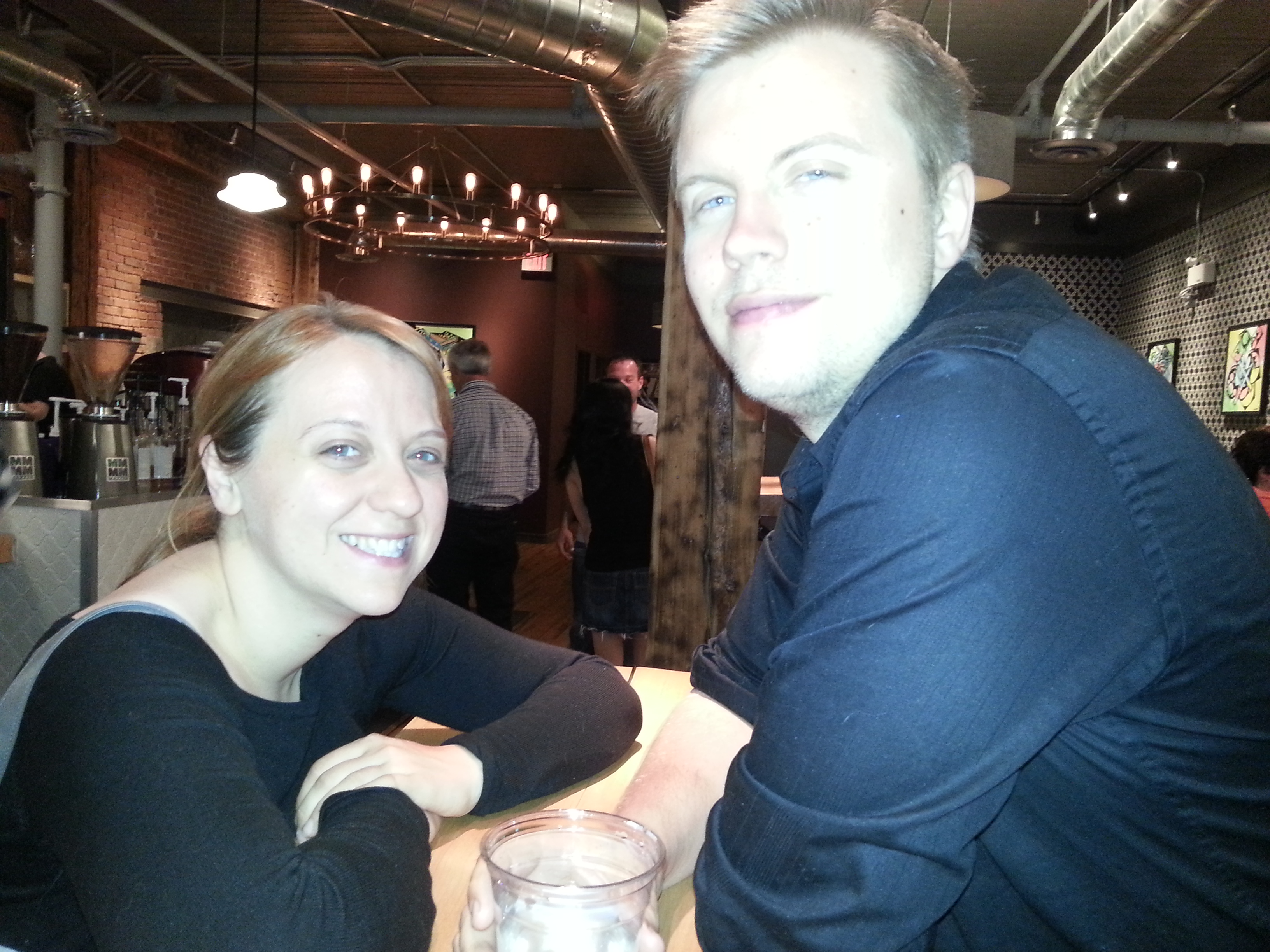
A little over twenty years later, I made my first appearance at a book club.  Because I’m such a slow reader, I’ve never belonged to a book club myself.  My first experience with one was as the author of the book in question.  I’d stepped out of turn again, just like I did in high school.  And I did it in the same town where that school from the old Archie comic still stands.  Hosting the club was my little sister’s best friend from our school days.  One of the members was Veronica herself.

“You invited my Nemesis?” she joked when she heard I was coming.  The rivalry was still just a myth – an exaggeration, a literary device working within the saga we and the people who still remember us tell about our teen years.

I’m always nervous when someone I know is reading my book.  My writer friends say that feeling never goes away.  It turns out I’m even more nervous when that person is the smart girl I spent a year chasing all over our high school.  If I’m actually a phony and my writing career is just a stupid pretense, Veronica would be able to tell.  If anyone in my history is justified in calling me out, it’s probably her.

Of course, this was all silly.  I was very moved by the things Veronica said about my book.  They were so gracious and thoughtful and earnest I can’t bring myself to repeat them but I will never forget them.  The questions she posed were piercing.  When she asked them, she cited the page numbers and read quotes directly, still the thorough, diligent student.  And out of everything else I felt upon seeing her again for the first time this century, what struck me was her voice.  It was pitched a little higher than I remembered it – prettier and kinder, not a Veronica’s voice anymore.

Reading In Toronto, Traveling Some Unexpected Full Circles

The first time I was in the Pearson Airport in Toronto this year, 4000 km from home, I was on a stop-over on a cross-country flight with all my immediate family members.  There were seven of us but, suddenly, only six boarding passes.  It made for some exciting air-travel fun.

The second time I was in Pearson Airport this year, I was by myself.  It was a bit too quiet but at least my passenger to boarding pass ratio was a solid one to one.  This time, I was stopping in Toronto, staying for a book event at the venue my publisher calls “the bookstore of our dreams.”  Maybe it’s a good thing I didn’t bring along anyone to pinch me.

The view – When I sent the pic to my husband he thought it was of the inside of an empty vending machine.

I booked a room downtown, not realizing until I saw it jutting out of the skyline, that I’d be staying two blocks from the CN Tower.  In the hotel lobby, I wondered if I’d be able to see the tower from my tenth floor window.  Not so much…

The book event – which was for all five of the 2013 authors of Linda Leith Publishing — was on Bay Street at Ben McNally Books.  In every city, long-established, well-known stores are sometimes called landmarks but Ben McNally Books really is picturesque – pillars, carved woodwork, chandeliers, and books, even my book.

In the shop were people I’d been working with for the past year whom I had yet to meet in real life.  What puts the “Linda Leith” in Linda Leith Publishing is a real person: a lovely, bold, accomplished writer, teacher, editor, and publisher.  She’s a fellow mother of boys, the eldest daughter of a large family, a survivor/beneficiary of her parents’ many relocations during her years at home.  It’s no wonder she was the publisher to look at my work and “get it.”

The ceiling in Ben McNally Books on Bay Street

The ceiling in Ben McNally Books on Bay Street

Here’s something I know about myself.  I love doing readings.  I love audiences and microphones and voice-acting my way through my story for people to hear.  The storytelling part of a book event is always my favourite part.

Meeting the other LLP authors was another pleasure.  I already knew they were formidable people.  They’ve written multiple books, worked in publishing and academia, lived and studied abroad, eschewed car ownership.  They’re multi-lingual and speak with cool accents.  They don’t get lost traveling on foot in downtown Toronto.  And they are very kind to the dippy little sister figure in their midst.

The consensus at the casual dinner after the event was that I should spend the time the next day, before my return flight, visiting the Royal Ontario Museum.  It was a long walk to get there – one that kept getting interrupted by women about my size asking for directions I couldn’t give.  In a big city, little girls gotta stick together.

Even after the rave reviews, the museum far exceeded my expectations.  It was vast and fascinating.

And up on the third floor, in a dim room with stone mortared to the walls, was a mummy taken from Egypt.  There he was, as the narrator of my novel would say, “caught in a bad funeral that threatened to go on until the end of the world.”  Dry and brown and desecrated with his face, neck, and toes exposed from the bandages — dead people, there’s no one more helpless.  Take that zombie garbage and grind it into compassion.

Canopic Jars at the Royal Ontario Museum

Canopic Jars at the Royal Ontario Museum

The book I wrote – it’s small and it’s only paper, but it’s a museum for the dead too, complete with all the ambivalence pent up in the display cases.

“I’m sorry,” I told the dead man from my side of the glass tomb.

Sorry but standing there anyway, seeing, knowing I would go away and tell.  This mummy and I – we were in my book together, part of the original art that brought me here, and made me this.

The circle closed.  It was time to go home.

Reconnaisance at Someone Else’s Book Launch

Here’s one more insultingly obvious pro-tip from a newbie novelist: the first book launch event you ever attend should not be your own.  For once, I didn’t wait to learn this bit of wisdom the hard way.  My novel’s release date is Aug 3, 2013 – just 86 days from now.  There isn’t much time left for me to get familiar with promotional literary events before the author in the fabulous arts-chick shoes standing behind the microphone winds up being me.

Fortunately, the closest publisher to me geographically – Edmonton’s NeWest Press – held a “spring spectacular” this week.  They collected three of their authors and one poet and brought them into the city for readings and signings of their newly released books.  It was a perfect opportunity for me to sneak into the literary scene and do some reconnaissance.

I started by plotting.  What I needed was a pair of wing-people.  I convinced these two.

Emily MacKenzie and Allan Taylor -- you know, from the Hunt and Gather blog

Emily MacKenzie and Allan Taylor — you know, from the Hunt and Gather blog

This is my extremely helpful and supportive brother-in-law and my baby sister.

[You mean the nursing professor sister? No.  The millionaire business tycoon sister? No.  The ultra-marathon runner sister? No.  The Edmonton slow-food lady sister?  Yes, that’s the one.  I am gifted with lots of gifted sisters.]

NeWest was holding the launch in a downtown coffee house housed in a restored brick building.  By the time we arrived, it was humid-warm and crammed with people and hot beverages.  Its name – Roast – couldn’t have been more apt.

The only place left to sit was in a dim, empty corner.  This was exactly how I had pictured myself here – dark and peripheral.

As we waited for the readings to start, I kept accidentally making eye contact with a lady sitting along the wall perpendicular to me.  I’m awkward and silly so I kept making sure I politely turned away every time we looked at each other.  But if I’d checked my Twitter feed at that moment I would have found this:

@JennQuistAuthor hi, I’m sitting at the next table over #creepytweets

The message was from one of my Twitter/blogger buddies, Laura Frey.  She was the woman I kept looking at across the crowded room.  I’d never met her in person and I was too stupid to recognize her until later when I overheard her name.  This is fairly typical.  Sometimes we joke (because brain injuries are hilarious, I guess) that I have prosopagnosia – brain damage that makes it hard to recognize faces.  I probably don’t.  It’s the kind of disorder that usually only comes on in survivors of horrendous no-helmet motorcycle accidents.

The time came for us to stop whispering in our corner and start listening to the readings.  The first was poetry from Jenna Butler’s Seldom Seen Road.  Her work is set on the central Alberta prairie but it isn’t the usual  western Canadiana.  In the selections she read, there was a longing and loneliness that didn’t just arise from the physical struggle to subdue a harsh landscape while maintaining human relationships.  It rose instead from the decline of the communities that had originally been built on the land.  The first wave of prairie settlers is ebbing away as their posterity rejects their way of life.  And the second wave of settlers, like Butler and her family, is arriving without a script for how to connect themselves to the crumbling social and physical landscapes left behind.

I hadn’t heard of Butler before the launch but the second reader was someone I’d already been admiring on the Internet.  She’s Rebecca Campbell, author of The Paradise Engine.  I know it’s sexist and vapid to comment on a woman artist’s appearance but I have to mention how impressed I was by Campbell’s height.  There’s nothing I’ve seen on her website to reveal the fact she’s at least six feet tall once she puts on shoes (yes, I asked her).  Her book was the one I used my launch party budget to bring home.  The section she read – a gorgeous picture of a Cold War kid’s night frights over nuclear war – could have been a narration of my own childhood.  Campbell writes about crows and Apocalypses – things I love.

Marguerite Pigeon – yet another author I’ve stalked on the Internet – read from her central American thriller Open Pit.  It’s about a hostage taking and a fictitious open pit gold mine.  This was the book Emily brought home after Pigeon tantalized us with a crafty cliff-hanger ending.  Em and I are going to trade books once we’re finished reading – which, knowing me, will not happen soon.

The fourth reader was novelist Corrina Chong.  I’ve quoted her insightful ideas about the influence of authors’ realities in their fiction in an earlier post.  Any girlie-ness that might have been implied by her pinkish book cover is offset by pencil sketches of squid in all their tentacled loveliness.  The selections she read from her book, Belinda’s Rings, felt a lot like real family life to me – especially real life with a demanding little boy who needs his caregivers to be everything and nothing to him all at the same time.  She nailed it – nailed it right to my Goodreads to-read list.

Roast was roasting and my home was over 100km away so we didn’t stay very late into the night after the readings were finished.  I got to meet a few people but not as many as I wanted before my wing-people and I stepped out into the fresh-enough inner-city air.

On the sidewalk, with Emily and Allan, I indulged in lamenting my missteps.  When I groaned at myself for demanding to know how tall Rebecca Campbell is Emily said, “It’s okay.  I figure as long as you’re still talking, it’s all good.”

And for my first outing, maybe she’s right.  The mix-and-mingle concept is not a big part of my current skill set.  Maybe it never will be.  Under the high wooden beams of the old coffee house, maybe we were all just a bunch of bookish writer-types lurching out of our comfort zones, trying to recognize each other’s faces from tiny Twitter and blogger head-shots, forgiving each other for not being as smart and shiny in person as we are in print.

Crybaby Reads Her Book

Me and my advance reading copy, taken from my good side.

Me and my advance reading copy, taken from my good side.

The sight of a thick, yellow envelope postmarked from Montreal usually means a happy day for me.  It’s mail from my publisher, Linda Leith.  The most recent envelope was closed around an advance reading copy of my unreleased novel,  Love Letters of the Angels of Death.  I was as happy to see it as I can get without crying.

The same week, my brand new writers’ group had its first meeting.  Each of the members was invited to bring “one or two pages” of work to read aloud.  The timing was perfect.  Here was a small, low stakes environment where I could make an early attempt at reading my novel in public.

It sounded easy.  As long as it’s all talk — no singing or yodeling involved — I’m comfortable with my own vocal performance skills.  I already had the chops I needed to do a reading from my novel.  All that was left for me to do was pick a short section out of the book, read through it once, jam the pretty new book into my purse, and show up at the meeting as if I do this kind of thing every day.

The first step — choosing a selection — was harder than I thought it would be.  I’m ginger with other people’s time so I wanted to be sure I read something I could end neatly when I reached the equivalent of the roughly two 8.5×11” sized pages I’d been invited to share.  It meant simply reading the first chapter of the book wasn’t an option.  I also wanted to avoid spoilers, which meant the last third of the book was off limits and I had to be careful about what I chose from the middle.

And then there was one more consideration.  I wanted to read something gripping.  But it also had to be something that would not make me cry.  If you know me, you know that’s asking a lot of myself.

I may have held it together the day I found the ARC of my book in the mail, but I can still call myself an easy crier.  It’s awful.  I hate it.  Everyone hates it (especially my teenaged sons).  I am such an easy crier that my own novel – a story I wrote myself – still makes me sniffle two years after I’ve finished writing it.  The last sentence in it is only two words long and it makes me choke into tears almost every time I look at it.

Don’t misunderstand.  I am not emotionally delicate.  I react with appropriate sorrow when something terrible happens but I’ve never struggled with enduring feelings of depression or anything crippling or frightening.  Alarming as it may be, I simply relieve tension best by crying.  And it’s not just negative tension.  It’s the positive too.  When a stranger stopped on the Alberta Autobahn and helped me change my flat tire last month, I was so touched by his kindness I could hardly speak to him.  I knew if I loosened up, I’d start crying.  Stupid crying – or even just the dread of ending up crying — it taints most of my best moments.

I guess I should be grateful my emotional depressurization system isn’t any more complicated than simply opening the valves of my tear ducts.  It’s a fine mechanism in private but in public it’s an embarrassing mess.

Back to the book: chapter nine was where I found what I was looking for.  I chose a main character’s quick flashback to a bad teenaged romance.  That was my selection – the very first part of my novel I would ever read aloud in public.  I’ve always thought the passage was strong.  It has everything except something to cry about.

Still, when the time came to read it to a room full of friendly, un-threatening writers, I felt shaky and unnecessarily emotional anyway.  And when I was finished, I was a little mad at myself for being too high strung to read it exactly the way I had wanted to.  I’m experienced in speaking about many things.  But my novel isn’t one of them – not yet.  I’m still cagey and protective when it comes to my book and the secret well inside me that it sprang from in the beginning.

Here is yet another aspect of this career as a novelist that I hadn’t anticipated.  Once again, writing the book wasn’t enough.  I guess I need to become slick, smooth, and professional at reading my novel out loud.  Even though its opening chapter is a little long and a lot emotional, I need be able to chew up it until I can recite it with a fluent, steady voice.  I need to hone my reading until those two tight passages where it’s easy for me to get overwhelmed don’t squeeze me anymore.  I will transform myself into a flesh and blood book-on-tape.  There – I’ve decided.

“No,” one of the nice Nancies (there are two of them) from the writing group gently protested, “the fact that your book means so much to you made it mean more to me.”

And with that, I’m weeping all the way back to where I started.  Dang it, Nancy.

How I (Almost) Botched My Writing Career

IMG_7226

Writing in bed on a tea tray — like a boss

Last night I attended my very first writers’ group meeting – a “writers’ salon” at the home of a local wire-tap-transcriptionist turned edgy poet.  And I’m realizing now that my late entry into a writing group is yet more evidence that I have gone about my writing career the wrong way – the hard way, the backwards way.

Let me explain exactly how I’ve botched it – so far.

1)      I should have joined a writers’ group years and years and years ago.  All you kids at home, don’t wait until the advance reading copy of your first novel arrives in the mail before joining a writers’ group.

I’m in the habit of not showing my serious writing to anyone – not my husband, not my sisters, no one.  My utter lack of writing colleagues meant I mistook my work-in-progress manuscript for a finished book, started submitting it too early, and inadvertently ended up work-shopping it with the few gatekeepers at literary agencies and publishing houses who were thoughtful enough to jot a line or two (never any more) about why they were rejecting it.  It was a traumatic, slow, costly, and stupid way to get feedback.

Don’t be like me.  Before anyone in the business reads your work, make friends with writers with similar interests and better abilities than your own.  Read each other’s work and offer feedback.  Share contacts and news.  Learn to be gracious.

2)      I’ve never taken a creative writing course.  When my publisher and I were looking for a “blurb” for my book, Linda suggested I consider my former creative writing teachers.  It would have been a good suggestion if I’d had any.  It’s not that I didn’t take university-level literature classes.  I took them and I did well.  But I never took any courses dedicated to creative writing.  I’ve never had my work assessed and graded in an academic setting.

It’s not a fatal mistake.  Many writers spring up outside post-secondary creative writing programs — but not as many as I used to think.  So far, most of the people I’ve met in the working writing community have some past or present connection to writing as an academic field.  They don’t talk about writing as a vocation merely in a romantic, figurative sense.  They mean it the same way plumbers talk about their vocations – as papered credentials and regular, paying gigs.  There is middle ground between an institution-centred career in writing and never enrolling in a class.  And I should have spent some time there.

3)      I haven’t read much of the current literature in my field.  Instead of keeping up with the industry, I’ve used my precious reading time to polish off classics and to survey the YA books my kids are reading.  By now, I’m pretty well-versed in Dostoevsky and Dickens.  And I know my way around J.K. Rowling and Daniel Handler.  But I don’t know much about – whoever the heck has been important in literary fiction since the 1990s.

This was a bad move.  Stay tuned to the tone and the content of the industry.  Don’t raise your head only to when the mainstream media starts clamouring about yet another wave of erotica.  And don’t worry about being unduly influenced by other artists.  It’s the post-modern age – a time when humans have been reading and writing long enough for all of us to be a little derivative.  There’s no way to avoid it and the best we can hope for is to be able to admit it when our work looks like a freaky chimera of Carol Shields, Emily Brontё, and Napoleon Dynamite.

4)      I don’t have a physical space set aside especially for writing.  I write on my lap, sitting on my pillow, leaning against the head-board of the bed where I sleep at night.  It started as a desperate play for peace and quiet in a large, busy household.  I guess that’s still what it is.  It’s bad for my mattress, my spine, my wrists, and my temper.  Get a desk – or at least a chair.

That’s a short list of a few of my most obvious missteps.  I won’t repeat them during my next project — except for the bed-desk.

But there’s something like irony at work here.  I failed in all these ways yet I continued to publish anyway.  All my stumbling around with an unsuitable manuscript served to match my timing up with Linda’s and we found each other at just the right moment.  There’s no fail-safe formula for good fortune.

And on top of all these errors, I did do something right – something vital.  I finished the dang book.  I took good advice when I was finally given it.  I kept revising and submitting.  I kept fighting.  Of all the things I’ve heard people name as the undoing of their literary ambitions, not finishing their projects has got to be the most common.

Maybe that’s the biggest, most valuable lesson of all the ones I’ve learned so far — the one I’d leave with everyone, the one I kept repeating like a holy mantra at the writers’ group last night.  Finish it.  Keep going.

Confessions of a Slow Reader

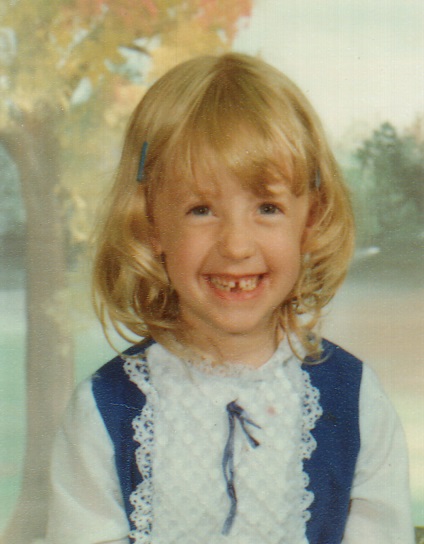
If this old picture of me could talk it would say, "What?"

If this old picture of me could talk it would say, “What?”

I am a slow reader – painfully, tediously slow.  It’s been true since I was in grade two and it’s still true today.  Whether I’m reading aloud or not, I can’t move through a book any faster than the speed of speech – not nearly quickly enough.

If you’re one of the people who’s surprised to learn this about me, thank you.  Most people assume writers are also accomplished readers.  I am not.  I have read and understood a lot of very good books.  But it’s taken me a long time.

Why am I talking about it now?  I just read book blogger Laura Frey’s Can-Lit confessions – a list of hard truths about her experience with our country’s literary canon.  She admitted to not liking, not reading, and being slow to hear about a few of the authors and books considered Canadian classics.  I enjoyed her candor so much I made my own confession about getting through my entire adolescence without reading a single word written by Farley Mowat (as proof of my ignorance, I think I even misspelled his name in my comment).

And then I started considering the short-comings in my own career as a reader.

Early elementary school – the learn-to-read years — was a hard time for me.   In grade one, the fluid left behind my eardrums by a streak of bad ear infections made me mostly deaf.  For about a year, nobody noticed.  That’s how it is with hearing loss.  No one’s to blame.  The loss meant I spent my time at school listening to the dull tides of my pulse moving through all that fluid – fwum, fwum, fwum.  I didn’t realize there was anything more to hear and I thought school was just really boring.  It seemed like we sat in our desks or on the carpet doing nothing at all.

In the second grade, I had surgery, the deafening fluid drained away, and I came back to the land of the hearing to find I’d been bumped from my place in the reading group meant for the best readers in our class.  After all the loud reprimands I remembered little deaf-me getting for not paying attention and not following directions, I figured I deserved the demotion and slunk away with my mediocrity.

Indignant current-me isn’t so sure I deserved it.  I have always understood and retained what I read.  But I will concede this: if we were being ranked based on our reading speed alone, mediocre was a generous assessment of my skills.  Grade two is when I remember Her coming.  She’s this voice in my head – an adult woman’s voice, I don’t know whose – that spoke every word I saw with my eyes.  I couldn’t read any faster than she could talk.  I still can’t.

After grade two, we moved to a new school where my teacher was just as interested in our writing as our reading skills.  She told me I was talented and I became her unofficial language arts protégé – the student invited to the front of the class to read creative writing out loud, at the glorious pace of speech.  No one ever mentioned my reading speed again.  It was my secret to keep.

And I did keep it.  I never cheated but I did learn how to read enough of a book to be able to sound informed about it and no more.  During my Arts degree, I learned how to wade through enough of the material on a course reading list to still get an A.  It was risky and stressful but I simply could not complete all the “required” readings.  There wasn’t time for someone moving at my pace to finish it.

Thanks to the years and years I spent pinned under nursing babies, forced to sit down and hold still and listen to Her, I have ended up fairly well-read.  It was another unexpected irony of motherhood – the way the babies who were supposed to stifle and suppress me ended up being what made it possible for me to become what I wanted all along.  Eventually, I did read everything on the lists from my university classes.  I’ve read hundreds of pounds of thick, daunting prose, poetry, and non-fiction.  And I’ve loved it.

Now that I’ve finished my reading lists — now that the Bachelor of Arts degree hanging in my kitchen doesn’t seem so much like a sham anymore — I can freely admit to anyone that I’m not what people might think I am.  I am a working writer but I am not what my early elementary school teachers considered a gifted reader.  I am not incorrigibly bookish.  I’m still poking my way through the literary landscape, warning my friends I’ll just drag their book clubs down with my sluggish ways.  But I’m working in this field anyway, in spite of my nature.  I’m reading and writing anyway. Maybe it’s true for anyone who tries to write as a vocation.  We’ve probably all got something deep-seated and shame-laden that we had to overcome before we could do this.

I know, it reads like a sports cliche.  But that’s the thing about cliches — they’re tired because they’re usually true.