This Is What a Good Day Looks Like

I emerge from 准备考试 (where I’m all about midterms in a class of super-smart people all clutching raw scores of over 90% which will eventually be hammered into a horrifying curve) to share this post from the Literary Press Group’s All-Lit-Up blog. It’s about both of my books.

Go ahead and read it here.

The author, Leonicka Valcius, compares my novels’ treatments of themes of family, love, and death. She even picks a favourite of the two books–and it’s not the same as mine. The piece is long and thoughtful and I enjoyed it immensely, reading as my bus rolled along Jasper Avenue, away from the restaurant where I’d had lunch with my tall, fancy husband and, for the first time this month, we hadn’t been asked if we wanted separate bills.

I got home and made dinner for my family, almost from scratch. And in the evening, whilst watching Chinese TV on the exercise bike, I understood not only a phrase but its cheeky play on words that doesn’t translate into English–because no matter what grade I end up with I am learning something.

That’s a good day.

The Edmonton Launch of “Sistering”

audreyspic

This is not what’s usually meant by books going viral

After spending the summer terrified, plunking through oral presentations spoken all in Chinese, this fall’s chance to appear in public, speaking to people about my novel in my native language seemed like a breeze.

Easy!

But there’s precious little in life that turns out to be easy. The week of my book launch, I came down with a cold. Grownups muscle through colds all the time. It’s not heroic or dangerous. However, my family, the MacKenzie family, has a talent for coughs and colds. We cough until we gag. We cough so loudly little children cover their ears. We cough until the blood vessels around our eyes break, giving us a scary petechiae–a rash of red-brown flecks on our skin. In the late 19th century, one of our great-great-grandmothers lost nine of her eleven young children to influenza. I’m not convinced there’s any such thing as a man-cold but I do believe in the Mac-cold: the MacKenzie cold.

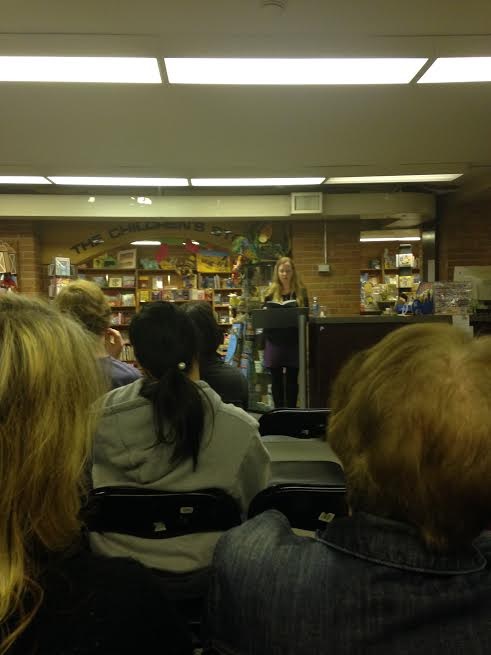
So I turned up at my book launch at Audreys Books in Edmonton with a Mac-cold. I arrived still embarrassed about having to leave a lecture earlier that afternoon to go hack in the privacy of a stairwell. All the hopes I had for the event had been reduced to one simple goal. I wanted to make it through the reading without a spectacular, face-bleeding coughing spasm. All that mattered was breath.

I took my medicine, prayed, took comfort in the goodwill of the family, friends, and colleagues who came, and accomplished my reading in a low, smoky but cough-free voice.

Then I came home and crashed, just like the computers at the store.

From the fog of medication and illness, I missed a few event details that would have been nice. I couldn’t taste any of the cake my sister made for the guests. I also failed to set up any proper photos and am left with phone-shots to document the night.

That’s okay. Someone with a Mac-cold is best seen through a fuzzy screen at a far distance anyway. And the more adversity, the more thankful I am to be in the position to be headlining the launch of my own book, for the second time, in a venerable space, surrounded by people who wish me well.

Thank you, from the bottom of my lungs.

A National “Must-Read Books of the Season” List Featuring Our Own “Sistering”

Oh, how I love the Canadian Broadcasting Corporation, especially when it does stuff like this. The CBC has a healthy, powerful books department in a world thin on books departments. They just made a “Fall 2015 Reading List” suggesting fifteen “must-read books of the season.” They’ve included new fiction from international writers like Salman Rushdie and Franzen, Canadian names like Lawrence Hill and Marina Endicott — oh yeah, and my latest novel.

Wha?! I mean, “Yay, for Sistering!” See the list here.

Great way to end a day of spit-washing spaghetti sauce off people’s faces.

“Sistering” in the Edmonton Journal

Me in my local. Click the link to read the online version.

Me in my local. Click the link to read the online version.

The Edmonton Journal, my local daily newspaper with its robust books section, ran a feature on me and Sistering this week.

Michael Hingston (fellow Can-lit humour novelist) interviewed me and wrote the piece, and a nice photographer named Bruce met me outside the University of Alberta Humanities Centre, stood me up against a tree and shot pictures of me. I’ve never heard someone say, “You look like you’re pissed off at me” so pleasantly. I wasn’t, of course. I always hate pictures of myself, but at least my hair was full-throttle Smurfette that day.

They also posted a notice of my upcoming book event in Edmonton. We’ll be at Audreys Books on Sept. 29 at 7pm.

Here’s the link to the easy-to-read online version: Sistering in the Edmonton Journal

Angie Abdou Reviews “Sistering” on the CBC

datbreakWe were pleased to hear Angie Abdou reviewing Sistering on CBC Radio’s Daybreak Alberta programme. Here she is talking to host, Chris dela Torre, about my new novel. My favourite line? “Jennifer Quist makes you believe it.” Thinking of having a t-shirt made…

Here’s the link to listen to the 6 minute bit: Sistering on the CBC

That Time I Stole a Truck

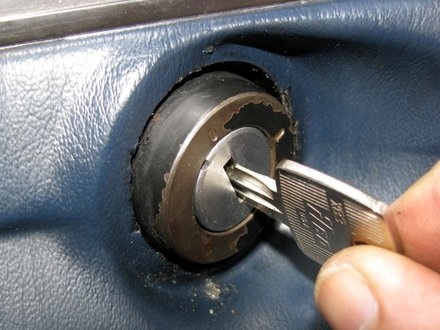
oldkeyOn the first day of this fall semester, I opened the door of my garage where, strangely enough, my car was parked. To my surprise, blocking the foot of my driveway was a skid-steer and a one-tonne flat-bed truck. I was trapped. Unless I was prepared to sprint twenty kilometres, I wasn’t going to make it to school.

The machinery belonged to the contracting company that had been repairing sidewalks on our street. But there was no trace of the men who had left it there to blockade my house. Except for me, the street was deserted.

“Hey!” I called out, just in case. “Is anyone here? Come on. You’re kidding me.”

No one was coming.

The name of the construction company was written on everything so I phoned their headquarters. I spoke to a guy who identified himself as “I Just Work Here at the Office” and I offered to arrange to have their gear towed away if it was too inconvenient to send someone back right away to move it for me.

Mr. I Just Work Here and I hung up. And while I waited to see what he could do, it occurred to me that fastidious craftsmen like these might be too meticulous to bother with details like securing their vehicles. Maybe my freedom didn’t depend on tow trucks or whims of construction workers. Maybe I could free myself.

Sure enough, the truck was unlocked and the keys were in the ignition. I climbed inside, cranked the key, backed up — beeeep, beeeep, beeeep – and, because I am a genius, moved the truck down the street to where it wouldn’t be obstructing anyone.

The work crew was back on the block by the time I had finished and walked back to my house.

“What were you thinking parking across my driveway? I had to move your truck myself.”

“You went in our truck?” the dude said. “That’s—not legal.”

Now, this is not a story of one of my finest hours. I am neither a gracious nor a composed character in this weird little suburban vignette. But give me a little credit for not saying the words “prosecutor’s wife.” Give me credit for not tossing my hair and saying, “Oh, you want to play that’s-not-legal with me, do you? Well, you forcibly confined me in my home by blocking the exit. That could be a criminal offense too, ya know.”

All I said was, “Yeah. Go ahead and recover your stolen property. It’s parked right there.”

“You can’t do that.”

“I did. And your correct response is, ‘Sorry for your inconvenience, ma’am.’”

He never said those words but he did move the skid-steer without my help and I did get to school. I felt a little bad about the scrappy conversation. The construction goofballs are just a bit older than my oldest kids, after all. I’m patient and empathetic when my own big kids mess up and this was a lapse in character for me.

But I didn’t feel sorry for moving the truck myself. Life—what’s left of my life, in particular—is too short for sitting around getting mad and late when the keys are right there, dangling from the ignition.

managehairWhile my oldest kid was working his first part-time job, as a stock-boy in a grocery store, he showed me this picture. It’s about unsatisfied but mostly civilized customers who don’t want to argue with teenaged frontline workers and primly insists on taking their extremely important retail grievances to a higher court. Notice the model in this picture is a probably little younger than me.

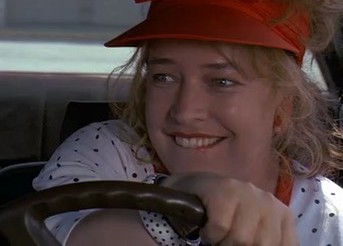
I’m getting closer to the age of the lady below. This is Kathy Bates in “Fried Green Tomatoes” acting out in a parking lot. I always thought this was a dumb scene – a grown-up smashing her car into someone else’s because they were rude and put her out and deserved it. The scene is still over-the-top but it’s starting to make more sense.kathy

I don’t want to talk to the manager. I don’t want to phone the office and wait for a guy. I don’t want answers anymore. I don’t want anyone to get in trouble. I just want results. It’s not about a haircut or hormones or insurance coverage (like it was for Kathy Bates’ character). It’s about time–four decades littered with the usual amount of smoking crap and a complete lack of desire to know where it came from or who put it there. I just want it gone even if I have to muck it out myself.

If the clichéd catch phrase of young women these days is supposed to be “I can’t even…” maybe the catch phrase of women my age should be “I can even…” And I if I can do it without someone  coming out of the office to help, I’d actually prefer that.

Beware women my age. Don’t box in our vehicles. Don’t start ridiculous arguments with us, panic when they’re not going well, and then try to say we came up with the whole feminism thing not because we’re actually suffering but so we can fib our way onto some bogus moral high ground. Women my age are not actually nasty or crazy. We have our wits about us. We also have skills and knowledge and experience. We aren’t hobbled by our sweet babies anymore. We have each other. We can see for miles. And we may insist on being called ma’am.

Sistering is Published Today, or, Enough With the Eerie Coincidences Already

Summer 2013, my first novel is published. It’s a family saga about death and dying. The week it’s released, a close family member is diagnosed with a life-changing, life-expectancy altering illness.

marfire

Oliver, BC fire, 2015

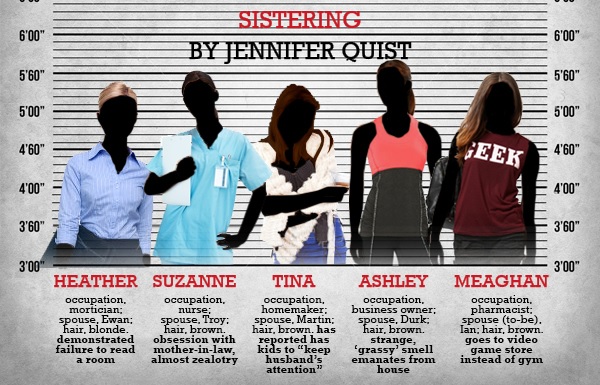
Summer 2015–today, to be exact–my second novel is published. It’s another family story–a dark-hearted comedy instead of a light-hearted tragedy. It’s about sisters and fire and love and stuff. So, naturally, right in time for publication week, the mountain town where my sister Mary lives catches fire.

Ya can’t make this stuff up.

Upon waking on the morning of the unveiling of a five year project my future and my identity as an artist are inextricably linked to, my first thought wasn’t “book.” It was “Mary.”

The last images she left on Facebook last night included the one above. But while we slept, the lightning stopped, the rain started, the firefighters fought. This morning, my sister and her family (plus a second sister who just happened to be visiting this week, posting fire-photos on Instagram that ended up on the Global News website) have all reported in safely from their undamaged home.

I am relieved, finally ready to celebrate, and resolved that my next novel will be a tableau of fluffy bunnies nibbling wildflowers in peaceful meadows.

Oh yeah, and if you’d like to read my “wonderfully bizarre and surprisingly recognizable” book click the “Finding the Book” tab above.

Accidental Pow-wow

poundmakerRemember when we accidentally went to the Poundmaker Pow-wow?

We were out walking in the suburbs, like we do, when we heard the music—drums and voices like weather, water and wind. We followed ‘til there was no more sidewalk, just an empty lot between houses too fine to be anything but empty and for sale. There was dirt and thistle and at the back of the lot, a fence. You said you’d toss me over it—showed me your hands laced together like the bucket of a catapult. I wasn’t sure you’d be able to hoist yourself after me and I refused long enough to find a gate, mud drifted over its bottom edge, burying it closed. We kicked and kicked, like pocket gophers, until the dirt moved and we could squeeze through the gate, into the hayfield behind the houses. Elmer Rattlesnake, the voice on the Pow-wow microphone, called over the field.

“And there you have it…”

We found the road—oiled dirt, tire ruts marked with gravel like trails of bread crumbs—and we moved through the darkness, toward the voices. If this was ficton it would have been too much for me to write that the moon was full, that it was a blue moon. But it was—a real-life blue moon, which, of course, was not blue but orange with the low, dirty haze rising from the hot city to the south.

At the Poundmaker gate, men at a campfire were calling hello and inviting us inside. It was what we wanted but we told them no thank you, hearing the music from the road is enough, we said, saying, without saying, that we are unworthy and we know it and deserve to be left outside. But they stood up from their lawn chairs, told us, “Tansi” and, “Follow the orange snow-fence, duck the trees, and you’re there.”

There was tobacco and fries with gravy, hand-made jewelry in trays, beautiful young men with bustles of eagle feathers illegal for everyone but them to own, checking their phones between numbers. We didn’t have our phones. When we left home, it was just for a short walk and there was no need. No white-faced Pow-wow selfies for us. Which is for the best. Everyone knows taking pictures of something human and ancient and not our own can take your soul away.

There was a lag between formal dances and the community took the field. Blue jeans and running shoes, dads with babies in their arms, aunties with young girls at their sides, dancing forward in rays, families turning in a slow wheel beneath the lights. It was rhythmic but not merely a march. There was footwork, learned movements—skipping, stomping, spinning.

Elmer Rattlesnake was on the microphone again, making the last call for the jingle-dress dancers. Reminding the crowd about the moon and calling for noise. I made it with my hands, clapping.

This is what my father taught me, a little girl raised in boreal towns near the Reserves where he worked, a grown young woman visiting Reserves as a hired specialist herself. Honor the invitation by keeping still. Speak when spoken to. Keep the small pox to yourself. Bow your head when the prayer is said. You will never speak more than a word or two of the language. Don’t dare pretend to know more. But listen anyway. Listen. For the love of everything, listen.

It was all so beautiful, all love and joy—the kind that made me lonely even sitting beside you in the bleachers. The seats were set in a circle–always, I remember, always circles.

It was time to go. Our children were at home in bed and didn’t know where we’d gone—would never imagine it was here. We had to go. As we moved through the crowd, young women eyed my hair—the blond flag against my back. Is that a dye-job? It’s not a dye-job. It was real, it was mine, there was nothing I could do about it.

We moved on. And in the crowd, beside a man dressed in traditional Blackfoot clothing, was a man in a kilt. He was there celebrating his heritage as a member of a First Nation. But he also had an ancestral claim to a dark blue and green kilt fastened with a family pin. It’s how my great-great-great grandfathers dressed when they came to North America as soldiers, fresh out of Scotland, two centuries ago. It was identical to a garment hanging in my own closet, through the trees, over the fence, and into the suburbs. I stared at him, the way the girls had stared at me seconds before. Without speaking, I stared at this man, outside the circle, still a brother.
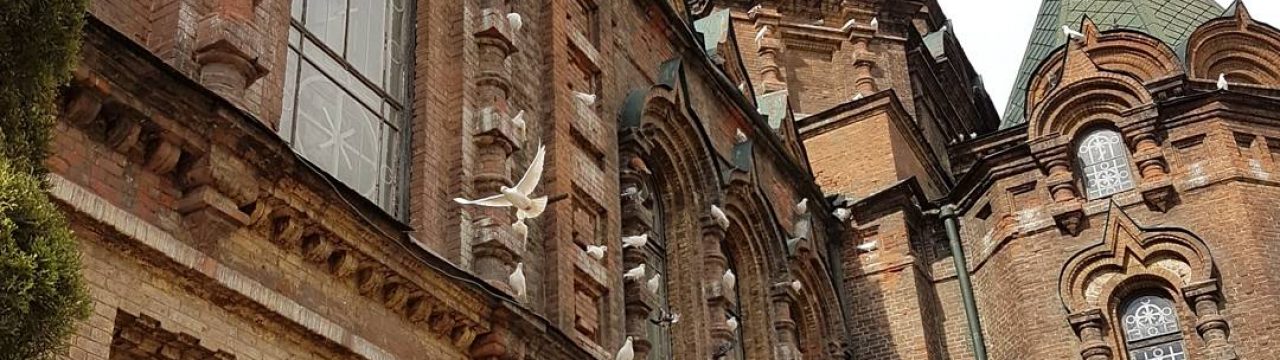
Picture Book, Part I

It’s been observed in reviews of my work that the imagery I use isn’t the typical sort of literary imagery, rooted in visual experience–things that can be seen. Instead, it’s based on other senses (especially smell), simple minute experiences, and cultural allusions. I was surprised to read this about myself but I have to agree with it.

Maybe I was surprised because, no matter how I wind up expressing myself in the end, I do have albums of pictures in my head that inspire my writing. I’ve kept track of some of them and I’ve been posting them every few days as a countdown to the release of my second novel this August 15. A friend called them “clues” and I suppose they do serve to create a bit of mystery. They also satisfy my little kids, who are very diplomatic about their disappointment that my books don’t come with pictures.

Whatever the pictures do, there are still fifteen days before Sistering is released and in the meantime, here’s a recap of what I’ve posted in the past 15 days–my picture book.

Back Stairs, by Heather Horton

Back Stairs, by Heather Horton

dolls

Vintage Paper Dolls

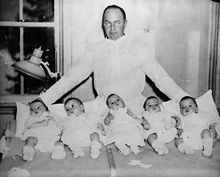
The Dionne Quintuplets (and the Premier of Ontario)

The Dionne Quintuplets (and the Premier of Ontario)

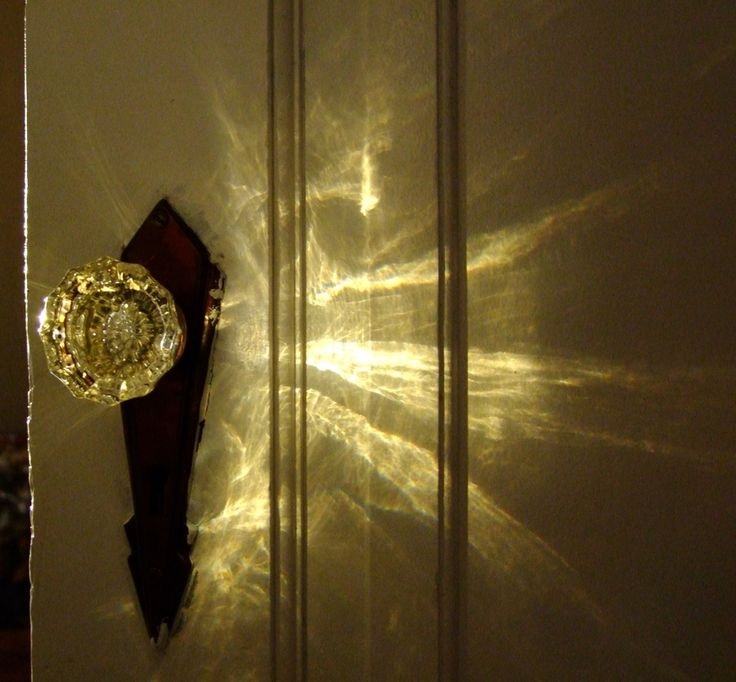
doorknob

Sunlight through an old glass doorknob

headstonecare

Light gravestone maintenance

Queen of the Mist

Queen of the Mist

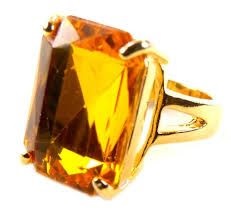
Big Ole' Yellow Ring

Big Ole’ Yellow Ring

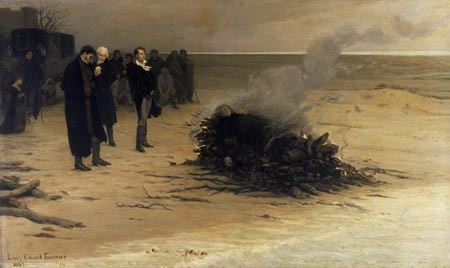
The Cremation of Percy Bysshe Shelley

The Cremation of Percy Bysshe Shelley, by Fournier

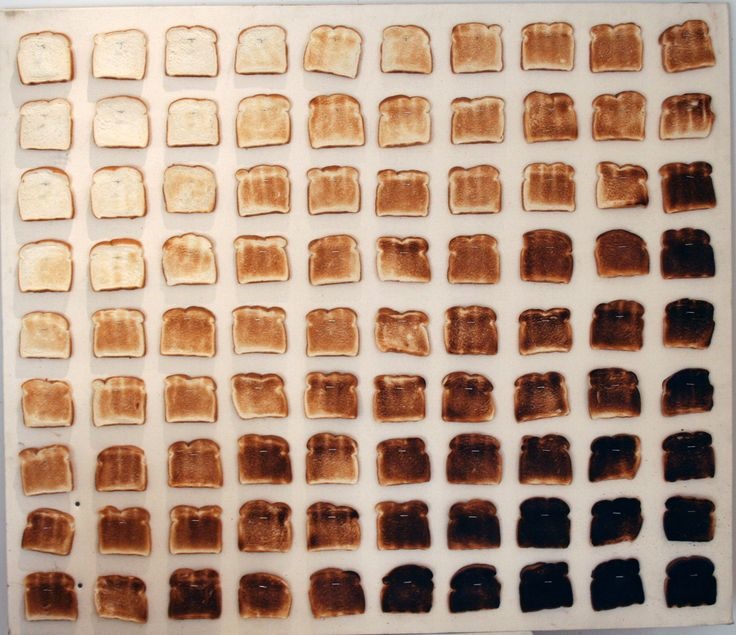
The Toast Spectrum

The Toast Spectrum