Here Baby, There Mama: Don’t Politic My Hair

Let me tell you about the angriest I’ve ever been with my husband. Our not-quite-two-year-old son needed his long, wispy, angel hair cut. He hated haircuts and would carry on like a calf getting branded. It was always awful. My husband told me he’d take care of one particular haircut by himself. He took the baby into the bathroom and buzzed his head with electric clippers.

I was furious.

Yes, the baby’s hair grew back. And no one – not my oh-so-scolded husband, not anyone – has ever buzzed it again. The baby is fifteen years old now. His hair is still light blond but it’s also thick, silky, and he wears it long. I love it. Everyone loves it.

That’s the angriest I’ve ever been at my husband. I’m very lucky. I have an excellent husband. I also have an excellent mother. Guess what makes me angriest about the way she raised me. Once again, it’s haircuts. I’m not one to try to blame my mother for everything. She was and is wonderful to me and my six siblings. But she is a demon in a hair salon.jennyshort
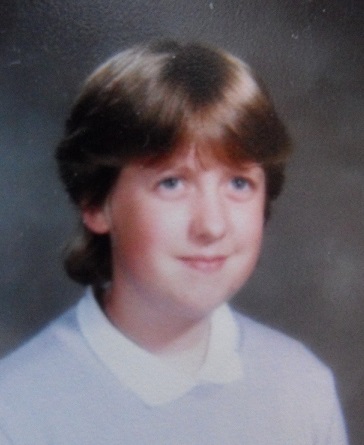
Her first six children were born within seven and a half years. No, she’s not crazy. She’s just talented at pregnancy and babies. My mum is never happier than when she’s raising a baby. I don’t understand it — the same way I don’t understand people who are happiest when they’re cooking or playing soccer or doing math.

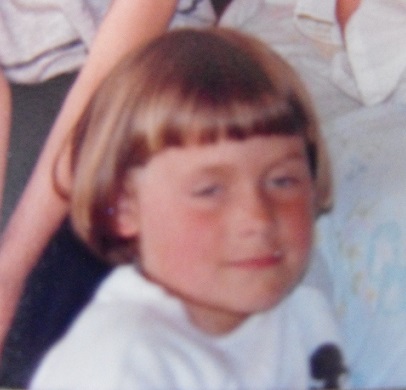
With a family like that, I guess Mum needed some short-cuts – literally. Five of us are girls — though it was hard to tell from looking at us when we were kids and our mother was choosing our haircuts. Mum had this idea that short hair on girls was “stylish” and modern – that and it didn’t need any time consuming combing or binding with elastics.

amyshort

Some people look fine in short hair. These people are not in my immediate gene pool. We all looked horrible. We knew it even though our mother raved about how pert and bold we were and how boring and backward our girl-friends were with their gorgeously normal shoulder-length bobs. But we were respectful, filial girls and I didn’t rise up and put an end to my mother’s terrible haircuts until I was in the tenth grade. That was when I grew my hair long – crazy long – and never went back. My sisters have thrown off their chains and grown out their hair too.

We all have the hair we want now. We’re educated, independent women exercising control over our own bodies and using a whole lot of high-end conditioner every morning. That’s the happily ever after, right?

Unfortunately, personal preference isn’t the only thing being read into hair length lately. Some click-baiting doofus wrotesarashort an article in response to the recent Hollywood revival of the pixie cut that made my childhood so awkward. He trolls on about how women cut their hair short to perturb and alienate men. The article has been answered by far more thoughtful pieces claiming long hair can be a patriarchal weapon meant to signal reproductive receptivity and with it, submission to oppressive forms of traditional gender roles.

Actually, for most people from my ethnic group anyways, long hair is just the natural state of all hair, for men and women. It’s now been unnaturally politicized by both sides of the gender divide. One of my brothers-in-law snapped and told my sister she had to cut her hair because she looked like the wife of a fundamentalist cult leader. I guess that wasn’t the impression he wanted his colleagues to have of their successful family business. My sister keeps her hair long anyway and sometimes twists it into a tight, top ‘o the head, power-bun that is authoritarian and formidable and totally awesome.
maryshortI admit I’m still insecure enough to worry whether anyone mistakes my long hair as a sign there’s something oppressive in my relationships or worldview – something amiss with my feminism. There isn’t. I’ve written more in defense of feminism than many people will ever read in their lifetimes.  I have nothing to be insecure about.  Part of enjoying my personal autonomy is invoking my right not to cut my hair if that’s what makes me happiest.

All that anger from the beginning of this story – with my husband and my mum – it’s petty. I’ve let it go and moved on. Even in the teeth of the crises, I never had much to complain about.  Unless it’s a token of religious observance, everything that’s said about another person’s hair length seems just as petty to me. And in realms of pettiness, what’s important aren’t the choices we make but the fact that we are free to make those choices.emshort

Sometimes, as Freud is rumored to have said, a cigar is just a cigar. And sometimes, a haircut is just a haircut – no social agenda, no revolution, no patriarchal violence – just pretty protein sprouting out of a scalp. When it comes to the way I wear my hair, all I’m trying to say is that I love it long – on my sons, on me, on my sisters, even on my mother herself.

Me, My Mum, and My Sisters Today

It’s Me, Writing in “The Awl”

It’s Me, Writing Psychoanalytic Feminist Film Criticism

This week, I drafted a blog post I liked too much to keep to myself.  Instead of posting it here, I sent it to a cool New York City website called “The Awl” and 48 hours after pitching it, the story was published.  It’s doing well — getting tweeted and shared and picked up by other news sites.  There is an audience out there who gets it.

However, I realize all the psychoanalytic feminist film criticism in it might be off the beaten path for many of the kind people who know me personally and read my stuff out of love.  The “Awl” article assumes readers have already heard of and dismissed the trope — the flat, stock film character — known as  the “Manic Pixie Dream Girl.”  The term was coined by critic Nathan Rabin in reviewing a movie where a sad young man is rescued by a “psychotically chipper” woman.  Rabin explains, “The Manic Pixie Dream Girl exists solely in the fevered imaginations of sensitive writer-directors to teach broodingly soulful young men to embrace life and its infinite mysteries and adventures.”

My article is a cheeky look at a possible source of this self-indulgent, embarrassing character.  Something tremendously compelling must keep male-writers coming back to it.  The piece was a lot of fun to write and I’m enjoying people’s reaction to it.

Maybe give it a read here:

Manic Pixie Dream Mom – The Awl, Jan 10, 2014

Lessons in Vocabulary and Art from Publishers Weekly

Publishers Weekly Reviews My Novel

Publishers Weekly Reviews My Novel

This week, my little Canadian novel was reviewed in Publishers Weekly.  (I know, right?  Read it here.)  The review isn’t long but it is perfectly positive.  The reviewer isn’t credited by name in the online version I’ve seen but she or he was thoughtful and insightful enough to have me Googling a few of the terms used to describe my own work.

The first was one of those words that’s still vaguely familiar from my Arts degree days — those spellbinding lectures on Jungian psychology at the base of the Tory Tower.  Somewhere in scrolling through the fanciful vocabulary of archetypes scrawled on the overhead projector film, the meaning of this term slipped out of my consciousness.  It’s “psychopomp.”  It doesn’t sound like a nice thing to be called but, as I now remember, it means a creature who serves as a guide to souls — newly deceased souls in particular but also the newly born or anyone unmoored.  As the PW review points out, my novel’s main characters are psychopomps.  I had never thought of them that way before but it’s certainly true.

The second term I had to look up was completely new to me: mono no aware.  Though it’s tempting, don’t try to use an English or Latin vocabulary to decode it.  It’s a bit of Japanese philosophy and translates into something like “the pathos of things.”  The idea is that instead of the bittersweet knowledge that this world is transient making us morbid and jaded, it moves us to reverence our lives and experience them as poignant rather than mundane.  I’m no scholar of Japanese philosophy but I think it might be the opposite of the Western ennui that makes up so much of literary thought right now.  Whatever it is, I think I need to find my old, water-stained copy of The Tale of Genji and read it again.

There’s a lot to love about being an artist.  That anyone would read my work is great.  That they would look up and from my work and have something to say about it is even better.  And having them teach me something I didn’t know about what I, myself, have written makes me want to fall on my face and cry — especially when it’s something true.  Sometimes, it’s wonderful to admit, “I didn’t know that was in there and I don’t know where it came from.”

I’m usually fairly pragmatic and cringe at the conceits and the headier romance of writer-life.  I don’t have much of a stomach for elitist memes and other silliness bent on making embarrassing overstatements about writing and writers.  But there is something genuinely sublime about art — even the quiet, tappity-tap, within sight of my laundry hamper art form of my own.  At its best, art is a miracle.  And we bow our heads, grateful and baffled that whatever it is that makes miracles would stoop to involve people like us.

Mothers of All Brothers at the Mall

My sister had just posted a new picture of her baby on Facebook.  In it, my big-eyed, beautiful niece was wearing layers and layers of frilly pastel ruffles.  Beneath the picture, I wrote, “I didn’t know ruffles were the big thing right now.”  Even for idle social media chatter, my ruffle comment was pretty idle.  I didn’t expect anything to come of it.

But then, out of the vastness of time and space, through the miracle of post-modern social networking, another comment came answering back from an old friend of mine.  I didn’t know she and my sister were in touch.  I was surprised.  Frankly, they hardly know each other.  Frankly, my friend and I hardly know each other anymore.  We were closest during our early teenaged years, before I outgrew the worst of my hideous phase and started encroaching on her boy-chasing territory.  Things had been very quiet between us for a very long time.  But now that ruffles were on the table, she had something to say to me about them.

“That’s because you are the only girl in your home,” she told me, “And I don’t think that ruffles were ever your thing…”

She was right about that.

“…Little girls LOVE ruffles,” she continued, emphasis in the original.  “And sparkles, and tiaras, and glitter, and magic wands.  Maybe you should see if you can get a girl to balance out all of that boyness in your house.”

Maybe I’m crazy but it read like a smack-down.  It sounded like my family of nothing-but-sons was being called out as karmic.  She may as well have written, “You like boys, do ya?  Well, take THAT, boy-stealer.”

I replied by doing what anyone put in my position would have done: I quoted out-of-context Bowie lyrics at her.

“There’s only room for one and here she comes, here she comes.”

Unlike me, my old friend – the ruffle expert – has a daughter.  She goes shopping for tiny frilly dresses while I’m pushing a cart full of black and navy sweatpants.

I’ve heard people remark how tragic it is that mothers of boys don’t have as much fun shopping as the mothers of girls.  The idea is familiar enough to make it feel like everyone must agree.  But who actually makes this complaint?  I took a straw poll, pulling comments out of Internet parenting forums dedicated to mothers of all-boy families.  I was looking for any self-reports of mothers being disappointed about not being in the market for pretty dresses for anyone but ourselves.

Here’s what I found: hardly anything.

Every now and then, a long, sad venting post would appear where a mom of boys lists everything about parenting that hurts her.  Once she’d started brainstorming her disappointments, she’d usually toss in a line about shopping.  But in pages and pages of healthy, happy chit-chat about raising boys, it was nearly impossible to find any boys-only moms complaining about the lack of sparkles in their laundry.

So who keeps talking about how sad we must be?  It seems the people most likely to think shopping in the pink section is important are people who are actively enculturating a little girl with prissy, Western notions of acceptable gender roles.  These people care very strongly about it.  But guess who doesn’t care much about it?  Everyone else.

Groaner at the Scholastic Book Fair

Groaner at the Scholastic Book Fair

Shopping may be a strange and backward place for flagrant plays of gender politics but it’s a real one.  Most of the time, gendered shopping is a marketing tool meant to get parents with kids of both sexes to buy double the merchandise they need because pink bicycles burst into flames if boys try to ride them.  It’s got nothing to do with what’s good for the human psyche and everything to do with selling products.

When it comes to underwear and tampons, I can see the wisdom in dividing the marketplace between the sexes.  But when I walked into the Scholastic Book Fair at my kids’ school this winter and saw a table labelled “Books for Boys,” I got angry.  Thanks, Scholastic, for making sure arbitrary gender division in education and the arts stay staunchly and clearly defined.

And thanks, I guess, to everyone harbouring any compassion for women who only mother children of the opposite sex.  Go ahead and feel sorry for us.  In truth, there are reasons for boy-moms to feel a little lonely – a little empty.  They’re real and I believe they’re profound.  The reasons women might mourn for never creating another human in their own image are existential, rooted in our personal identities, our senses of our own immortality, and our fears about dying alone.  And that makes the suggestion that our feelings are all about vapid unfulfilled shopping fantasies outrageously offensive.

Regional Bestseller!

Edmonton Journal’s Bestseller List, Nov. 15, 2013

Our book was number 5 on the Edmonton Journal newspaper’s list of best-selling fiction yesterday. It was fifth after the Giller Prize winner, two collections by the Nobel Prize winner, and a Giller Prize nominee. I am very please and extremely grateful to everyone who has ever picked up a copy of Love Letters of the Angels of Death. Enjoy!

What Not to Say About My Sick Family Member

In an eerie coincidence, the same week my book was published – a family saga with the word “death” right in its title — a close family member was diagnosed with a serious illness.  It’s a liver disease that’s been seen in our family before with fatal results.  Though not hopeless, it is at best an extremely difficult crisis.  It is the boogeyman.

We’re not the kind of family to hit the social media circuit with alarming, heart-wrenching announcements.  We suffer best in intimate surroundings.  But as time goes on and the disease muscles its way into everyday life, it becomes necessary to tell people outside our inner circle why things are changing.  Some of the people who should respond with the simple sympathy and support we need choose another route.  They respond with unwanted, quack-tastic theories and advice about what went wrong.

Questionable health advice is part of social life in the Google age.  When it’s aimed at me – a healthy person just entering mid-life – I can grin and listen to it.  If an idea is important to my friends, I can make it important enough to me to bear a thorough, good-humoured airing of it.  That’s empathy.  But when Google-lore is leveled at my loved one’s acute health crisis, it becomes a different matter entirely.  Suddenly, the onus is no longer on me not to be callous about my friends’ attachments to their pet beliefs.  It’s now on them not to be callous of my grief and anxiety.  That’s empathy.

I understand that no one I know has any malicious intent toward sick people or their loved ones.  At the root of unsolicited advice about magic grease and mega-minerals and super-berries is an earnest desire to be helpful – to give me the information I need to escape the suction of the awful yellow-green vortex swirling in the depths of my gene pool.

And I do have friends and relatives – people with decades of education and experience in both conventional and alternative medical fields – whom I shamelessly pester for unpaid, informal advice on health matters.  The problem isn’t that I’m too proud to seek out or listen to advice.

The problem is the subtext people like me, who are dealing with sensitive situations, can read into well-meant advice.

Let me explain what it sounds like when I’m told by anyone other than an attending health care worker how to save my loved one and myself.  It could be any kind of advice, like do not, under any circumstances, drink sweet, fizzy drinks.  (Yes, someone once told me pop is the worst thing anyone can drink.  Actually, I’d wager mercury is the worst thing anyone can drink – or molten lava, or tailing pond-water, or bleach, or a broken-glass smoothie).  The advice could be warnings never to eat gluten or dairy or red meat or unicorn hoofs.  It could be voicing suspicions about all those sinister vaccines.  It could be nothing more than pushy chatter about positive thinking.

Right now, this kind of advice all sounds harsh and denunciatory.  No matter what anyone intends when they say it, none of this feels like good will to me.  Instead, it’s like being told my loved one deserves to be sick because he’s not as smart as the people on Google and he fricked up his body, like an idiot.

And that’s not true.

Even if it was true, what good would it do to lavish scorn on someone’s choices now that he’s already sick?

So save it.  When someone cracks the door open and makes the darkness of their tragedy visible, don’t shoulder through the gap and start tripping around wreaking havoc in the gloom.  Accept what they’ve shared and tell them, “Oh my gosh, I am so sorry to hear that.”  Sit and listen.  If you can, find out where that sick loved one is and go shovel the snow off his sidewalks. Or tell that struggling friend how it was when you were living in the same kind of shadow.  Say a prayer.  Give a hug.  Shut your face.

Reading In Toronto, Traveling Some Unexpected Full Circles

The first time I was in the Pearson Airport in Toronto this year, 4000 km from home, I was on a stop-over on a cross-country flight with all my immediate family members.  There were seven of us but, suddenly, only six boarding passes.  It made for some exciting air-travel fun.

The second time I was in Pearson Airport this year, I was by myself.  It was a bit too quiet but at least my passenger to boarding pass ratio was a solid one to one.  This time, I was stopping in Toronto, staying for a book event at the venue my publisher calls “the bookstore of our dreams.”  Maybe it’s a good thing I didn’t bring along anyone to pinch me.

The view – When I sent the pic to my husband he thought it was of the inside of an empty vending machine.

I booked a room downtown, not realizing until I saw it jutting out of the skyline, that I’d be staying two blocks from the CN Tower.  In the hotel lobby, I wondered if I’d be able to see the tower from my tenth floor window.  Not so much…

The book event – which was for all five of the 2013 authors of Linda Leith Publishing — was on Bay Street at Ben McNally Books.  In every city, long-established, well-known stores are sometimes called landmarks but Ben McNally Books really is picturesque – pillars, carved woodwork, chandeliers, and books, even my book.

In the shop were people I’d been working with for the past year whom I had yet to meet in real life.  What puts the “Linda Leith” in Linda Leith Publishing is a real person: a lovely, bold, accomplished writer, teacher, editor, and publisher.  She’s a fellow mother of boys, the eldest daughter of a large family, a survivor/beneficiary of her parents’ many relocations during her years at home.  It’s no wonder she was the publisher to look at my work and “get it.”

The ceiling in Ben McNally Books on Bay Street

The ceiling in Ben McNally Books on Bay Street

Here’s something I know about myself.  I love doing readings.  I love audiences and microphones and voice-acting my way through my story for people to hear.  The storytelling part of a book event is always my favourite part.

Meeting the other LLP authors was another pleasure.  I already knew they were formidable people.  They’ve written multiple books, worked in publishing and academia, lived and studied abroad, eschewed car ownership.  They’re multi-lingual and speak with cool accents.  They don’t get lost traveling on foot in downtown Toronto.  And they are very kind to the dippy little sister figure in their midst.

The consensus at the casual dinner after the event was that I should spend the time the next day, before my return flight, visiting the Royal Ontario Museum.  It was a long walk to get there – one that kept getting interrupted by women about my size asking for directions I couldn’t give.  In a big city, little girls gotta stick together.

Even after the rave reviews, the museum far exceeded my expectations.  It was vast and fascinating.

And up on the third floor, in a dim room with stone mortared to the walls, was a mummy taken from Egypt.  There he was, as the narrator of my novel would say, “caught in a bad funeral that threatened to go on until the end of the world.”  Dry and brown and desecrated with his face, neck, and toes exposed from the bandages — dead people, there’s no one more helpless.  Take that zombie garbage and grind it into compassion.

Canopic Jars at the Royal Ontario Museum

Canopic Jars at the Royal Ontario Museum

The book I wrote – it’s small and it’s only paper, but it’s a museum for the dead too, complete with all the ambivalence pent up in the display cases.

“I’m sorry,” I told the dead man from my side of the glass tomb.

Sorry but standing there anyway, seeing, knowing I would go away and tell.  This mummy and I – we were in my book together, part of the original art that brought me here, and made me this.

The circle closed.  It was time to go home.

Kleines Mӓdchen: Little Girls on a Book Tour

Reading on the Road

Reading on the Road

I never meant to cram a month’s worth of book promotion into seven days.  It just happened — an unforeseen consequence of good luck, good will, and good publicists.  I was so busy last week my kids actually noticed and mentioned how little time I’d been spending in my pumpkin shell.

I told them, “Look, I took a seventeen year mat-leave.  You’ve got nothing to complain about.”

Sure, it was a maternity leave full of freelance work and “will-you-just-let-me-finish-this” but I was here, in the house with them, for almost all of it.

The week started early Monday (because, that’s when it always starts) when I went into my closet — the room in the house most like a radio booth — and did a telephone interview with a talk-radio station in Edmonton.  It was a “top-line” interview meant to promote an appearance I’d be making in the city the next day.  It went well until the very last question.

“So,” Mr. Radio asked, “who’s taking care of the kids while you’re [in Edmonton]?”

Instead of musing, “You know, when my husband gets interviewed by the media, on the courthouse steps, no one ever asks him who’s looking after his kids,” I laughed it off.

“That’s their problem,” I told the interviewer.  “The oldest is seventeen so it’s Lord of the Flies over here when I’m gone.”

So far, no visit from Child and Family Services.

By bedtime that evening, I was gone.  I was at my sister’s house in Edmonton, getting ready for another “top-line” interview on the most terrifying of all media: television.  I haven’t watched television for years and I was scheduled to appear on a morning news show I’d never seen before.  What I remembered from TV was mostly how it’s been used to make “real” people look foolish and grasping.

In the morning, I got dressed while it was still dark — high black boots, skinny black pants, white top, black jacket.  Looking in my sister’s mirror, I finally saw it: I had subconsciously dressed myself to look like the black and white magpies on the cover of my book.

After a breakfast of Diet Coke with the coolest girl in Yellowbird Elementary School, I was on the freeway.  I got to the studio early enough to meet the other author being interviewed that morning.  In the green room was a man my age wearing a raspberry-coloured suit with a peach handkerchief tucked into the breast-pocket.  This was self-proclaimed over-dresser and Edmonton literary institution, Todd Babiak.  I thought I might run into him here.

“Don’t get nervous and start making fun of him,” one of my little sisters had warned me.  “That’s what I’d do.”

This was good advice.  It turns out Babiak isn’t a TV watcher either and we sat in the green room puzzling at the monitor on the wall as the program wound its way toward our segments.  He nodded at the anchor-lady on the screen.  “She’s actually read my book,” he said because, in a top-line interview, this is remarkable.

Left alone in the green room, I watched Babiak’s interview.  Of course, his raspberry suit had to be acknowledged on-air, just like my five kids at home had to be acknowledged on the radio on Monday morning.  The boys — they’re my raspberry suit.

Walking the hallway to the studio, I asked the producer with the pixie-cut hairdo, “There aren’t going to be any questions about who’s taking care of my kids, are there?”

She smirked.  “Any what?”

I told her about the radio station and we all scoffed together.  The anchorman who interviewed me was sweet in a clean-cut-captain-of-the-football-team kind of way.

I spent the rest of the day in the city, visiting family, calming the frick down before I went to a reading in a bookstore downtown.  The guests at this reading included some old friends I hadn’t seen in this century.  One of them reintroduced herself in case I’d forgotten her — which I certainly had not.  A wonderful thing about a book tour is the way it’s also a time machine.

After two days of massaging social media, the time came for another reading.  This one was closer to home, in the city my husband commutes to for work.  The Red Deer venue was warm and cozy and the time machine coughed out a long lost aunt and cousin.  There was a question from a woman — a fellow artist — who earnestly and innocently wanted to know how I “do it” with so many kids in my life.

I shrugged, “By being a crap mother, I guess.”  This might be my new pat-answer.  Put it right in the press kit.

fmroad

Get your kicks on Route 63

The last event of the week was the most ambitious one of all.  The person stepping out of the time machine this time would be me.  The  machine took the form of my black pickup truck — the kind they issue everyone crossing into Alberta’s borders.  I picked up my sister (the third sister in this story) and we went north, to Fort McMurray.

I’m no carpet-bagger, no oilsand opportunist.  For five years during the early 2000s, the city was my hometown.  I bought my first house, repaid my student loan, met bears, planted trees, and had two magnificent babies in the city.  An entire chapter of my novel is set in the Wood Buffalo region.  To get there, we drove for five hours — me boring the heck out of my sister with all my “Wow, this is so different.”  I alternated between, “I can’t believe all this is here” and “I can’t believe all that is gone.”  No matter what the Old Man says, the region is not Hiroshima.  It’s not a wasteland.  But it’s not like it used to be either.

In seven years, the city’s service industry hasn’t changed.  We arrived at 2:45 pm but we couldn’t get into our hotel room to change our clothes.  It was still a mess.  I’d be appearing in public looking like I’d spent the day in a pickup truck.  We hadn’t had a meal all day and we went to a fast food restaurant with milk and grease smeared all over the sky-blue tabletops.  This was familiar too.  The restaurant couldn’t hire enough staff to have anyone to clear the tables.  Customers go there knowing they’ll have to do it themselves.

At the event — a launch party for the latest edition of NorthWord: A Literary Journal of Canada’s North  I was invited to read first.  I chose the chapter set in the neighbourhood where I now stood reading.  And when I got to the part about the trees along the highway — the ones that now exist only in my imagination — I choked into the microphone.  Maybe it’d sound noble and Neil Young would pat me on the head if I tried to say I was having a fit of environmental conscience.  It wasn’t that.  It wasn’t the trees.  It was me.  There was some kind of awful longing rising in my throat with the words I read.  The whole time machine idea — it’s wrong.  This place that I love had moved on without me.  I was abandoned.  And I hadn’t even known it.

Part of the NorthWord event was in impromptu poetry contest.  The theme was contrast.  I jotted some lines and signed my sister’s name to them.  The poem was about the dirty tabletop at the restaurant.  It was silly and pretentious right down to the lines I wrote in German.  The judges got the joke and it won a prize in the contest.  But my sister was too embarrassed to let them announce it.  Fair enough.

Sister-Sleepover

Sister-Sleepover

When we were finally let into the hotel, we put on pajamas, got into one of the beds, put our heads together, and watched YouTube on my sister’s tablet — a sisters’ sleepover, just like old times, only not at all like old times.  Neither of us had wi-fi or a credit card or an ex-husband or a book to tour when we were little girls.

Still, those German words — the refrain from our winning poem — they were these:

Kleines Mӓdchen.

Return of an Edmonton Cleaning-Lady as an Audreys Author

The best thing about being from nowhwere is being from everywhere.

I lived in thirteen different houses by the time I moved away from my happy, nomadic family at age eighteen (only to have them move right along after me a few months later).  That counts as growing up everywhere doesn’t it?

When I made my first solo move, the place I went was Edmonton, Alberta.  Don’t know Edmonton?  It’s a metropolitan area of about a million people at 54 degrees latitude.  If anyone’s thinking, “That must be a pretty great city for people to put up with living that far north,” they’re right.   I went there to get an education at the University of Alberta.  I met my husband on Whyte Avenue, earned my degree, published my first guest column in the Edmonton Journal, and my two eldest children were born in Edmonton.  I was there for eight years — longer than I’ve lived in any city.  My Edmonton days were happy but not glamorous.  Most of the time, I lived in Strathcona walk-up apartments like this:

The Apollo Apartments, just off Whyte Avenue

The Apollo Apartments, just off Whyte Avenue

Even this place was only affordable because I worked as the resident manager and cleaning-lady. I don’t live inside the city limits anymore but if the weather is good, I can get to them in under an hour.  Edmonton is still one of my many hometowns — part of the everywhere I’m from.  In fact, several of the chapters of the book I wrote are set in city — University of Alberta campus, the High Level Bridge, Cloverbar Waster Transfer Station — all Edmonton.

This coming Tuesday night, I’m bringing my book home to Edmonton.

A few weeks ago, my novel was nicely reviewed by Edmonton Journal book columnist (and fellow newly debuted local author) Michael Hingston.  He called it, “A surprising, thoughtful and captivating debut that uses death to illuminate all that’s at stake in life itself.”

The good local review sets the stage for my author reading hosted by Edmonton’s indie bookstore mainstay, Audreys Books. (No, there isn’t supposed to be an apostrophe in the name.  It refers to more than one Audrey and is grammatically above reproach.)  Audreys is a place little girls slogging away at their Arts degrees, and young-mother-cleaning-ladies writing indignant guest columns keep in their minds as the setting for scenes from the futures they want for themselves.  The store is a landing-pad for Edmonton writers in traditional, book-length publishing.  I am beyond happy to be appearing there.

And since my publicist, Sarah, is a total animal, I’m getting right up in Edmonton’s face about my homecoming.  I’m doing a radio interview with talk radio station 630 CHED on Monday, Sept 23, at around 7:20am.  The morning of the reading itself, Tuesday Sept 24, I’ll be interviewed outside the safe, blind box of radio on television with the CTV Edmonton Morning show.  I’ll be on for just a few minutes at around 8:40am.  So crazy!  And if I botch it, remember that we must never speak of this again.

The Head Sneer-Leader Takes to the Field

We knew by the way he sacked the basemen as he ran around the tee-ball diamond that football was the sport for our fourth son.  That was when he was five years old.  Now, at age eight, he weighs 100lbs, is tall enough to look his mother in the eye, and is finally old enough to play for our town’s Atom Chargers football team.

athletes onlyOne month into the season, he looks great on the field – shoving and sauntering.  But it hasn’t always been that way.  The first two practices were disasters.  He ignored the coaches, walked while everyone ran, and eventually wound up standing with his helmet pressed against the goal post in a self-imposed timeout.

With half an hour left in the second practice, I stood up from the stands and headed onto the field.  “You’re not going to want to make a habit out of that,” my friend, a seasoned football dad warned me.  He’s right.  But watching my kid bouncing his own head off the goal post over and over again was more painful than storming onto the field as “that parent.”

I got to the goal post, took my boy by the arm, and said, “You have exactly one more chance to do what the coaches say or you are grounded from the computer and all the video games.”

“Okay, Mom.”

So began his football career.  He’s still the slowest guy on the team but he’s playing a position where his job is to get in the way and knock people over.  He’s a natural.  Wherever he is at this very moment, he’s probably getting in the way and knocking things over right now.  He will never touch the ball during a game.  For a kid like mine, playing on the line, football is more a martial art than a ball-game.  And I am shocked at how much I – a former high school football sneer-leader – am enjoying watching my son playing sports.

Yes, it’s taken me four sons to finally have one involved in team sports.  Before him, I didn’t have any first-hand knowledge of how kids behave in organized sports.  Along with that ignorance, I didn’t have any experience with how parents behave while watching kids play sports.  I’d heard horror stories about parents cursing at coaches, threatening referees, yelling at kids, running out onto the ice or the field, embarrassing and upsetting everyone.  It seemed like craziness.  I didn’t disbelieve those stories.   But I didn’t understand the complexities of them either.

Not every parent meddling in his or her kid’s game is out there abusing coaches and trying to bully kids into far-fetched pro-sports careers.  Some of them are just trying to get their kids to do flaming anything.  When my son zoned out in the end zone, I could have got all tender, sighed something about how he wasn’t interested in football after all, unlaced his brand new cleats, and taken him home to our soft couches and lovely, glowing screens.

Big Mic in his practice gear

Big Mic in his practice gear

The fact is if my kids had it their way, they wouldn’t do anything that wasn’t easy for them.  They’d be charming writers, artists, and readers but they wouldn’t know how to swim or ride bicycles or speak French or do any number of other things that make them happy now that they’ve mastered them.  Young kids – like my linesman — don’t know anything about work or rewards or regrets or how everything in life but real love comes with an expiration date looming over it.  When my kid acted like he wanted to quit football, he wasn’t thinking about the day disillusioned adult-him might come brimming with blame, asking why I didn’t push him hard enough to make a difference when he was still a kid.  He’s not thinking of old-lady-me trying to justify to my daughter-in-law all the times I failed to kick his butt, leaving her to do it.  (I, on the other hand, am constantly thinking about my daughters-in-law.  I want those harpies happy.)

Someone owes it to kids to give them chances to learn new things – hard things.  For some parents, giving a kid a chance means writing a check, dropping him off at the sports field, and watching the magic happen.  For slow-to-warm-up kids like mine, giving them a chance often means riding them until they figure out what’s important for themselves.  And for other parents, like the guy I saw calmly carrying his screaming son off the field after the kid ripped off his cleats and threw them at his dad’s head, it means knowing when certain horizons are already as broad as they’re going to get and moving on to different ones.

So to all those parents of the eager, easygoing kids, don’t take those kids’ good attitudes for granted.  Thank them for it.  And take it easy on all of us “that parents” out on the field mixing it up with our more difficult kids.  We’ll try to go easier on ourselves too.  If it helps, let’s think of our different parenting-styles as CFL versus NFL football.  To people who don’t know much about it, the games look the same — but they’re not.

Oh, and go Chargers!