Found Art for Fathers Day

IMG_7375IMG_7373

In the clay and rock fill that keeps getting piled up to make a park behind our house, we sometimes find these eggshell-coloured rocks with rusty markings on them. We’ve never asked anyone if we could collect them and add them to our garden but we’ve never been told we couldn’t take them either. The local rock-expert-dude who sells necklaces and healing crystals in the mall is unimpressed with them — says the marks are scraped onto the stones by the heavy-duty, dirty-metal equipment used to quarry and carry them. They’re machine-made which means they’re human-made — and that makes them art.

One of them is nice but it’s just an eagle, or whatever — something anyone could see in any skid-mark.  The other is some kind of winged, jaunty, sub-terranean devil-man on his way to work at some hellish mine.  Look, he’s got a pick-axe slung over his shoulder.

We used to have a rock that looked like a picture of Don Quixote on horseback.  But over the last winter his rust-smudged head wore away, or the stone healed itself, or I lost the power to see the image properly, or something. If I was someone else, maybe I might prefer the new headless horseman to the old non-knight.  If I hadn’t gone looking for the rock so close to Fathers Day after spending years telling everyone Don Quixote was my father-in-law, maybe I would be glad.  But I miss them — the stain on a rock and my not-quite second dad — I miss them both.

Selfhood, Motherhood, Childhood and How They’re All the Same

My son says this Fever Ray video reminds him of me. Is it the hair, the skinny legs, or all the going off to do weird stuff by myself?

I’m in a thrift store with my sixteen year old son.  (Anyone who doesn’t have a sixteen year old son should get one someday.  It’s kind of like having a stupid, darling high school boyfriend again only without all the icky tension.)

We get to the furniture section of the store – the part set-up like a dozen crummy little living rooms butted against each other.

“It’s like some old grandpa’s house,” my boy says.

And then, as I often can, I track of his train of thought.  It’s passing through the stop called “grandpa,” chugs in and out of the station called “the only dead person I know well” before it screeches to a halt in the busy rail yard labeled “death.”

“This is where they bring people’s stuff after they die,” my boy says.

“Yup,” I agree.  “This is where you’ll bring my stuff after I die.”

He doesn’t choke or get maudlin but he does say, “I won’t bring your stuff here.  I’ll keep it.  I’ll take your computers and find everything you ever wrote and print it out and save it.”

I tell him he’s sweet and we leave the store, bound for another thrift shop.  So far, we’ve bought a 1970s era Charlie Brown paperback and a discarded copy of a book I contributed a couple of essays to but we still haven’t found the t-shirt with the graphic of a killer robot with a Korean speech bubble that will be my son’s find of the day.  We get into the car, tune the radio to one of our favourite CBC shows – the one I work for a few times a year, – and we back into the Saturday afternoon traffic.

See it?  My life – including my life as a writer – forms a part of my son’s life.  It’s something he sees as enduring and inseparable from the imprint I leave on the world he is in the process of inheriting from me.

A recent article in The Atlantic entitled “The Secret to Being Both a Successful Writer and a Mother: Have Just One Kid” assumes motherhood and a stellar career as a writer are irreconcilable competing interests. The article’s hook of a headline (which was was not written by the author, Lauren Sandler), is beside the point.  This isn’t so much a piece about family size as it is about the level of personal investment it takes to write for a living.  On its way, it looks at mother-writers like Susan Sontag and Joan Didion to examine whether these women’s single-child families are the compromise that made it possible for them to excel at their careers while raising children – er, a child.

Of course, there are writers who do have more than one child and Sandler suggests that some of these women preserve their careers by hiring someone else to look after their kids.  Her other suggestion is that women writers can thrive in families willing to invert traditional gender roles and cast men as their children’s primary caregivers.

Sandler doesn’t seem convinced that any of these strategies is necessarily enough to transform an artist into something considered a good parent.  The article presents examples of writer-mothers being absent, self-involved, and dismissive – sending their lone children away with “Shush, I’m working.”  By the end of the piece, it’s acknowledged that there’s a difference between motherhood and “momish-ness” and artists often set the latter aside.

Right now, weeks before my debut novel is even released, I’m not what The Atlantic would consider a successful writer.  But I’m still free to fret over my own experience raising five children while writing.  Am I devastatingly dismissive?  Am I “momish?”  Do I have to be?

I admit I’m missing some of the traits of momish-ness – especially in the kitchen.  If my sons want cookies, they bake them for themselves.  I might make something special on holidays but I always garnish it with demands for praise and thanks.  “Hey, I made cookies.  Aren’t I good?  Look at how good I am.”  Honestly, I don’t even cook dinner very often.  My husband usually does that, without complaint, after a full day of demanding non-domestic work.

But is neglecting cooking enough of an an explanation?  Why do I still get prickly when I’m asked how I find time to write?  No matter how kindly it’s meant, the question seems to imply neglect and self-centredness – a lack of understanding of my own situation that misleads me to believe I can do two incompatible things at once.  I must be either willfully negligent of my kids or witlessly oblivious to reality.

Sometimes, I do put my kids off with my own version of, “Shush, I’m working.”  But there are reasons why being shushed by their writer-mother isn’t a developmental disaster:

1)      When my sons leave home, they will not be met with people who jump to satisfy all their wishes for food, attention, money, housekeeping, technical support, etc.  If I raise them to expect instant service, I do them and the other people who will live and work with them a disservice.

2)      By ignoring traditional areas of housework, I help the boys see distinctions between housewifery and motherhood.  They are not the same, they are not the same, they are not the same…

3)      Because I work inside the house where my kids’ lives are centred, they get plenty of “quantity time” so there’s not as much need to orchestrate fancy “quality time.”  I don’t arrive in the house as a celebrity here for a limited engagement.  I’m not a special attraction so I can relax and forgo behaving like one.

4)      All mothers have interests that eat up time they could spend with their children.  It might be paid non-writing work, making fancy scrapbooks, training for marathons, stoking reality television habits — anything.  When it comes to maternal attention, my kids aren’t that different from anyone else’s.

5)      My sons are not strangers dropped here at random.  They’re very much like me.  They are writers, artists, and creative people themselves.  Maybe they understand better than other people the importance of this kind of work.  They know it makes me happy because their own similar projects make them happy.  Maybe my self is overbearing enough to convince them to value in themselves what I value in myself.

The self – that’s the core of the problem I have with Sandler’s approach to writer-mothers.  She writes of our need to “negotiate a balance between selfhood and motherhood.”   I don’t know how these two -hoods could be separated, let alone set on opposite sides of a scale and balanced.  The self is far more like a casserole than a bento box.  (Hey, it’s a cooking simile – aren’t I good?)  Motherhood hasn’t effaced my self but it has been integrated into it.  A healthy self is a pliable one, not a brittle one.  It’s dynamic and able to accept how impressionable it is to powerful forces including – or especially — kids.

Sir Robert Borden Junior High School, Much, Much Later

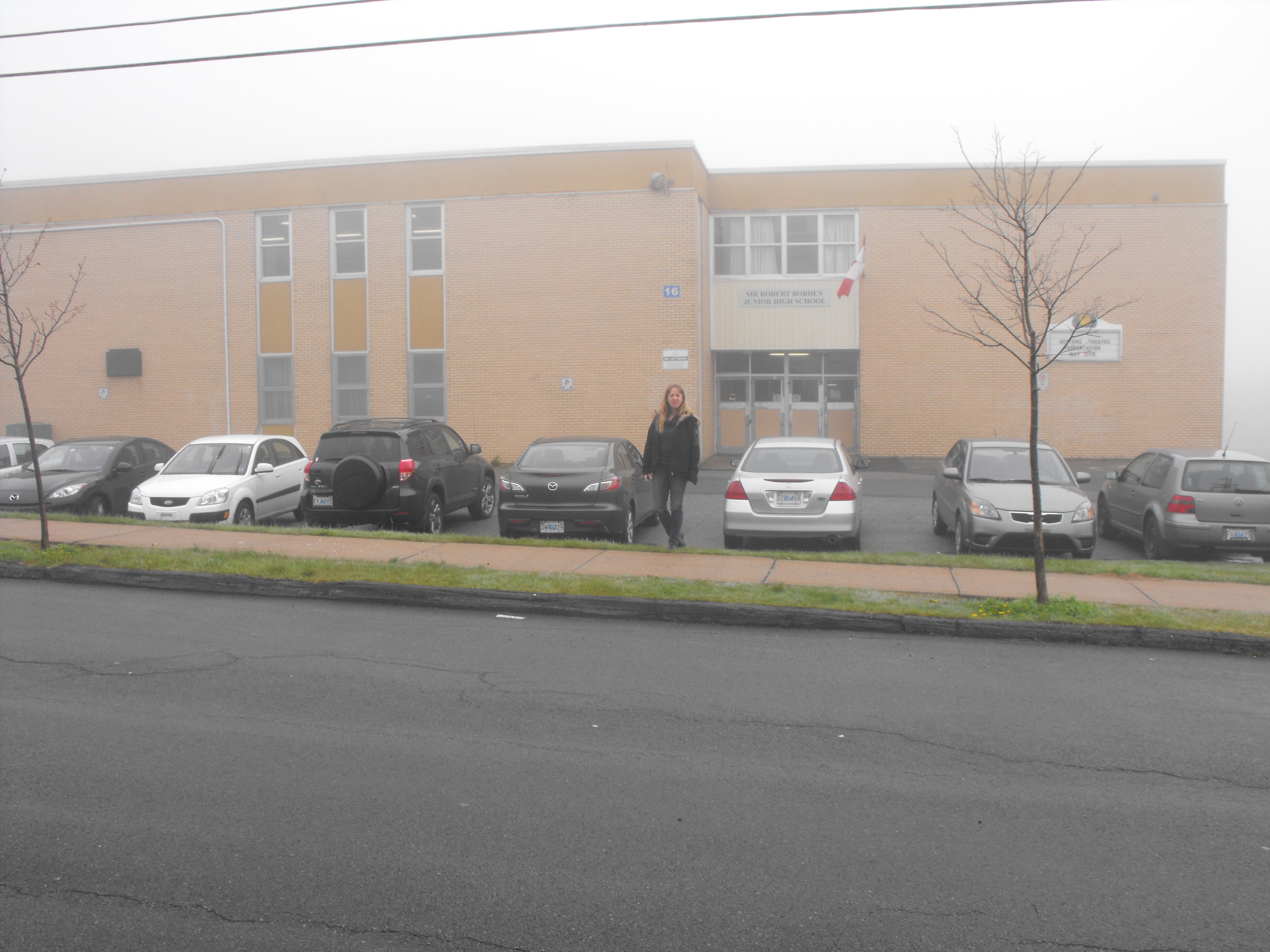
DSCF7211When you can, go back to the place where they said you were the smallest and the ugliest.  Stand in front of it, turn your back to it.  And have someone who loves you as perfectly as he can pace across the street and take a picture of you, in the fog, on the side of the road, the barred windows and yellow brick walls behind you.  You are still small.  You are still ugly.  This is not a transformation story told with paint and hot irons.   It is not what you are that has changed.  It is what matters that has changed – what is said and seen.  The voice, the eye – all of it — is yours, now, and his and Yours.

Crybaby Reads Her Book

Me and my advance reading copy, taken from my good side.

Me and my advance reading copy, taken from my good side.

The sight of a thick, yellow envelope postmarked from Montreal usually means a happy day for me.  It’s mail from my publisher, Linda Leith.  The most recent envelope was closed around an advance reading copy of my unreleased novel,  Love Letters of the Angels of Death.  I was as happy to see it as I can get without crying.

The same week, my brand new writers’ group had its first meeting.  Each of the members was invited to bring “one or two pages” of work to read aloud.  The timing was perfect.  Here was a small, low stakes environment where I could make an early attempt at reading my novel in public.

It sounded easy.  As long as it’s all talk — no singing or yodeling involved — I’m comfortable with my own vocal performance skills.  I already had the chops I needed to do a reading from my novel.  All that was left for me to do was pick a short section out of the book, read through it once, jam the pretty new book into my purse, and show up at the meeting as if I do this kind of thing every day.

The first step — choosing a selection — was harder than I thought it would be.  I’m ginger with other people’s time so I wanted to be sure I read something I could end neatly when I reached the equivalent of the roughly two 8.5×11” sized pages I’d been invited to share.  It meant simply reading the first chapter of the book wasn’t an option.  I also wanted to avoid spoilers, which meant the last third of the book was off limits and I had to be careful about what I chose from the middle.

And then there was one more consideration.  I wanted to read something gripping.  But it also had to be something that would not make me cry.  If you know me, you know that’s asking a lot of myself.

I may have held it together the day I found the ARC of my book in the mail, but I can still call myself an easy crier.  It’s awful.  I hate it.  Everyone hates it (especially my teenaged sons).  I am such an easy crier that my own novel – a story I wrote myself – still makes me sniffle two years after I’ve finished writing it.  The last sentence in it is only two words long and it makes me choke into tears almost every time I look at it.

Don’t misunderstand.  I am not emotionally delicate.  I react with appropriate sorrow when something terrible happens but I’ve never struggled with enduring feelings of depression or anything crippling or frightening.  Alarming as it may be, I simply relieve tension best by crying.  And it’s not just negative tension.  It’s the positive too.  When a stranger stopped on the Alberta Autobahn and helped me change my flat tire last month, I was so touched by his kindness I could hardly speak to him.  I knew if I loosened up, I’d start crying.  Stupid crying – or even just the dread of ending up crying — it taints most of my best moments.

I guess I should be grateful my emotional depressurization system isn’t any more complicated than simply opening the valves of my tear ducts.  It’s a fine mechanism in private but in public it’s an embarrassing mess.

Back to the book: chapter nine was where I found what I was looking for.  I chose a main character’s quick flashback to a bad teenaged romance.  That was my selection – the very first part of my novel I would ever read aloud in public.  I’ve always thought the passage was strong.  It has everything except something to cry about.

Still, when the time came to read it to a room full of friendly, un-threatening writers, I felt shaky and unnecessarily emotional anyway.  And when I was finished, I was a little mad at myself for being too high strung to read it exactly the way I had wanted to.  I’m experienced in speaking about many things.  But my novel isn’t one of them – not yet.  I’m still cagey and protective when it comes to my book and the secret well inside me that it sprang from in the beginning.

Here is yet another aspect of this career as a novelist that I hadn’t anticipated.  Once again, writing the book wasn’t enough.  I guess I need to become slick, smooth, and professional at reading my novel out loud.  Even though its opening chapter is a little long and a lot emotional, I need be able to chew up it until I can recite it with a fluent, steady voice.  I need to hone my reading until those two tight passages where it’s easy for me to get overwhelmed don’t squeeze me anymore.  I will transform myself into a flesh and blood book-on-tape.  There – I’ve decided.

“No,” one of the nice Nancies (there are two of them) from the writing group gently protested, “the fact that your book means so much to you made it mean more to me.”

And with that, I’m weeping all the way back to where I started.  Dang it, Nancy.

How I (Almost) Botched My Writing Career

IMG_7226

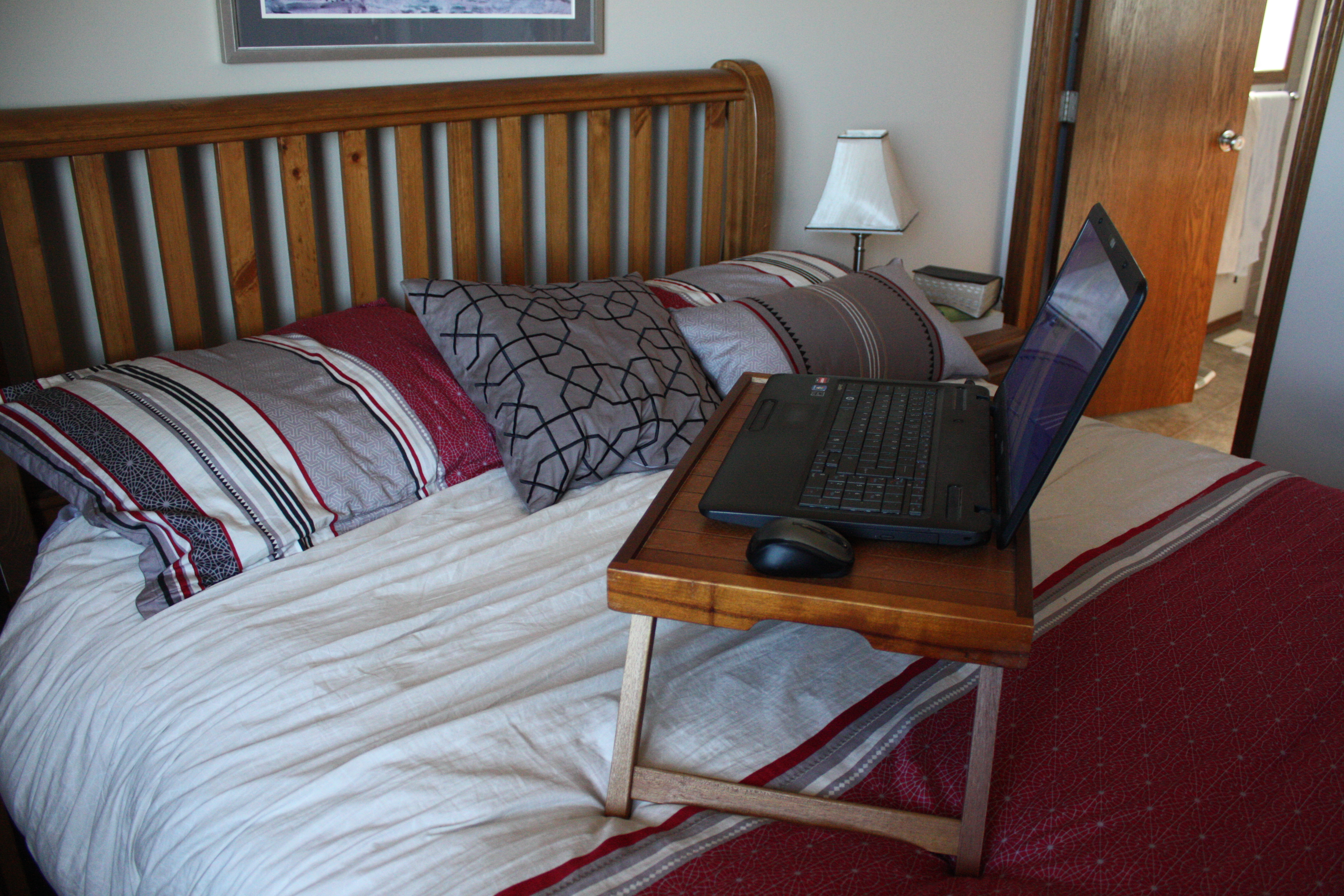
Writing in bed on a tea tray — like a boss

Last night I attended my very first writers’ group meeting – a “writers’ salon” at the home of a local wire-tap-transcriptionist turned edgy poet.  And I’m realizing now that my late entry into a writing group is yet more evidence that I have gone about my writing career the wrong way – the hard way, the backwards way.

Let me explain exactly how I’ve botched it – so far.

1)      I should have joined a writers’ group years and years and years ago.  All you kids at home, don’t wait until the advance reading copy of your first novel arrives in the mail before joining a writers’ group.

I’m in the habit of not showing my serious writing to anyone – not my husband, not my sisters, no one.  My utter lack of writing colleagues meant I mistook my work-in-progress manuscript for a finished book, started submitting it too early, and inadvertently ended up work-shopping it with the few gatekeepers at literary agencies and publishing houses who were thoughtful enough to jot a line or two (never any more) about why they were rejecting it.  It was a traumatic, slow, costly, and stupid way to get feedback.

Don’t be like me.  Before anyone in the business reads your work, make friends with writers with similar interests and better abilities than your own.  Read each other’s work and offer feedback.  Share contacts and news.  Learn to be gracious.

2)      I’ve never taken a creative writing course.  When my publisher and I were looking for a “blurb” for my book, Linda suggested I consider my former creative writing teachers.  It would have been a good suggestion if I’d had any.  It’s not that I didn’t take university-level literature classes.  I took them and I did well.  But I never took any courses dedicated to creative writing.  I’ve never had my work assessed and graded in an academic setting.

It’s not a fatal mistake.  Many writers spring up outside post-secondary creative writing programs — but not as many as I used to think.  So far, most of the people I’ve met in the working writing community have some past or present connection to writing as an academic field.  They don’t talk about writing as a vocation merely in a romantic, figurative sense.  They mean it the same way plumbers talk about their vocations – as papered credentials and regular, paying gigs.  There is middle ground between an institution-centred career in writing and never enrolling in a class.  And I should have spent some time there.

3)      I haven’t read much of the current literature in my field.  Instead of keeping up with the industry, I’ve used my precious reading time to polish off classics and to survey the YA books my kids are reading.  By now, I’m pretty well-versed in Dostoevsky and Dickens.  And I know my way around J.K. Rowling and Daniel Handler.  But I don’t know much about – whoever the heck has been important in literary fiction since the 1990s.

This was a bad move.  Stay tuned to the tone and the content of the industry.  Don’t raise your head only to when the mainstream media starts clamouring about yet another wave of erotica.  And don’t worry about being unduly influenced by other artists.  It’s the post-modern age – a time when humans have been reading and writing long enough for all of us to be a little derivative.  There’s no way to avoid it and the best we can hope for is to be able to admit it when our work looks like a freaky chimera of Carol Shields, Emily Brontё, and Napoleon Dynamite.

4)      I don’t have a physical space set aside especially for writing.  I write on my lap, sitting on my pillow, leaning against the head-board of the bed where I sleep at night.  It started as a desperate play for peace and quiet in a large, busy household.  I guess that’s still what it is.  It’s bad for my mattress, my spine, my wrists, and my temper.  Get a desk – or at least a chair.

That’s a short list of a few of my most obvious missteps.  I won’t repeat them during my next project — except for the bed-desk.

But there’s something like irony at work here.  I failed in all these ways yet I continued to publish anyway.  All my stumbling around with an unsuitable manuscript served to match my timing up with Linda’s and we found each other at just the right moment.  There’s no fail-safe formula for good fortune.

And on top of all these errors, I did do something right – something vital.  I finished the dang book.  I took good advice when I was finally given it.  I kept revising and submitting.  I kept fighting.  Of all the things I’ve heard people name as the undoing of their literary ambitions, not finishing their projects has got to be the most common.

Maybe that’s the biggest, most valuable lesson of all the ones I’ve learned so far — the one I’d leave with everyone, the one I kept repeating like a holy mantra at the writers’ group last night.  Finish it.  Keep going.

Facing Up to Poetry

What the poets are doin’ – 2013 Poetry Prowl in Red Deer, Alberta. Photo by Grant Ursuliak

There’s an old Jerry Seinfeld joke rooted in a dubious claim that more people fear public speaking than fear death.  Seinfeld’s punch-line (in case anyone out there missed the 1990s) is “to the average person, if you have to go to a funeral, you’re better off in the casket than doing the eulogy.”

It’s probably a better joke than it is a reliable piece of social science but there is a glimmer of truth in it.  Speaking in front of a crowd can be scary.  However, we all know a lot of scary things are also fun.  And while I don’t enjoy thrill-rides like sky-diving or giving high-strung driving lessons to my kids, I do enjoy public speaking.  I might even be good at it.

So I was surprised at myself when I realized late in my 30s that since I’ve started writing professionally, I have never stood up and read my work out loud and in public.  I’ve done some radio work but those productions were easy and chatty — not much like careful, literary writing where even tiny prepositions are weighed against something vague and dynamic called “art.”

Art is another one of those things that’s frightening and beloved at the same time.  It needs to be worked out with reverence and caution and that can make handling it in front an audience an intimidating prospect.  But I don’t think the gravity of art is what kept me from finding venues for reading my work to strangers.

The first obstacle was simply time.  With a larger than average sized family, my mommie gig is a larger than average sized time commitment.  That’s the easy excuse.

The more complicated excuse is full of traumatic memories from junior high school – some adolescent persecution over the fact that the perfectly fine face I inherited from my grandfather didn’t play so well on a young girl.  I’ll spare all of us a recital of the harrowing details.  It’s enough to say that the long-term effects aren’t simple and superficial.  They’re not the kinds of things that can be undone by Dove soap commercials.  And it means that I mistrust my face – the one that has stayed happily hidden on the radio and in print.  My face has sabotaged me before and, even though junior high was long ago, I still look like my grandfather and it makes me wonder if his lady-fied face might distract and disturb my presentation of my art.

Of course, all of that’s nonsense and it’s time for it to end.  And it did, a few weeks ago.  To celebrate poetry month every April, a group of poets from Calgary (the big city two hours south of my neighbourhood) travels through what is invariably terrible weather to spend an afternoon in the small city of Red Deer meeting those of us toiling in obscurity.  The event is known as The Poetry Prowl.

It’s fabulous – far better than I expected it to be.

The other poets at the event were high quality artists.  They were editors and writing instructors as well as artists – educated, experienced, and highly polished.  The chief organizer, Emily Ursuliak, even managed to bring along the city of Calgary’s current poet laureate.  The local contributors — all men except for me — were delightful too.  Performance after performance, I was pleased and surprised and honoured to be included.

What was nearly as impressive as the poetry was the personable warmth of the poets themselves.  Despite the haughty ring to his official title, Calgary’s Poet Laureate, Kris Demeanor, backed up some of his work by playing the pink acoustic guitar strapped around his back with a lace from a hockey skate.

The more educated and decorated the poets were the more humble and decent they seemed to be.  The man who’d written articles on “the philosophy of death” for academic anthologies gave me his program when he saw I didn’t have one and apologized that his bio in it sounded so much like a CV.  I pointed out that mine sounded like one too only it wasn’t nearly as impressive.  And my bio wasn’t just a CV it was also a plug for my upcoming novel.  So, yeah – there’s nothing to apologize for here.

Since re-entering arty society, I have no proof that the cold-hearted, self-involved, hipster jerk stereotype actually exists in real life.  So far, everyone I’ve met is lovely and collegial.

And by the time I was introduced and called to the microphone to read my work – the small collection of short poems I’d written during the Dark Ages of my artistic career when “creativity” was more literal than literary and meant blood and amniotic fluid and breastmilk – I wasn’t afraid to match my work to my face anymore.  I owned my physical appearance.  I joked about it, referred to myself with all irony as a “trophy wife” and let everyone laugh with me.

It had to happen.  I’m glad it did.  I can now say I’ve put all of myself into my work – even my face.

Carbon Copying Vulcan – Shreds of Reality in Fiction

The Roman God Vulcan, smashing stuff

If my youngest brother-in-law was a Roman god, he’d be Vulcan.  Wait — let’s not let Star Trek confuse us.  I’m not trying to say he’s cold and hyper-rational and his sleeves are too short.  He’s like the original, Classical Vulcan — fiery and powerful and smart.  Like Vulcan, he makes his living building things out of metal with torches and hammers.  When he’s having fun, he still likes to yell and hit things.  I adore him.  And if I was a goddess, I’d be Juno, the shrill but scary wife of the boss-god Jupiter (Zeus, to all you Greek fans).  I also like to yell and hit things.  It’s a sign of enthusiasm and love.  Both Vulcan and I understand that very well.

In the years and years I’ve known him, Vulcan has not been a voracious reader of contemporary Canadian literary fiction.  It’d be out of character for him to rush out and buy my novel when it’s released this August.  But I hope he will.  In order to encourage him, I did what Juno would do: I got up in his face and bullied him about it.

“Hey, are you going to buy my book when it comes out?”

He paused.  “Uh — how much money will you get from each one?”

It wasn’t the response I expected.  “I don’t know,” I said.  “About two dollars maybe?”

He reached into his pocket.  He said, “How about I just give you two dollars right now?”

“What?”

The Roman goddess Juno

He was laughing at me.

“You have to read it!” I bawled at him.  “You have to.  Because…”

This is where my Juno started to lose her nerve.  Even with my loved ones, I am a shy, apologetic promoter of my work.  I tell my friends and family where to find it and then I leave them alone.  There’s no follow-up – no awkward audit of their patronage of my art.  My loud, bossy questioning of Vulcan was not about getting him to cough up a twoonie.  It was about something much more delicate.

He was standing in front of me, towering over me, one hand still in his pocket.  He was looking down with his big brown face, waiting for me to finish.

I began again.  This was important – something between a warning and a gift and a confession.  “There’s this character in the book – and – he might seem like he’s kind of like you.”

Vulcan’s eyes got a little bit bigger.

“But he’s not you,” I hurried.  I explained there’s a scene in my novel where a woman meets her in-laws for the first time.  That meeting is written a lot like the time I first met Vulcan, when I was twenty-one and he was not quite ten years old.

“They’re not us.” I said again.  “They just look like us for a minute.  The little boy grows up and does things you don’t do.  He’s not you.”

“But someone might think he’s me.”

“Yeah.”

“Would he be in the book if you didn’t know me?”

Strictly speaking, it’s an impossible question.  How can I say whether I could have imagined someone so much like my brother-in-law ex nihilo now that I already know him?

What I could say was this.  “If I hadn’t lived the life I’ve lived, I wouldn’t have written the book the way I have.”

This was honest and fair to both of us.  The fact is I could have this same conversation (hopefully without the offer to pre-emptively buy me off) with dozens of people.  There are sparks and shreds and sometimes even long swaths of all sorts of real people in my work.  It feels inevitable.  Even if I switched genres and started writing hardcore science fiction, the spaceships and alien planets would still be full of traces of my friends, family, neighbours – everyone.

I’m certainly not the only writer who’ll admit this.  In an excellent essay, novelist Corrina Chong reflects on “writing as thievery.”  She says, “here’s the truth behind the fiction: as a writer, I am a thief…My writing is a collage of the bits and pieces I’ve stolen.  Once your piece is glued on, it’s no longer yours.  Finders keepers, I say.”

She sounds flippant but writing real life into fiction isn’t something done lightly.  We agonize over it.  We weigh the benefits of doing it against the risk.  And we understand the people unwittingly serving as our literary models might not agree we’ve struck the balance right.  Frankly, it’s scary.

Chong goes on to acknowledge that this theft is actually more like an exchange – a swap.  She says, “the very act of writing a story and releasing it out into the world assumes that readers will be able to see something of themselves in the characters, thereby stealing their own little pieces as keepsakes…any idea that rings true in your universe becomes your own.”

Maybe that’s what makes it possible for my self-consciousness at my own thieving audacity to be outweighed by my sense that it’s important for my reluctant, metal smashing baby-brother-in-law to read my novel – the one with a scene rooted in our shared history.  It’s not about the two dollars.  It’s about us.  Maybe that’s why I want all of the poor souls I’ve pilfered to read it.  I want to complete the second half of the exchange.  I want them to take something from me now – something bigger than my thanks for the inspiration.  Take yourself back, I say, and with it, take a piece of me.

Weekend in Girlstown

Two of my sixteen nieces, lookin’ super girlie — and a little cranky

I was once pregnant with a child I hoped was a boy.  He was — so were his four younger brothers.  It’s been a long time since I’ve lived with any other women.  And it’s been even longer since I’ve lived with any girls.  It shouldn’t matter.  I was once a girl myself and there’s nothing about being sequestered with my sons that can alienate me from that part of my identity.  It should be true.  I believe it’s true.  But I still keep having awkward collisions with little girl culture years after little girls stopped being part of my daily life.

Some collisions are secret and subtle.  I’m not a very big woman.  Shopping for clothing can be frustrating for me.  One of my girl-friends, a lady born in the Philippines who’s learned how to deal with over-sized western clothing, gave me a tip: do some shopping in children’s departments.  It’s brilliant.  The first time I tried it I was like Homer Simpson at clown college turning around in front of the mirror saying, “I’ve never had pants that fit so well.”

Then the saleslady noticed me out on the floor, picking through the kiddie-jeans.  “No daughter with you today?”

“Uh – no,” I said.

“That’s okay,” she allowed.  “If they don’t fit her you can always bring them back with the receipt.”

“Great.  Thanks.”

I skulked away.  I felt furtive and a little ashamed.  I am not a girl.  That’s supposed to mean I don’t belong in the store, let alone in their merchandise.  I don’t know.  Maybe it’s a bit like what closeted transvestites cope with when shopping for clothes outside the ones socially prescribed for them.  I am not a boy but since I have sons, I feel perfectly natural stomping around in the boys’ section stocking up on jeans and navy blue sweatpants for my kids.  But in the girls’ section, in the company of the specter of my fake daughter, I am a pretender – unfit and unworthy.

This weekend, girl culture and I collided again.  My sister was staying at my house while her daughter, my most glamorous ten-year-old relative, competed in a dance festival.  I counted four costume changes – peacock feathers, rhinestones, ruffles, crinolines.  She was plastered in makeup and hairspray.  And my sister – a nursing instructor who can thread a tube into a trachea – struggled to glue false eyelashes to her lids.

My niece is warm-hearted and adorable and had no idea Auntie was eyeing her dance gear with the detached skepticism of a smug anthropologist.  I shouldn’t have been surprised when she asked me to come watch her dance.  The invitation rattled me.  Accepting it meant detachment was not an option and I was being drawn into her culture – one I had abandoned ages ago.

I arrived at the auditorium all by myself.  It felt awkward enough to make me wonder if I was in the right place.  I  asked the ticket seller, “Is this the little-girl-dancing-thingy?”

Inside the theatre, I found my sister.  The lights went down and the first ballerina came out.  She was a sixteen-year-old dressed like a fairy princess.

“Look!  She’s seriously wearing a tiara!”

My sister smirked at me.  “Yes.”

The next number was a whole troupe of teenaged ballerinas.

“They’re all wearing tiaras!”

My sister smirked again.  “Yes.”

“If they’re all wearing tiaras, isn’t that the same thing as none of them wearing tiaras?”

“Shh.  You have to stop laughing or the other moms are going to get really mad.”

“What?  I’m just delighted.”

It was not completely true.  I was vaguely delighted but it was a patronizing outsider’s delight – amused but not quite charmed by the spectacle.  I stuck to my social scientist persona.  The dance numbers – with all their kitschy props and maudlin narratives – had names like “Imagine” or “Grace” or the risky “Images of Grace.”  Even my sister laughed when the lyrics of one of the songs earnestly crooned, “If I could put you on top of a cake I would ice you.”

If there’s a perfect age for amateur dancing it’s got to be the one my niece is at right now.  She’s technically good enough to actually be dancing but not so old that she’s starting to look silly and lumpy in her fancy leotards.  If I was ever going to be able to enjoy this part of her life, it was now.  Her first number was supposed to be a sad commentary on class divisions – at least, that’s what she told me.  But she couldn’t stop smiling while she performed.  The adjudicator complained about it but Auntie loved it.  And by the end, in the dark, up at the top of the auditorium, awkward Auntie became sappy Auntie had to wipe her eyes.

No one gets to be a girl for very long.  And some of us – like me and maybe like my niece too, depending on what the future brings her – end up moving farther away from girl culture than we ever imagined we would, back in the days when it meant everything to us.  Honestly, I don’t miss it.  It was silly and distracted from much of what is truly important.  But maybe there’s no need to be embarrassed about celebrating it every once in a while.  Maybe there’s no need to grudge the breasty teenaged ballerinas for spinning and tip-toeing through their final days in tiaras.  So what if we’re all wearing one from time to time?  We’ll have to set it aside soon enough.

Confessions of a Slow Reader

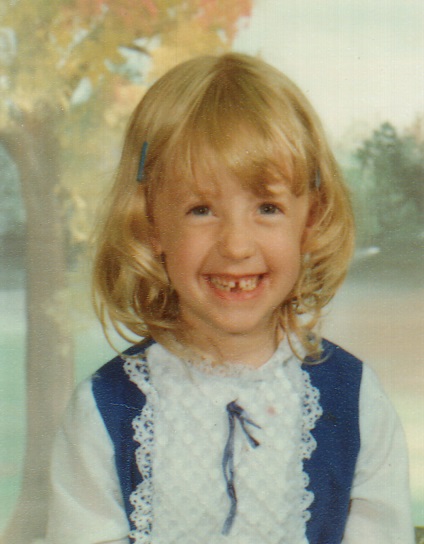
If this old picture of me could talk it would say, "What?"

If this old picture of me could talk it would say, “What?”

I am a slow reader – painfully, tediously slow.  It’s been true since I was in grade two and it’s still true today.  Whether I’m reading aloud or not, I can’t move through a book any faster than the speed of speech – not nearly quickly enough.

If you’re one of the people who’s surprised to learn this about me, thank you.  Most people assume writers are also accomplished readers.  I am not.  I have read and understood a lot of very good books.  But it’s taken me a long time.

Why am I talking about it now?  I just read book blogger Laura Frey’s Can-Lit confessions – a list of hard truths about her experience with our country’s literary canon.  She admitted to not liking, not reading, and being slow to hear about a few of the authors and books considered Canadian classics.  I enjoyed her candor so much I made my own confession about getting through my entire adolescence without reading a single word written by Farley Mowat (as proof of my ignorance, I think I even misspelled his name in my comment).

And then I started considering the short-comings in my own career as a reader.

Early elementary school – the learn-to-read years — was a hard time for me.   In grade one, the fluid left behind my eardrums by a streak of bad ear infections made me mostly deaf.  For about a year, nobody noticed.  That’s how it is with hearing loss.  No one’s to blame.  The loss meant I spent my time at school listening to the dull tides of my pulse moving through all that fluid – fwum, fwum, fwum.  I didn’t realize there was anything more to hear and I thought school was just really boring.  It seemed like we sat in our desks or on the carpet doing nothing at all.

In the second grade, I had surgery, the deafening fluid drained away, and I came back to the land of the hearing to find I’d been bumped from my place in the reading group meant for the best readers in our class.  After all the loud reprimands I remembered little deaf-me getting for not paying attention and not following directions, I figured I deserved the demotion and slunk away with my mediocrity.

Indignant current-me isn’t so sure I deserved it.  I have always understood and retained what I read.  But I will concede this: if we were being ranked based on our reading speed alone, mediocre was a generous assessment of my skills.  Grade two is when I remember Her coming.  She’s this voice in my head – an adult woman’s voice, I don’t know whose – that spoke every word I saw with my eyes.  I couldn’t read any faster than she could talk.  I still can’t.

After grade two, we moved to a new school where my teacher was just as interested in our writing as our reading skills.  She told me I was talented and I became her unofficial language arts protégé – the student invited to the front of the class to read creative writing out loud, at the glorious pace of speech.  No one ever mentioned my reading speed again.  It was my secret to keep.

And I did keep it.  I never cheated but I did learn how to read enough of a book to be able to sound informed about it and no more.  During my Arts degree, I learned how to wade through enough of the material on a course reading list to still get an A.  It was risky and stressful but I simply could not complete all the “required” readings.  There wasn’t time for someone moving at my pace to finish it.

Thanks to the years and years I spent pinned under nursing babies, forced to sit down and hold still and listen to Her, I have ended up fairly well-read.  It was another unexpected irony of motherhood – the way the babies who were supposed to stifle and suppress me ended up being what made it possible for me to become what I wanted all along.  Eventually, I did read everything on the lists from my university classes.  I’ve read hundreds of pounds of thick, daunting prose, poetry, and non-fiction.  And I’ve loved it.

Now that I’ve finished my reading lists — now that the Bachelor of Arts degree hanging in my kitchen doesn’t seem so much like a sham anymore — I can freely admit to anyone that I’m not what people might think I am.  I am a working writer but I am not what my early elementary school teachers considered a gifted reader.  I am not incorrigibly bookish.  I’m still poking my way through the literary landscape, warning my friends I’ll just drag their book clubs down with my sluggish ways.  But I’m working in this field anyway, in spite of my nature.  I’m reading and writing anyway. Maybe it’s true for anyone who tries to write as a vocation.  We’ve probably all got something deep-seated and shame-laden that we had to overcome before we could do this.

I know, it reads like a sports cliche.  But that’s the thing about cliches — they’re tired because they’re usually true.

A Rush and a Push: The Making of a CBC Radio Piece

CBC Radio’s Sook Yin Lee, host of Definitely Not the Opera

If you’re ever in the Edmonton City Centre and you see a person sprinting past the stores and coffee shops, pounding over the hard tile floors, doing that funny, ginger stomp down moving escalators, either you’re witnessing the flight of a very bad shoplifter or the frenzy of someone late for a taping at the Canadian Broadcast Corporation studios located at the far eastern end of the building.

Last Friday, that CBC bound mall-sprinter was me.

It was the seventh time I’ve done work for CBC Radio.  Sure, the very existence of Canada’s public broadcaster is considered controversial by some and acknowledged as tenuous by just about everyone.  But for now, it’s still a functioning organization that treats its contributors with respect and class.  I’ve always enjoyed working with them.

My first CBC gig was with the Sunday afternoon spirituality and religion program, Tapestry.  I put on a big, foamy headset, leaned into a microphone and read an essay I’d written about my grandmother – an essay I eventually re-read at her funeral as an exhausted 30-year-old involuntarily fasting with grief.

The six other pieces I’ve done for the CBC have been for the Saturday afternoon story-telling magazine, Definitely Not the Opera (DNTO).  As my producer told me the first time we met, “DNTO is way cooler than Tapestry.”  That’s not to say none of my DNTO work will ever be part of a eulogy but it does tend to be lighter and less lyrical.

A DNTO piece isn’t supposed to sound like it’s being read.  There’s no script and no rehearsal.  It’s supposed to sound spontaneous and conversational.  But like my sister-in-law, a veteran on-air personality of the University of Alberta’s student radio station says, “The best off-the-cuff speaking is the kind that isn’t really off-the-cuff at all.”

She’s right.  And though I can’t make any pre-show notes, I can’t help spending the hour-long car ride from my house to the studio babbling to myself, ironically practicing sounding breezy and conversational. As I speed along the Alberta Autobahn, I compose and repeat the story to myself until the sad parts don’t make me cry and the stupid parts don’t make me sound quite so stupid and every extraneous “um” goes away.

I begin the trip convinced that, this time, I’ve left early enough that there’s no chance of me having to make that desperate, frantic dash from the crowded downtown Edmonton parkade to the studio at the far end of the building.  This time, I won’t be standing in the elevator, trying to catch my breath, aware that the producer is already on the line from Winnipeg, waiting for the hack freelancer to appear.  But it never happens the way I’ve planned.  The mad rush to the finish is just part of the experience for me, I guess – just another pre-game adrenaline spike.

The recording itself is the easy part.  DNTO pieces are personal stories and there’s nothing most of us are better at talking about than ourselves.  The producers prompt with questions and politely ask for clarifications.  The process takes about forty very pleasant minutes.

And from that forty minutes, the story is edited into a tight five minute item.  I’m always nervous during the editing process.  I’m not included in it.  The whole thing happens in a black box about a thousand miles away from where I wait for the results.  It’s not until I tune in my radio with the rest of the country on Saturday afternoon that I hear how my rambling story-telling has been carved up and digested.  The waiting and fussing — it’s scary.  But I haven’t been disappointed yet.

The CBC and I are on again this Saturday, March 30 2013 at 1:30pm.  Hope to talk to you then.

Until then, here’s something from the archives, a previous DNTO piece featuring me:

http://www.cbc.ca/player/Radio/DNTO/Warm+your+Cold+Heart/   Click on the link called “The Joy of Silence.”

UPDATE: The episode of DNTO I’m talking about above has now been posted.  Here’s the link.  It’s not a hardship to listen to a whole episode but if you’re my mom or something and you just want to get to my bit, it’s at about 38.5 minutes into the program.

http://www.cbc.ca/dnto/episode/2013/03/20/when-did-you-face-the-odds/